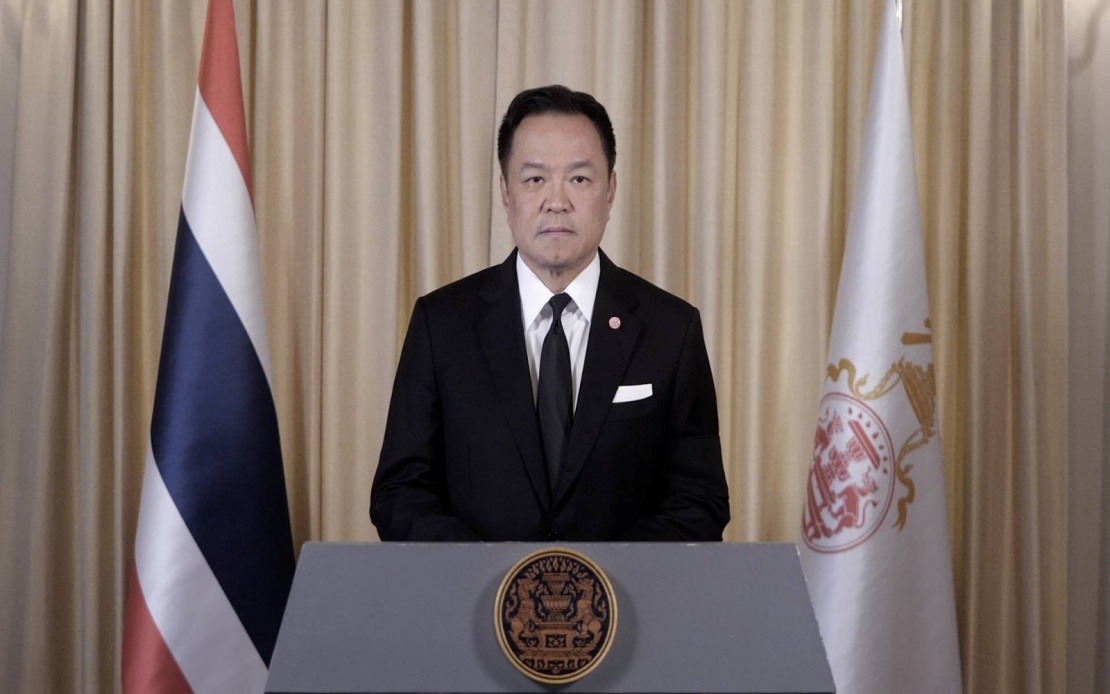
Thailand's government has expressed cautious optimism about the possibility of a ceasefire between the United States and Iran, viewing such a development as a potential stabilizing force for the region and the global economy. Prime Minister Anutin Charnvirakul told journalists at Government House that any breakthrough in West Asia would represent a welcome shift that could help ease mounting international crises and shore up economic conditions across Asia.
The timing of these remarks is significant. US President Donald Trump announced on Sunday that an agreement with Iran had been finalized, with the American leader authorizing the reopening of the Strait of Hormuz and the lifting of a US naval blockade. These moves could have far-reaching implications for global energy markets and maritime trade, particularly for nations dependent on stable oil supplies and predictable shipping routes.
Thailand's perspective on this geopolitical development reflects the kingdom's vulnerability to external shocks in energy and commodity pricing. The Thai government has positioned itself as pragmatic and forward-thinking on the matter, with officials acknowledging that their nation faces genuine challenges from supply chain disruptions and energy cost volatility. Rather than adopting a reactive posture toward global events, Anutin emphasized that Thailand relies on long-term strategic planning to navigate international uncertainties and maintain economic resilience.
Deputy Prime Minister and Finance Minister Ekniti Nitithanprapas expanded on this theme, noting that a resolution to the West Asian conflict would carry tangible benefits for both global economic health and Thailand's domestic situation. He highlighted energy pricing as a critical concern, suggesting that an end to hostilities could ease upward pressure on oil costs and reduce the economic risks that have been constraining growth prospects. This assessment aligns with Thailand's broader economic challenges, where inflation and rising production costs have weighed on household purchasing power and small business viability.
Thailand's exposure to energy markets is substantial and multifaceted. The kingdom imports significant volumes of crude oil and natural gas to meet domestic demand, making international price movements directly relevant to inflation management and fiscal planning. Any reduction in geopolitical risk premium embedded in global energy prices could therefore deliver meaningful relief to Thai consumers and producers alike, potentially creating conditions for stronger economic expansion than current forecasts suggest.
What distinguishes Thailand's position is the government's determination to pursue structural energy transformation regardless of near-term price movements. Officials have committed to a 200-billion-baht energy transition programme designed to reduce the nation's dependence on imported fossil fuels over time. Finance Minister Ekniti underscored that this initiative will continue even if international oil prices moderate, reflecting recognition that long-term energy security and environmental sustainability require sustained investment independent of cyclical commodity fluctuations.
The government's monitoring of inflationary pressures and their cascading effects on households and small enterprises suggests a nuanced understanding of how global shocks transmit through the Thai economy. Rather than expecting the private sector to absorb all cost increases, officials have signaled attention to the vulnerability of lower-income consumers and micro-enterprises that lack pricing power or access to hedging mechanisms. This awareness informs both the expectation that improved global conditions could release pent-up demand and the caution that any economic improvement must be sustained and broad-based.
For the broader Southeast Asian region, Thailand's response carries implicit messaging about how developed economies in ASEAN view geopolitical risk and their policy options. The kingdom's stability and economic performance have outsized importance for the region's supply chains, financial flows, and trade networks. A Thai government confident in managing external shocks through strategic planning rather than panic provides some reassurance to investors and trading partners across Asia.
The convergence of views among Thailand's top political and economic leadership on this issue—with both the Prime Minister and Finance Minister welcoming a ceasefire as economically beneficial—suggests internal consensus on how to interpret developments in West Asia. This unity of messaging can itself influence investor confidence and consumer sentiment, potentially shaping how quickly any improvements in global conditions translate into genuine economic activity in Thailand.
Looking forward, the extent to which a US-Iran ceasefire translates into sustained lower energy prices, reduced insurance costs for maritime shipping, and restored confidence in global supply chains will determine whether Thailand's optimism proves justified. The kingdom's success in managing external shocks ultimately depends on whether strategic planning frameworks can absorb the inevitable surprises that geopolitical shifts produce, and whether the structural investments in energy transition actually deliver resilience when needed.

