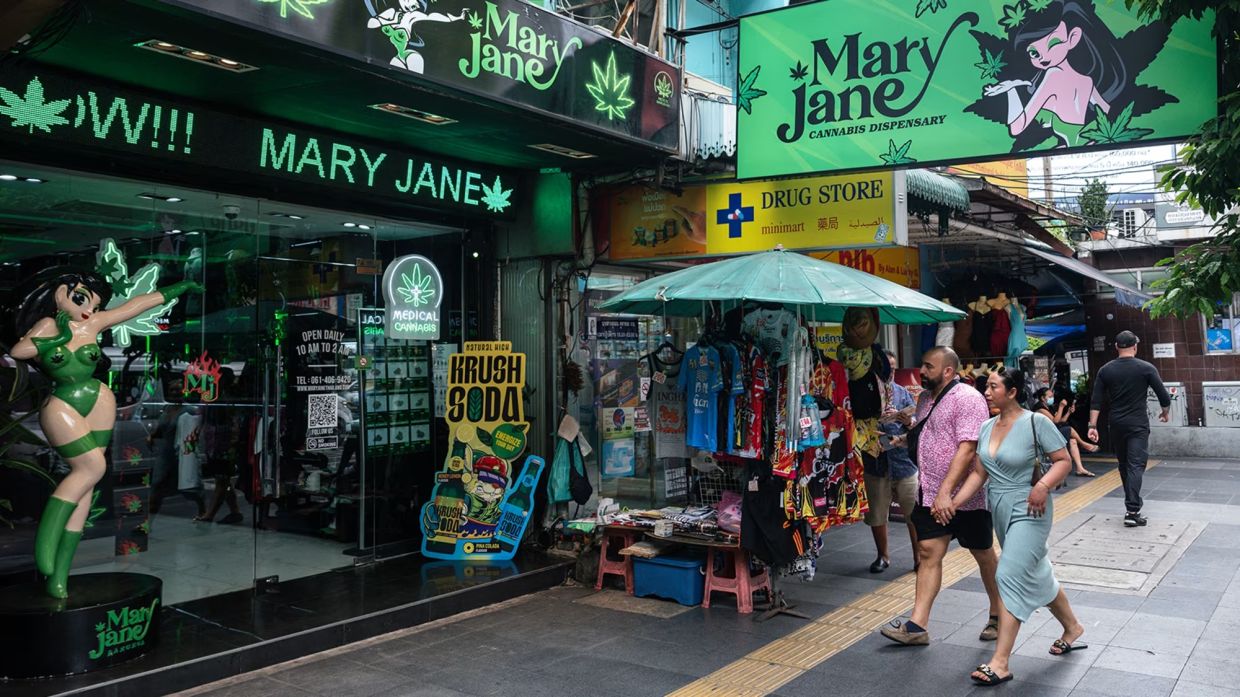
Thailand's approach to cannabis regulation is facing a critical juncture as lawmakers weigh whether the drug should return to the narcotics list while a dedicated legislative framework is developed. The House Public Health Committee, chaired by Sakoltee Phattiyakul, convened on June 18 to examine the mounting tensions between those seeking stricter controls and stakeholders invested in the emerging legal market. The deliberations have laid bare fundamental disagreements about how Thailand should manage cannabis at a time when sales have flourished and regulatory gaps have widened considerably.
The policy landscape became more complicated three years ago when Thailand decriminalised cannabis in June 2022, positioning itself as a regional pioneer in cannabis liberalisation. However, the intervening years have revealed significant implementation challenges. The Department of Thai Traditional and Alternative Medicine currently oversees cannabis as a controlled herb under the 1999 Protection and Promotion of Thai Traditional Medicine Wisdom Act, a framework that advocates argue has proven insufficient. In an attempt to modernise oversight, the Public Health Ministry issued three regulations in June 2025 governing research, sales, processing and international trade in line with global standards. Despite these measures, uncontrolled proliferation continues to outpace regulatory capacity.
Dr Tewan Thaneerat, the deputy director-general overseeing traditional medicine, acknowledged that concerns have persisted since liberalisation began, creating a patchwork of inconsistent enforcement and legal ambiguity. Officials across multiple agencies—including the Food and Drug Administration, the Department of Health Service Support, and the Office of the Permanent Secretary for Public Health—are collaborating on a comprehensive cannabis and hemp law. This draft underwent Cabinet review under the previous government but failed to reach parliamentary consideration before the legislature was dissolved. The current Public Health Ministry has renewed commitment to advancing the legislation, with public consultation hearings scheduled for completion by late July before resubmission to the Cabinet. The protracted timeline suggests regulation will remain contested ground for months ahead.
Proponents of temporary recriminalisation argue this interim measure would prevent further market entrenchment while permanent rules are finalised. Ekkapop Sittiwantana, deputy chairman of the House Public Health Committee representing the People's Party, contends that unregistered cultivation and informal direct sales have become endemic, creating openings for grey-market operators who circumvent the spirit of regulated commerce. He has proposed a plant registration system that would close loopholes by ensuring traceability from cultivation through sale. This position reflects growing alarm among medical professionals and public health advocates who view the current trajectory as untenable. Assoc Prof Dr Smith Srisont, representing a network of doctors and civic organisations focused on drug-related harms, buttressed this argument by pointing to practical evidence of adverse impacts already observable in clinical settings.
A critical structural weakness in current law further complicates enforcement: while cannabis flowers remain classified as controlled herbs, other plant parts operate outside criminal jurisdiction when cultivated, creating obvious avenues for circumvention. This botanical loophole has allowed sophisticated operators to argue that processing or selling non-flower material falls beyond regulatory scope. The distinction appears increasingly untenable as the cannabis market matures and consumers and producers alike exploit these technical definitions. Those advocating stricter controls emphasise that returning cannabis to narcotics classification first, followed by development of a dedicated regulatory regime, would establish clearer baseline prohibitions and allow lawmakers to design modern rules without the pressure of an already-established commercial infrastructure.
The Food and Drug Administration presented evidence that its current licensing system—covering production facilities, processing plants, imports and retail—functions adequately for regulated operators. The agency reported that most inspected cannabis products met labelling standards and that raw material testing has identified few compliance failures among licensed suppliers. However, officials candidly acknowledged that the primary enforcement challenge lies not with licensed operators but with unlicensed sales channels that remain largely disconnected from the legal system. This admission underscores a fundamental reality facing all emerging cannabis markets: illicit supply chains often prove more resilient and profitable than regulated alternatives, particularly when licensing requirements impose costs and compliance burdens.
Cannabis industry advocates and networks, particularly the Thai Cannabis Future Network, articulated a markedly different perspective that challenges the recriminalisation proposal. These stakeholders contend that legal operators face existential pressure from black market competition, smuggled imports and the destabilising prospect of renewed prohibition. They have raised serious allegations regarding unofficial demands for benefits or improper pressure by officials in connection with licensing decisions, suggesting that corruption and institutional opacity rather than inherent legal flaws drive market dysfunction. The network additionally highlighted problems with medical prescription requirements that many farmers find prohibitively expensive or that are allegedly being traded through non-healthcare channels, further alienating legitimate cultivators from the formal system.
Crucially, industry representatives have argued that cannabis possesses substantial economic and cultural value beyond narrow medical applications, rooted in Thailand's traditional knowledge systems and agricultural heritage. They have called for lawmaking processes that incorporate genuine public participation and avoid concentrating benefits among large corporate investors. This framing reflects anxieties among smallholder farmers and smaller operators that any restrictive regime will consolidate the market in favour of well-capitalised enterprises with superior regulatory compliance resources. The tension between supporting vulnerable agricultural communities and managing public health risks represents perhaps the most intractable dimension of Thailand's cannabis policy challenge.
In concluding the June 18 session, Sakoltee directed officials to catalogue all legally licensed cannabis retailers in Bangkok and FDA-certified cannabis products for subsequent review, signalling that legislators intend to verify the scale of the regulated market before deciding how to proceed. He emphasised alarm over excessive accessibility, particularly among young people, and stressed that any future legislation should mandate geographic separation between cannabis shops and educational institutions. These concrete enforcement measures indicate that policymakers recognise the current system's failure to prevent youth exposure. The committee also mandated a broader epidemiological survey assessing cannabis-related harms across affected populations, acknowledging a gap in rigorous data about policy consequences.
Sakoltee further announced the committee's willingness to evaluate legislative proposals from multiple sources, including the public sector alongside the Public Health Ministry's official bill, suggesting openness to innovative regulatory approaches. This pluralistic stance may reflect recognition that no single perspective commands sufficient political support to proceed unilaterally. The challenge ahead involves constructing a consensus framework that accommodates legitimate economic interests and agricultural concerns while implementing meaningful public health protections. Success will require navigating conflicts between industry stakeholders, medical professionals, law enforcement, farmers and civil society—constituencies with fundamentally divergent interests and risk assessments.
For Malaysia and other Southeast Asian nations monitoring Thailand's experience, the unfolding debate offers important lessons about the difficulties of implementing cannabis liberalisation without comprehensive enabling legislation. Thailand's predicament demonstrates that removing criminal penalties without simultaneously establishing robust regulatory infrastructure simply creates a vacuum filled by uncontrolled commerce and enforcement inconsistency. The coming months will reveal whether Thailand's policymakers can devise durable rules that balance economic opportunity, agricultural sustainability, public health protection and institutional integrity. The outcome will significantly influence how neighbouring countries approach cannabis policy reform, particularly as regional interest in plant-based medicines and agricultural diversification continues growing.

