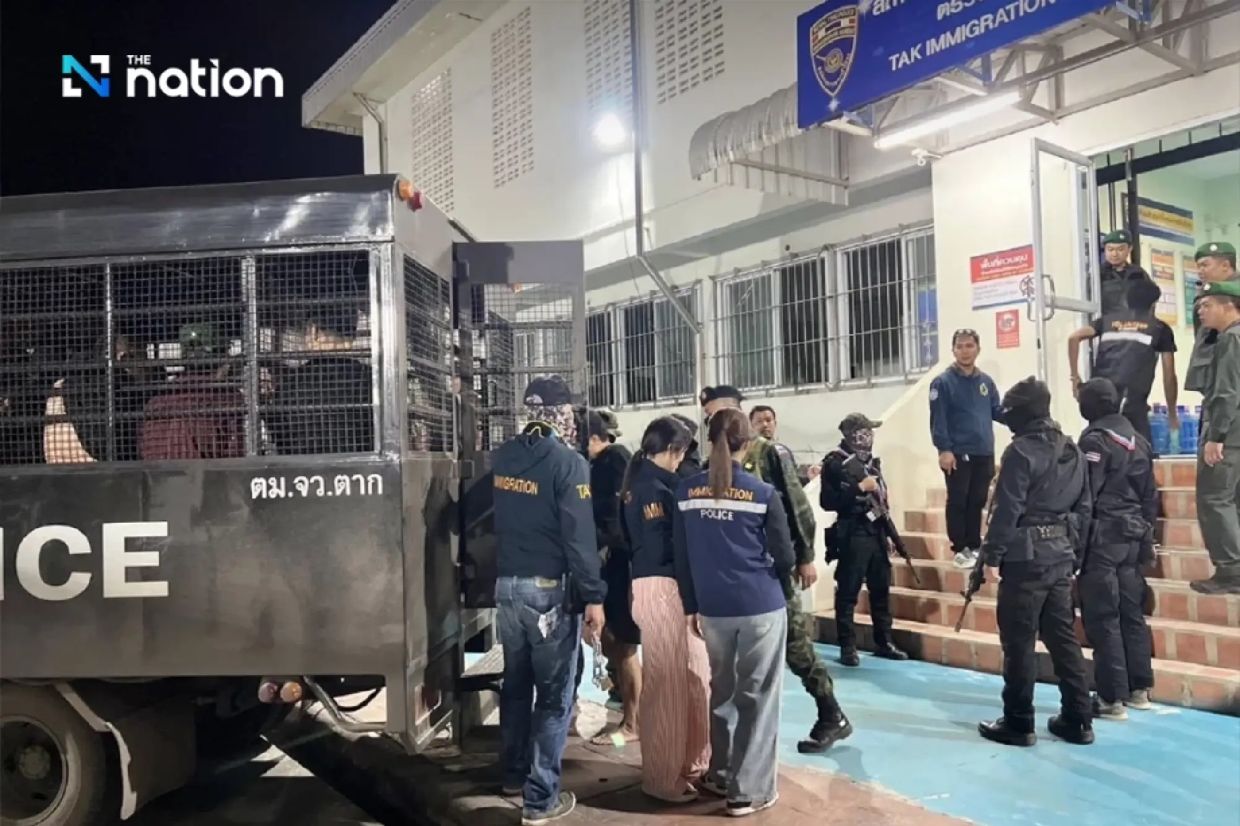
Thailand is moving to substantially revise its immigration legislation to accelerate the removal of foreign nationals engaged in criminal activities, responding to mounting security concerns about transnational crime networks that have exploited gaps in the country's entry systems. Deputy Prime Minister Pakorn Nilprapunt has been tasked with coordinating legal reforms across the Royal Thai Police, Immigration Bureau and Interior Ministry, with the government specifically targeting Sections 54 and 55 of the 1979 Immigration Act that currently govern the deportation process.
The initiative addresses a persistent bottleneck in Thailand's justice system where foreign offenders frequently remain in state custody for extended periods as their cases navigate through appellate procedures, court processes and diplomatic coordination with embassies. These procedural delays have created operational challenges for detention facilities while simultaneously allowing detainees to contest removal orders through various legal mechanisms, sometimes enabling them to effectively delay repatriation indefinitely. Prime Minister Anutin Charnvirakul has characterised the current system as inadequate, noting that arrests and prosecutions alone cannot resolve the underlying structural impediments to swift deportation.
A significant catalyst for this overhaul has been Thailand's controversial 60-day visa exemption scheme introduced in July 2024 under the previous Srettha Thavisin administration, which permitted citizens from 93 countries and territories to enter without prior visa applications. This arrangement fundamentally eliminated advance screening mechanisms that Thai embassies traditionally employed to verify criminal histories and financial backgrounds before allowing entry. Visitors exploited the system through repeated border runs—strategic departures and re-entries that reset their permitted stay duration—enabling extended residency without formal visa processing. The Cabinet subsequently approved cancellation of the 60-day exemption on May 19, 2026, reverting to individual bilateral arrangements with most countries providing maximum 30-day stays.
The security implications have proven substantial, particularly in Thailand's major tourist destinations. Foreign nationals have allegedly leveraged these entry gaps to establish illegal operations spanning restaurant and resort employment, property acquisition through nominee arrangements, call-centre fraud networks, and money laundering schemes. Authorities have identified concentrated criminal activity in Pai in Mae Hong Son, Pattaya in Chonburi, Koh Phangan in Surat Thani and Bangkok, suggesting that visa loopholes enabled criminal networks to operate with reduced detection risk. Officials contend that the exemption scheme failed to meaningfully boost either tourist numbers or visitor spending while creating disproportionate security vulnerabilities.
Government agencies have implemented four interim enforcement measures whilst legislative reforms proceed. These include heightened scrutiny of individuals exhibiting unusual travel patterns involving frequent border crossings without clear commercial or personal justification, enhanced screening protocols targeting nationals from countries designated as higher-risk, systematic integration of international criminal records with Interpol databases and Thai security agencies, and mechanisms to eliminate overlapping visa arrangements that could be exploited for extended stays. The Royal Thai Police, Immigration Bureau and military units have conducted joint operations resulting in arrests of foreign nationals residing illegally, though the removal process remains hampered by existing legal constraints.
The fundamental challenge lies in the multiple layers of legal protection and procedural rights embedded within Thailand's immigration framework and broader international treaty obligations. Under the Immigration Act of 1979, foreign nationals receiving deportation orders may appeal within 48 hours, and such appeals typically suspend removal proceedings pending resolution. Additionally, detainees may petition the Immigration Commission for postponement or temporary stay extensions citing humanitarian or legal grounds. The court system must consider human rights objections in every case, reflecting Thailand's membership in the UN Human Rights Council and adherence to eight major international human rights treaties addressing civil and political rights, women's and children's rights, disability protection, torture prevention and enforced disappearance.
The deportation and extradition mechanisms themselves introduce further complexity depending on whether Thailand has concluded bilateral extradition treaties with the relevant country. When such treaties exist, the attorney-general must evaluate cases before court referral for extradition orders. Absent treaty arrangements, the Foreign Ministry must request attorney-general review leading to court proceedings. Royal Thai Police spokesman Pol Lt Gen Trairong Phiwpan acknowledged that this multi-layered system inherently requires extended timeframes, as no standardised processing period can accommodate the variable rights that detainees may exercise across different jurisdictions and legal frameworks. He noted that repatriation proceeds significantly faster when detainees refrain from invoking human rights procedures, but contested cases necessarily await judicial consideration.
Beyond procedural delays, financial constraints compound detention periods. Some foreign offenders lack resources to fund their own repatriation and must await coordination between Thai authorities and their home country embassies for financial assistance. This dependency on diplomatic negotiation and financial arrangement has resulted in cases where detainees remain institutionalised whilst administrative matters are resolved. The government views this situation as both a burden on detention facilities and a potential recidivism risk, as extended custody sometimes culminates in de facto release pending finalised deportation, enabling offenders to resume illegal activities whilst proceedings remain pending.
Thailand's strategic reorientation prioritises tourism quality and security over volume-driven arrival targets. Officials have observed that the visa exemption scheme's promised economic benefits—higher tourist spending and longer stays—failed to materialise proportionately whilst simultaneously creating security exposures. The government's pivot reflects recognition that Southeast Asia's tourism competitiveness increasingly depends on destination security perception and stability rather than visa accessibility alone. Malaysia, Indonesia and Vietnam have similarly tightened immigration screening mechanisms, suggesting regional convergence toward more restrictive entry policies balanced against economic considerations.
The proposed legislative reforms specifically aim to accelerate deportation timelines whilst maintaining compliance with human rights standards and Thailand's international treaty commitments. Officials are examining methods to reduce procedural redundancies, compress appeal windows and expedite court consideration of removal cases. However, substantive reform requires balancing enforcement efficiency against due process protections and judicial oversight. Thai police officials suggest that reforms should focus on eliminating unnecessary procedural steps and compress processing timelines for non-contentious cases, whilst preserving judicial discretion for complex matters involving serious transnational crimes.
For Malaysian policymakers and regional security analysts, Thailand's experience illustrates the security consequences of visa liberalisation when unaccompanied by robust pre-arrival screening infrastructure and exit enforcement mechanisms. Thailand's call-centre fraud networks, money laundering operations and employment of illegal foreign workers create cross-border implications affecting regional financial systems and labour markets. Thailand's immigration reform trajectory may inform Malaysia's ongoing assessment of its own visa policies and deportation procedures, particularly given Malaysian concerns about illegal foreign workers in construction, agriculture and domestic service sectors competing with citizen employment.
Deputy Prime Minister Pakorn Nilprapunt's ongoing consultations with Interior Ministry, police and immigration officials will determine whether reforms proceed incrementally through regulatory adjustments or require substantive legislative amendments. The government's emphasis on maintaining human rights compliance whilst accelerating removals reflects international pressure and domestic accountability mechanisms that constrain enforcement discretion. Thailand's experience suggests that addressing transnational crime effectively requires coordinated improvement across visa administration, border enforcement, detention management, and judicial processing rather than isolated interventions at any single point.

