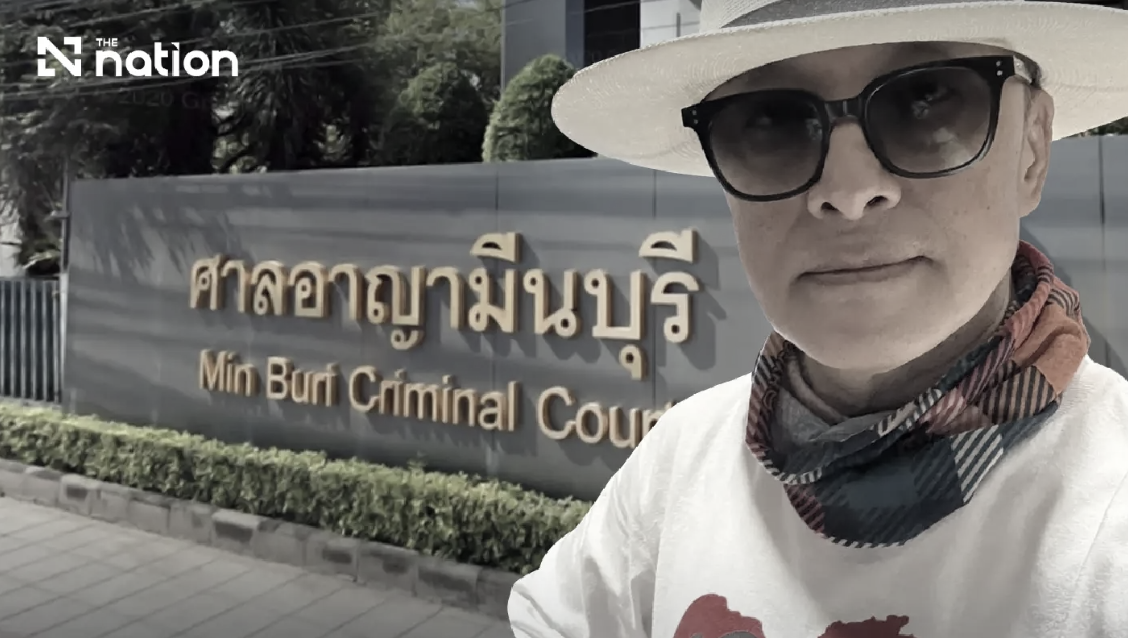
A Bangkok criminal court has sentenced Manasawin Nantasen, the celebrated Thai pop star known professionally as Tik Shiro, to two years in prison following his conviction for drunk driving that resulted in the deaths of two people. The sentencing on Wednesday represents a significant moment in Thailand's ongoing struggle with celebrity accountability, as the entertainer faces concrete consequences for actions that claimed the lives of a 28-year-old woman and her 21-year-old brother in a tragic incident spanning October 2024.
Manasawin rose to international prominence during the late 1980s and 1990s, when his distinctive stage persona—complete with fedora hats, leather jackets, and intricate choreography—earned him comparisons to Michael Jackson and secured him a devoted following across Southeast Asia. His influence during those decades cemented his status as more than a mere entertainer; he became a cultural icon whose image and style defined an era of Thai popular music. The parallels to Jackson's aesthetic were so pronounced that the moniker "Thailand's Michael Jackson" became his lasting descriptor throughout his career spanning multiple decades.
The fatal collision occurred when Manasawin drove his vehicle across a Bangkok bridge in October 2024, striking a stationary motorcycle. The impact killed the woman who had been riding the bike, while the force of the collision ejected her younger brother from the vehicle, propelling him over the bridge railing. Though initially surviving the fall, the 21-year-old succumbed to his injuries while hospitalised, transforming what began as a vehicular accident into a double tragedy. Police investigations determined that alcohol impairment played a central role in Manasawin's inability to avoid the stationary bike.
The immediate aftermath of the crash produced imagery that would dominate Thai social media discourse for weeks. Video footage captured the 64-year-old singer kneeling in apparent grief at the crash scene, an image that proliferated across Thai digital platforms and sparked widespread discussion about wealth, privilege, and judicial accountability. The viral nature of these images elevated the incident beyond a routine traffic tragedy, transforming it into a symbol of broader concerns about whether Thailand's entertainment elite face genuine legal consequences or enjoy de facto immunity.
These concerns reflect a pattern embedded in Thailand's recent history. In 2012, Vorayuth Yoovidhya, heir to the Red Bull fortune, was involved in a Ferrari collision that killed a Bangkok police officer in an affluent neighbourhood. Despite an investigation, charges were never filed, leaving many Thais convinced that extreme wealth afforded protection from accountability. Similarly, in 2001, the son of then-Pheu Thai MP Chalerm Yubamrung was accused of fatally shooting a man during a dispute in a crowded Bangkok nightclub; he was subsequently acquitted based on insufficient evidence. These cases created public perception that Thailand's justice system applies different standards depending on a defendant's social standing and financial resources.
The court's sentencing of Manasawin thus carries symbolic weight extending beyond the individual defendant. Judges acknowledged mitigating circumstances that influenced their decision, noting that the singer had voluntarily surrendered, cooperated with authorities, and provided testimony that assisted the investigation. Additionally, Manasawin demonstrated remorse through his attendance at the victims' funeral and by providing financial compensation to the bereaved families—gestures that the court considered meaningful in Thailand's justice calculus.
Despite these considerations, the court imposed substantive punishment alongside the two-year imprisonment term. Authorities permanently revoked Manasawin's driver's licence, effectively ending his ability to operate motor vehicles as a legal matter. The revocation represents a practical acknowledgement of the dangers his intoxicated state created, ensuring that he cannot repeat such conduct. The judge's written statement observed that "the defendant surrendered and provided testimony beneficial to the case," language suggesting that cooperation factored significantly into what might otherwise have been a harsher sentence.
The conviction occurs alongside another celebrity legal matter that reinforces the complexity of entertainment industry accountability in Thailand. Rock musician Sek Loso was released from prison on the same Wednesday, having completed just over one year of a sentence imposed for drug possession and illegal firearm charges. The near-simultaneous resolution of these two high-profile cases within days of each other inevitably invites comparison and raises questions about sentencing consistency and whether Thai courts treat violent crimes and drug offences with comparable severity.
Manasawin's case carries particular significance for Malaysian and Southeast Asian readers monitoring judicial trends across the region. Thailand's entertainment industry maintains substantial cultural influence throughout Southeast Asia, and developments within its legal system signal how regional courts may handle similar circumstances. The conviction demonstrates that even figures of considerable prominence can face prison time for serious traffic offences, yet the relatively modest sentence of two years—combined with the high-profile nature of mitigating factors—also illustrates how Thai courts weigh celebrity status against legal accountability.
The broader implications extend to how Thai society reconciles its desire for equal justice with the complicated reality of celebrity influence. Public opinion, as evidenced by the viral nature of the crash footage and surrounding social media discourse, appears to demand genuine accountability for high-profile figures. This case may represent a watershed moment where pressure from digital connectivity and widespread documentation of incidents makes it considerably harder for the wealthy and famous to escape serious consequences. Future cases will reveal whether the Manasawin precedent genuinely signals a shift toward equal application of law or represents a singular exception within Thailand's existing patterns of selective accountability.

