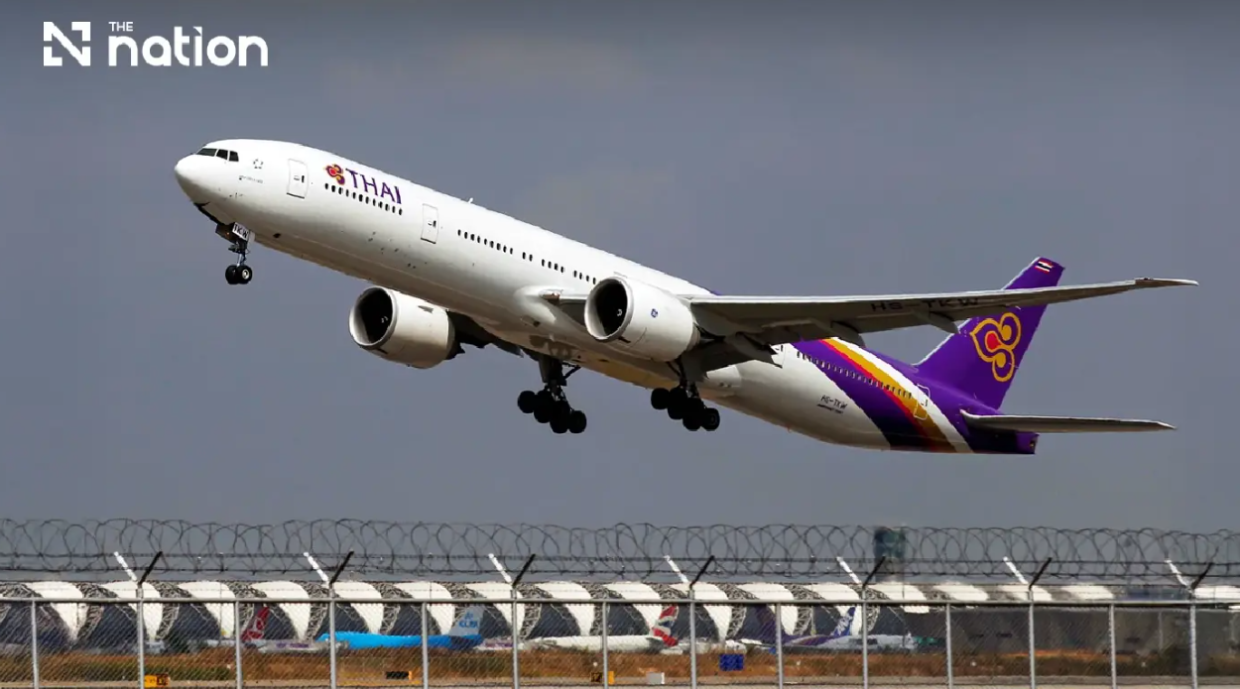
Thai Airways International chief executive Chai Eamsiri has assured Australian authorities of the airline's complete cooperation in the case of a cabin crew member arrested for allegedly attempting to smuggle heroin through Melbourne Airport. The pledge came after a 26-year-old female employee was detained upon arrival on flight TG465 from Bangkok on June 25, with more than one kilogramme of the drug discovered in her baggage at an estimated street value of A$500,000, equivalent to approximately 11.5 million baht.
Chair Eamsiri made clear that the Thai carrier would not attempt to influence or obstruct Australia's legal proceedings, allowing the Australian Federal Police and Australian Border Force to pursue the matter through the courts. The airline is simultaneously conducting its own parallel investigation, recognising the seriousness with which such breaches of conduct must be treated. The chief executive acknowledged that the incident represents a significant reputational blow to Thai Airways, an airline with substantial regional operations and a long history serving the Bangkok-Melbourne route.
The airline has immediately removed the crew member from operational duties pending the outcome of disciplinary proceedings. A fact-finding and disciplinary panel has been appointed to examine the circumstances of the case under standard company procedures, with expectations that the investigation will conclude within seven days or potentially sooner. Should the panel's findings confirm any wrongdoing, the employee faces dismissal as the maximum penalty available under Thai Airways' disciplinary framework.
The incident raises broader questions about cargo and baggage screening protocols across regional aviation networks. While the Civil Aviation Authority of Thailand maintains that screening procedures at Thai airports comply with both CAAT requirements and International Civil Aviation Organization standards, the case highlights the persistent challenges airlines face in preventing individual employees from exploiting their access to restricted areas. The CAAT clarified that security screening focuses primarily on preventing items that pose direct threats to aircraft safety, crew, and passengers, leaving narcotics enforcement to domestic and international law-enforcement agencies.
Chair Eamsiri emphasised that Thai Airways maintains rigorous protocols for its workforce of over 4,000 cabin crew members and more than 1,000 pilots. All employees receive pre-flight briefings covering relevant regulations, prohibited items, and legal restrictions. The chief executive acknowledged, however, that despite comprehensive company rules, controlling the conduct of individual employees remains inherently challenging for any large organisation. In response to this incident, he indicated that relevant departments have been instructed to strengthen supervisory measures and internal monitoring systems.
The Australian charges carry severe consequences for the accused. The Australian Federal Police have charged the woman with two separate offences: importing a marketable quantity of a border-controlled drug and possessing a marketable quantity of a border-controlled drug. Both charges carry maximum penalties of 25 years imprisonment, reflecting Australian authorities' serious approach to large-scale narcotics trafficking. The suspect was remanded in custody on June 26 and is scheduled for a further court appearance on September 14 at Melbourne Magistrates' Court.
For Thai nationals and airline employees seeking to travel to or through Australia, this incident may create additional scrutiny and procedural complications. Chair Eamsiri expressed concern that the case could adversely affect the travel experience of Thai crew members and Thai nationals entering Australia, though he expressed hope that foreign authorities would evaluate each case individually rather than applying generalised suspicions to all travellers of Thai nationality. This concern reflects the broader impact that high-profile cases can have on cross-border movement and perceptions of traveller populations.
The CAAT has taken its own supervisory role seriously, contacting relevant airport operators and Thai Airways to review procedures and monitor the preliminary investigation. The regulator has indicated that should wrongdoing be confirmed, it may take action to revoke or suspend the employee's pilot or crew certificate, protecting Thailand's aviation safety standards and maintaining international confidence in the Thai civil aviation system. This regulatory dimension underscores how individual conduct can have systemic consequences for an entire national aviation sector.
The case underscores the vulnerability of international supply chains to exploitation by individuals with legitimate access to restricted areas. Despite the sophistication of modern airport security systems, the challenge of screening employees who have undergone background checks and possess valid credentials remains formidable. For Southeast Asian airlines operating regional and international routes, this incident serves as a cautionary reminder of the need for continuous investment in employee monitoring and supervision, alongside cooperation with law-enforcement agencies across borders.

