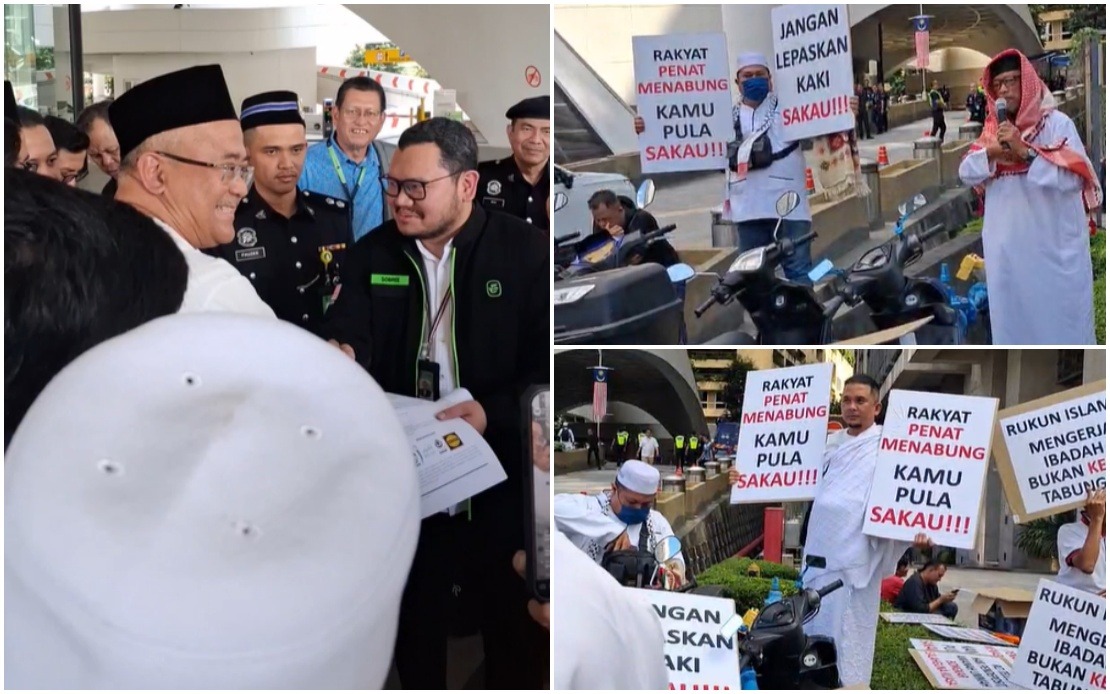
The leadership of Malaysia's MADANI coalition has intensified calls for the authorities to conduct a thorough and independent investigation into the findings of the Royal Commission of Inquiry (RCI) examining Lembaga Tabung Haji's management over the 2014-2020 period, emphasising that the process must remain free from political pressure and interference. Speaking at a solidarity gathering in front of Menara TH in Kuala Lumpur, MADANI chairman Amir Zuhair Abdull Khalid underscored the critical importance of allowing investigative bodies to work without impediment, particularly the Malaysian Anti-Corruption Commission (MACC), which will play a central role in pursuing potential wrongdoing identified by the RCI.
The RCI's comprehensive report has surfaced troubling allegations regarding the governance and management of Tabung Haji, one of Southeast Asia's largest Islamic financial institutions serving millions of Muslim depositors across Malaysia. The findings have prompted serious questions about institutional oversight and the stewardship of funds entrusted to the organisation, making the integrity of any subsequent investigation paramount to public confidence in both the institution and the broader financial system. Amir Zuhair stressed that while the Prime Minister's commitment to taking action is welcomed, sustained political neutrality throughout the investigation phase is essential to ensure credibility and fairness in the eventual outcomes.
Centrally, the RCI's investigation revealed allegations that political interference may have influenced governance decisions and board member appointments during the period under examination. These findings speak to a broader concern about the separation between political interests and institutional management, particularly when public funds and religious trust are at stake. The MADANI chairman cautioned that determining guilt or innocence cannot be done through political discourse or public pressure; rather, such determinations must follow proper legal procedures, with evidence presented in court before impartial judges who can properly weigh the facts and circumstances surrounding any alleged misconduct.
The gravity of the Tabung Haji matter extends beyond typical corporate governance concerns. The institution manages savings accumulated through the Hajj savings scheme, the Amanah Saham Bumiputera, and other investment vehicles that represent the financial security and aspirations of millions of Malaysians. Any mismanagement or breach of fiduciary duty therefore carries profound implications not only for individual depositors but for the broader credibility of Islamic financial institutions across the region. This context frames the MADANI coalition's insistence on transparency and adherence to the rule of law as matters touching the very foundations of institutional trust and religious responsibility.
Amir Zuhair explicitly called for all relevant parties to refrain from exerting pressure on investigators or attempting to influence the direction of the inquiry. He articulated a straightforward position: whoever bears responsibility for wrongdoing must face the courts, and those who are exonerated must be properly vindicated through legitimate legal processes rather than political vindication or media campaigns. This stance reflects a recognition that premature judgments, whether securing convictions or acquittals through political means rather than judicial processes, ultimately undermine the credibility of both the investigation and the Malaysian legal system itself.
Simultaneously, two major Islamic civil society coalitions—the Malaysian Islamic Movement Coalition (HIKAM) and the Coalition of Islamic Non-Governmental Organisations—have submitted a ten-point list of demands to the government, signalling that the broader Muslim community is closely monitoring how authorities respond to the RCI's findings. Their demands encompass immediate legal action against those implicated, recovery of losses and misappropriated assets, full implementation of the RCI's recommendations, and sustained governance reforms under the MADANI administration. This coordinated civil society pressure reflects deep concern within Malaysia's Muslim community about institutional accountability and the protection of religious trust.
HIKAM's membership, comprising the Persatuan Wadah Pencerdasan Umat Malaysia (WADAH), Pertubuhan IKRAM Malaysia (IKRAM), Pertubuhan Lepasan Institusi Pendidikan Malaysia (HALUAN), and the Angkatan Belia Islam Malaysia (ABIM), represents a significant cross-section of Malaysia's Islamic civil society landscape. The involvement of these organisations signals that the Tabung Haji matter has transcended narrow political divisions and emerged as a question of fundamental institutional integrity that commands attention across diverse segments of the Muslim community. Their emphasis on governance reform under the MADANI framework also suggests expectations that the current administration will use the RCI findings as an opportunity to strengthen institutional safeguards and prevent similar problems in future.
The intersection of these various pressures—from political leadership calling for transparent investigations, from civil society demanding accountability and reforms, and from millions of ordinary Malaysians whose savings are implicated in the RCI findings—creates a complex environment in which authorities must navigate carefully. The MACC and other investigative bodies will need to demonstrate both vigour in pursuing credible leads and fairness in according due process to those being investigated. Any perception of political direction or bias in either direction would be corrosive to the legitimacy of the entire process.
Looking forward, the success of the RCI follow-up phase will likely determine not only the immediate fates of individuals implicated in governance failures but also the longer-term trajectory of institutional reform in Malaysia's religious and financial sectors. If investigations proceed professionally and evenhandedly, leading to proportionate accountability and genuine reforms, the episode could ultimately strengthen public institutions. Conversely, if the process is perceived as politically motivated or if investigations are derailed by interference, the damage to institutional credibility and public trust could be substantial and long-lasting. The MADANI coalition's vocal insistence on impartiality therefore serves as both a call to authorities and an implicit warning about the stakes involved.

