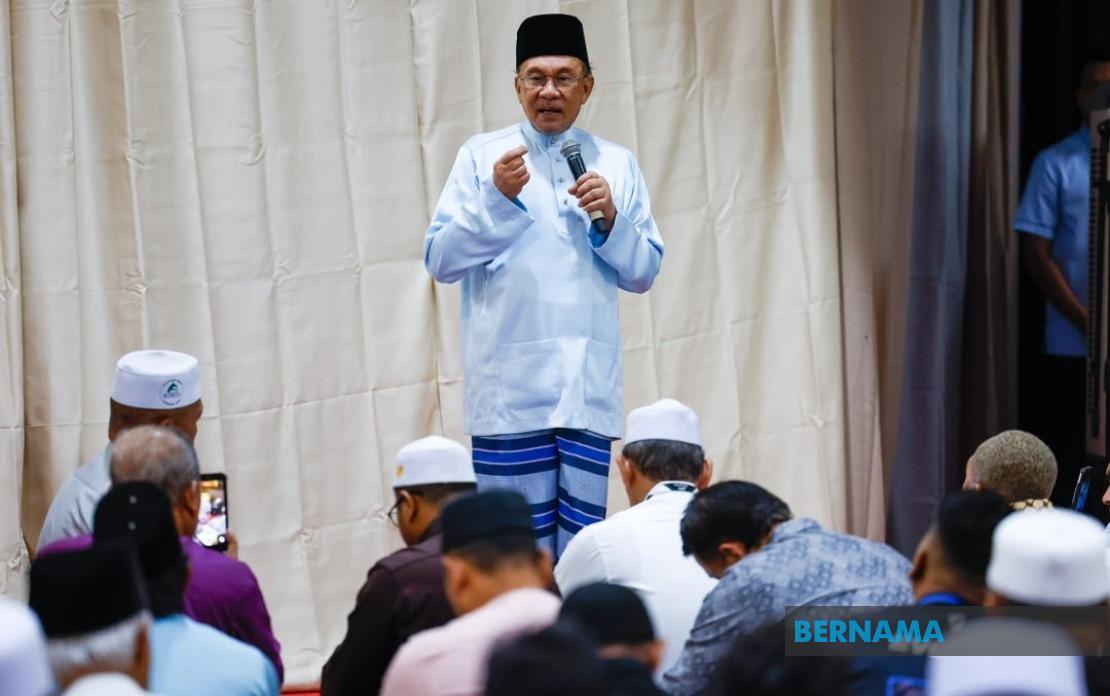
Prime Minister Datuk Seri Anwar Ibrahim has characterised the release of the Royal Commission of Inquiry report on Lembaga Tabung Haji as fundamentally a matter of institutional trust rather than partisan advantage. Speaking at a community gathering in Port Dickson, Anwar emphasised that the decision to make the findings public reflects the government's commitment to protecting the financial interests of Malaysia's Muslim population, who collectively hold substantial savings through the pilgrimage fund management body.
The RCI's investigation uncovered a troubling pattern of regulatory warnings that went unheeded at critical junctures. Bank Negara Malaysia had raised substantive concerns about Tabung Haji's financial health in both 2014 and 2017, yet these early alerts failed to trigger meaningful corrective action by the institution's leadership. This lapse in governance oversight represents precisely the kind of institutional failure that the inquiry was designed to expose and address, lending credibility to the government's determination to bring these findings into the public domain.
Anwar, who simultaneously holds the portfolio of Finance Minister, took particular care to clarify that the RCI report itself was not commissioned or produced under his administration's watch. This distinction carries weight in the Malaysian political context, where accusations of weaponising investigative bodies for partisan purposes are common. By emphasising that the inquiry predated his government, Anwar sought to establish that the decision to release the report reflects professional judgment about public interest rather than political calculation.
The magnitude of the Tabung Haji situation cannot be overstated for Malaysian society. The fund serves as a savings and investment vehicle for millions of Muslim citizens preparing for the Hajj pilgrimage, one of Islam's five pillars. These are not institutional shareholders pursuing profit maximisation but ordinary Malaysians of modest and middle-class means entrusting their financial security to a government-linked body specifically mandated to manage their resources responsibly. Any mismanagement or governance failure at this institution carries profound implications beyond mere financial losses, touching upon the spiritual aspirations and life plans of devout believers.
The government's decision to permit parliamentary debate on August 11 represents a deliberate pivot toward transparency and collective deliberation. By opening the RCI findings to discussion across party lines, rather than attempting to manage the narrative through executive channels alone, the government signals confidence that the facts themselves merit serious consideration. This approach also distributes political responsibility across parliament rather than concentrating it within the executive, a structural choice that may reflect awareness of the report's potentially damaging revelations about institutional failures that span multiple administrations.
For Malaysian depositors and their families, the implications of Tabung Haji's governance failures extend well beyond financial statements and audit reports. Many Malaysians have structured their life savings around the expectation that Tabung Haji would reliably manage contributions intended for pilgrimage expenses. Breakdowns in regulatory vigilance and organisational accountability directly compromise the ability of these individuals to fulfil a central religious obligation at a chosen time in their lives. This constituency, which crosses ethnic and educational lines within Muslim Malaysian society, has a legitimate interest in understanding what went wrong and how future failures might be prevented.
The political landscape surrounding this issue reveals interesting tensions within Malaysia's governance framework. While releasing critical reports about institutional failures serves the public interest, doing so also carries political risk if opponents can credibly frame the government as highlighting past administrative shortcomings without presenting convincing solutions. Anwar's framing of the report release as non-political attempts to preempt such criticism by appealing to shared values of institutional accountability and fiduciary responsibility that transcend partisan boundaries.
The 2014 and 2017 Bank Negara warnings deserve particular scrutiny as they represent the formal regulatory system functioning as intended, with supervisory bodies identifying problems and communicating them through proper channels. When such warnings fail to generate substantive response, the institutional breakdown extends beyond any single administrator to implicate the effectiveness of Malaysia's financial regulatory architecture itself. This broader systemic question may prove more significant in the long term than partisan attribution of blame.
Parliamentary debate on the RCI findings will likely grapple with difficult questions about governance structures, board composition, management accountability, and the role of oversight bodies. These discussions carry implications for multiple government-linked investment vehicles and statutory authorities that manage public or quasi-public funds. If Tabung Haji's experience reveals systematic gaps in Malaysia's institutional monitoring capabilities, the remedial responses may extend considerably beyond this single case.
The timing of the report release and parliamentary discussion carries its own significance. Occurring amid electoral activity in some states and broader national political realignment, the decision to proceed with public discussion of institutional failures demonstrates a calculation that transparency serves the government's longer-term credibility more effectively than managed discretion. For Malaysian voters assessing government commitment to accountability and institutional reform, the government's handling of this sensitive matter will provide meaningful evidence of stated commitments to good governance.

