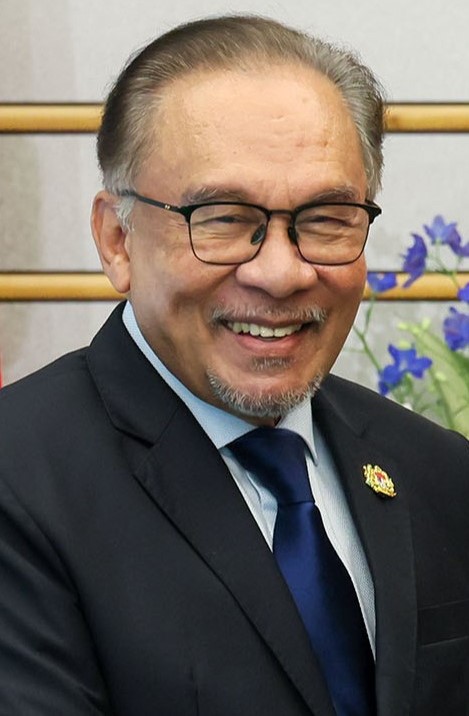
Tengku Datuk Seri Zafrul Tengku Abdul Aziz, who serves as a senior political adviser to Malaysia's Prime Minister, has formally signalled his intention to contest a parliamentary seat in Selangor during the 16th General Election (GE16). The proposal represents a notable development in the political landscape as the nation edges closer to the next general election cycle, with prominent figures from the federal apparatus repositioning themselves for electoral contests.
The Selangor political arena has traditionally served as a proving ground for ambitious politicians seeking to elevate their national profiles. As the country's most populous state and economic powerhouse, the state commands significant influence in determining overall election outcomes. Tengku Zafrul's decision to pursue a Selangor seat reflects the strategic importance the political establishment continues to place on this particular battleground, where multiple coalitions maintain competitive strength and voter demographics remain dynamic and diverse.
Tengku Zafrul's role as a senior adviser to the Prime Minister positions him within the inner circle of government decision-making. His background and proximity to executive power have shaped his profile among both party leadership and the broader political establishment. The move from an advisory capacity to direct electoral participation underscores a pattern observed across Malaysian politics, where trusted advisers frequently transition into elected office to deepen their influence and validate their standing through popular mandate.
The timing of this proposal carries implications for coalition politics and internal party calculations. GE16 will determine the composition of parliament for the subsequent five-year term, making candidate selection a matter of considerable strategic deliberation among party machinery. Selangor's parliamentary seats remain hotly contested, with multiple constituencies swinging between different coalitions in recent electoral cycles, reflecting the state's role as a genuine competitive arena rather than a guaranteed stronghold for any single faction.
For Malaysian voters in Selangor, such candidacies from federal-level figures often come with expectations regarding resource allocation, infrastructure development, and direct access to decision-making authority. Candidates with established connections to the Prime Minister's office traditionally leverage such relationships to deliver tangible benefits to their constituencies, creating a transactional dimension to electoral politics that resonates with pragmatic voter considerations. However, federal connections alone cannot guarantee electoral success without robust ground-level campaign organisation and responsiveness to constituency concerns.
The broader context of GE16 includes emerging economic pressures, cost-of-living anxieties, and infrastructure development priorities that will dominate campaign discourse. Selangor voters, particularly those in rapidly urbanising suburban areas and expanding township developments, have demonstrated increasing sophistication in evaluating candidate credentials beyond party affiliation. Local issues such as traffic congestion, housing affordability, and service delivery often outweigh national political narratives in determining voting patterns at the state level.
Tengku Zafrul's proposal must navigate the internal party selection mechanisms that govern candidate allocation. Malaysian political parties employ various methods for choosing electoral candidates, from consensus-based approaches within divisional structures to more formal nomination procedures. His standing as a senior government adviser may facilitate his candidacy, yet party machinery ultimately determines final endorsement, and established local figures or incumbent representatives may already hold advantages in certain constituencies.
The Selangor selection process will reveal important signals about coalition dynamics and the balance of power between federal authorities and state-level party structures. Whether Tengku Zafrul receives nomination approval, and which specific constituency he contests, will indicate how current political alliances prioritise integrating federal-level figures into state electoral contests. These decisions often reflect deeper calculations about coalition stability and the relative influence of different factional groupings within parliamentary formations.
From a Southeast Asian perspective, Malaysia's evolving political landscape continues to attract regional attention. The country's competitive electoral system, despite ongoing debates regarding its fairness and transparency, remains notably pluralistic compared to several neighbouring nations. Candidates emerging from executive backgrounds to contest elections represent a continuity in Malaysian political practice, though the degree of government-assisted campaigning and incumbent advantage remains subject to ongoing scrutiny from civil society observers.
Looking forward, the GE16 campaign will test whether candidates with primarily federal-level visibility can effectively translate administrative connections into electoral appeal. Tengku Zafrul's eventual standing, should his candidacy receive approval, will provide a case study in how federal prominence converts into constituency-level persuasion. Selangor voters will ultimately determine whether proximity to Prime Ministerial authority constitutes a compelling reason for electoral support or whether they prioritise alternative considerations when making their polling-day decisions.