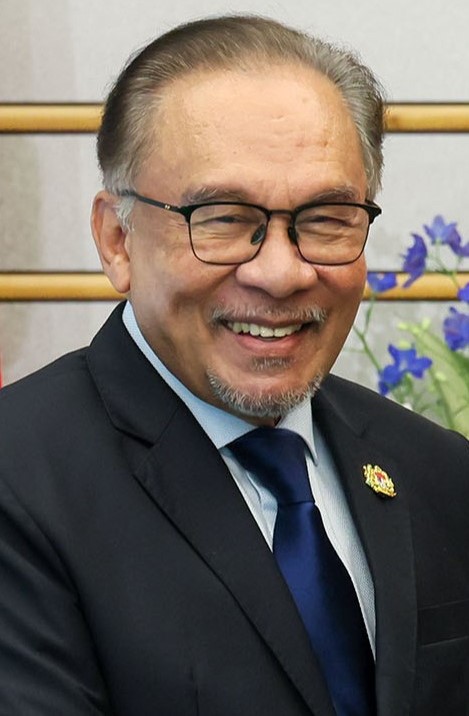
Tengku Zafrul, who previously served as Malaysia's finance minister, has expressed interest in standing as a candidate for a Selangor parliamentary seat in the upcoming general election, signalling his determination to return to the national legislature after a setback two years ago. His willingness to contest again comes as political parties across the country begin mapping out strategies and candidate selections for what many analysts expect to be a closely contested electoral battle in the coming years.
The former minister's previous electoral experience saw him campaign for Umno in the Kuala Selangor constituency during GE15, where he faced defeat at the hands of Dzulkefly Ahmad, who held the seat representing Amanah. The loss represented a significant moment in Tengku Zafrul's political career, coming at a time when the coalition he represented faced considerable electoral challenges across multiple states, particularly in urban and suburban areas where opposition parties had strengthened their ground organisations.
Selangor has emerged as a critical battleground in Malaysian electoral politics over the past decade, given its large population, diverse demographic composition, and proven ability to swing between different political coalitions. The state's importance cannot be overstated—it accounts for a substantial portion of parliamentary seats and serves as a testing ground for political messaging and campaign strategies that parties later deploy nationally. Any politician seeking to build or rebuild a national profile must demonstrate electoral viability in such high-stakes constituencies.
Tengku Zafrul's interest in returning to electoral politics reflects broader patterns within Umno and the larger Barisan Nasional coalition, where senior figures continue to pursue parliamentary representation despite previous electoral disappointments. His background in finance and economics, combined with his ministerial experience, positions him as someone who could appeal to suburban and urban voters concerned with economic management and financial stability—constituencies that have become increasingly competitive in recent election cycles.
The Kuala Selangor constituency itself remains notable in Malaysian politics as a mixed urban-rural seat that encompasses coastal areas, residential developments, and agricultural zones. The diversity of this constituency's demographic profile means that candidates must address concerns ranging from flooding and coastal erosion to urban congestion and livelihood issues faced by farmers and fishermen. Tengku Zafrul's previous campaign in this area would have given him valuable insights into local grievances and voter priorities.
Dzulkefly Ahmad, who currently represents Kuala Selangor, brings his own political strength to the seat as an Amanah vice-president and member of the opposition coalition. His tenure has been marked by active constituency engagement and positioning himself as an advocate for local development concerns. Should Tengku Zafrul face him again in GE16, it would represent a rematch between two well-resourced candidates with distinct political backing and messaging strategies.
The timing of Tengku Zafrul's signalled interest in contesting comes amid broader discussions within Malaysian political circles about the composition of candidate lists and how different factions within coalitions will be represented in forthcoming elections. Party strategic committees must balance considerations of incumbency, electoral viability, demographic representation, and factional interests when finalising nomination lists—a complex calculus that determines which figures advance their political ambitions and which see their prominence diminish.
For Umno specifically, the selection of experienced figures like Tengku Zafrul for winnable or highly competitive seats forms part of the party's strategy to recapture constituencies lost during the volatile elections of recent years. The party's performance in GE15 left it with work to do in numerous urban and suburban areas, and deploying candidates with ministerial credentials and policy expertise represents one approach to rebuilding support among middle-class and professional voters who may have shifted allegiances.
Selangor's political evolution has tracked broader Malaysian trends, with voter preferences shifting toward parties perceived as less tainted by corruption scandals, more responsive to development concerns, and better organised at the grassroots level. The state's opposition-led government has maintained relatively solid support despite internal tensions, forcing Barisan Nasional to field increasingly competitive candidates in previously held seats if the coalition hopes to regain control of the state assembly and increase its parliamentary representation.
The prospect of Tengku Zafrul's candidacy in GE16 also raises questions about how voters in constituencies like Kuala Selangor weigh previous electoral outcomes and incumbency advantages against national party reputation and individual candidate profiles. Some voters reward incumbents with additional terms, while others view each election as an opportunity to register preferences anew based on evolving circumstances and changed political circumstances since the previous contest.
As political parties continue mapping out their strategies for the next general election, figures like Tengku Zafrul will test whether previous defeats in specific constituencies can be reversed through subsequent campaigns, improved campaign machinery, or changed electoral conditions. His explicit interest in returning to parliamentary politics suggests confidence in his political viability, even as broader structural challenges facing his coalition persist across different regions of the country.