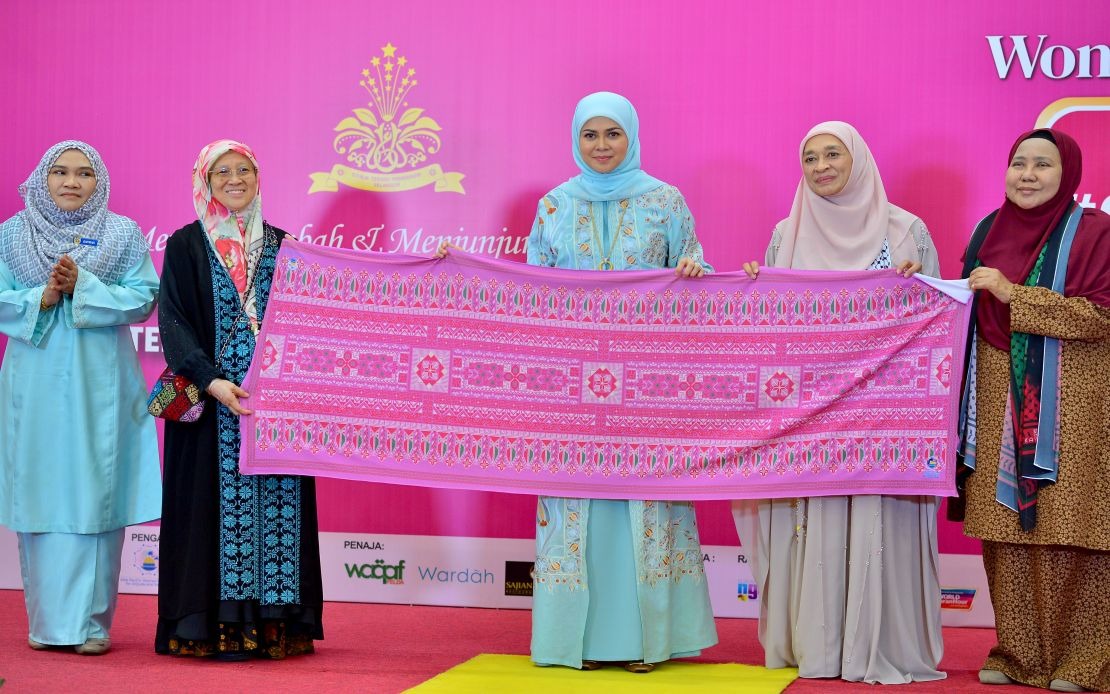
Tengku Permaisuri Norashikin of Selangor formally inaugurated the Women Summit & Women #QuranHour 2026 programme at Dahlia Auditorium within Sultan Salahuddin Abdul Aziz Shah Mosque in Shah Alam on June 24, signalling renewed institutional support for faith-based women's empowerment initiatives in the state. The royal patronage underscores the significance of the event, which aims to position Quranic education as a cornerstone of character development and emotional resilience for Malaysian women navigating contemporary challenges.
The gathering assembled approximately 400 women participants representing Selangor alongside delegations from Singapore and Indonesia, reflecting the programme's aspirations toward regional engagement and the export of Malaysia's Islamic educational frameworks. This cross-border composition suggests that organisers view the initiative not merely as a local endeavour but as a template for broader Southeast Asian collaboration on issues of faith, identity and women's empowerment—a positioning that carries implications for how Malaysia positions itself as a knowledge hub within the Muslim-majority region.
Central to the programme's messaging is the thematic frame "Women of Grit," a deliberate acknowledgment of Palestinian women's fortitude amid the humanitarian crisis in Gaza. By anchoring the summit's philosophical foundation to the experiences of women enduring conflict, displacement and profound loss, organisers articulate a vision of spiritual resilience that transcends abstract religiosity and grounds itself in concrete, observable human suffering. This framing allows participants to connect scriptural principles with the material realities facing vulnerable populations globally, fostering empathy and drawing explicit parallels between Palestinian struggles and the everyday challenges facing Malaysian women.
The programme's conceptual architecture, developed by director Gharizah Hashim and coordinated by organisers including the Yayasan Warisan Ummah Ikhlas (WUIF) and the Asia Pacific Women's Coalition for Al-Quds and Palestine (ApWCQP), positions Quranic study as a mechanism for cultivating what might be termed "emotional fortitude with spiritual anchoring." Gharizah articulated this vision during media engagement, emphasizing that "Women of Grit" encompasses not only the capacity to endure hardship but also the development of psychological equilibrium, discernment in decision-making and forward momentum sustained by religious guidance—a comprehensive approach that integrates mental wellness discourse with theological instruction.
The participation of specialized experts amplifies the programme's intellectual credibility. The attendance of 2014 International Quran Recitation Champion Tirmizi Ali and Associate Professor Dr Nora Mat Zin from International Islamic University Malaysia's Department of Psychiatry reflects an interdisciplinary approach that fuses Islamic scholarship with psychological expertise. This combination signals recognition that women's spiritual development cannot be addressed through theological instruction alone; contemporary programming must acknowledge mental health dimensions and integrate evidence-based psychological frameworks alongside religious teachings to address the multifaceted pressures facing modern women.
A particularly significant development is the announced expansion of the Women Summit's reach through the Rumah Ngaji network, a nationwide system of free Quranic learning circles sustained by local community patronage. According to WUIF chief executive officer Marhaini Yusoff, the presence of Rumah Ngaji representatives from multiple Malaysian states at the Shah Alam summit marks the initiation of a more structured, decentralized movement to democratize Quranic education and women's spiritual formation. This expansion strategy suggests that organisers recognize the limitations of centralized, event-based programming and are investing in sustainable, locally-rooted infrastructure for women's religious education.
The federation model represented by Rumah Ngaji carries particular relevance for Malaysian policymakers concerned with women's agency and social cohesion. By establishing free learning spaces sustained through community sponsorship rather than government subsidy, the network potentially builds social capital at the grassroots level while maintaining religious authenticity—avoiding the perception that women's Islamic education represents state indoctrination. The decentralized approach allows individual communities to contextualize Quranic teachings within their specific cultural and social environments, potentially increasing the programme's resonance and relevance.
Marhaini's emphasis on scaling the programme to state level through Rumah Ngaji demonstrates strategic thinking about movement building beyond ceremonial occasions. Rather than treating the Shah Alam summit as a culminating event, organisers position it as an inflection point that catalyzes sustained, distributed programming across Malaysia's thirteen states. This approach acknowledges demographic and geographic realities—not all women can travel to Kuala Valley for centralized events—and recognizes that persistent social change requires sustained institutional infrastructure beyond periodic high-profile gatherings.
The programme's articulated objectives centre on producing women possessed of "clear life purpose, compassion and resilience," suggesting an understanding that women's empowerment in the Malaysian context requires more than economic participation or political representation. Instead, organisers posit that spiritual grounding—construed as deep engagement with Islamic scriptural tradition—provides essential psychological and moral resources for women to navigate family responsibilities, professional demands and broader social pressures. This emphasis on internal spiritual development as a precondition for effective social contribution represents a distinctive approach within Malaysian women's empowerment discourse.
The regional composition of participants, including women from Singapore and Indonesia, raises questions about the portability of Malaysian Islamic education models across Southeast Asia and the comparative advantages Malaysia might leverage in religious education markets. If the Women #QuranHour 2026 programme successfully attracts regional participants and generates replicable frameworks, it positions Malaysian Islamic institutions as exporters of soft power—a form of cultural and religious influence increasingly significant in an era when nation-states compete for regional leadership through ideational frameworks rather than military or economic dominance alone.
The royal patronage extended by Tengku Permaisuri Norashikin carries symbolic weight within Malaysian hierarchies of legitimacy. Royal attendance at religious programmes signals state-level validation of faith-based women's empowerment initiatives, potentially encouraging emulation by other state governments and suggesting that women's spiritual formation constitutes a matter of constitutional concern rather than purely private religious activity. This positioning may facilitate government support for Rumah Ngaji expansion and create policy space for community-based Islamic education programming.
Looking forward, the scalability of the Women #QuranHour framework to state level will depend substantially on whether the Rumah Ngaji network can sustain the pedagogical quality demonstrated at the Shah Alam summit while operating under resource constraints characteristic of community-sponsored initiatives. Success will require developing trainer capacity, establishing curriculum standards, and ensuring that locally-managed Quranic circles maintain intellectual rigor and contemporary relevance—challenges that have historically complicated the translation of successful pilot programmes into durable, nationwide networks.

