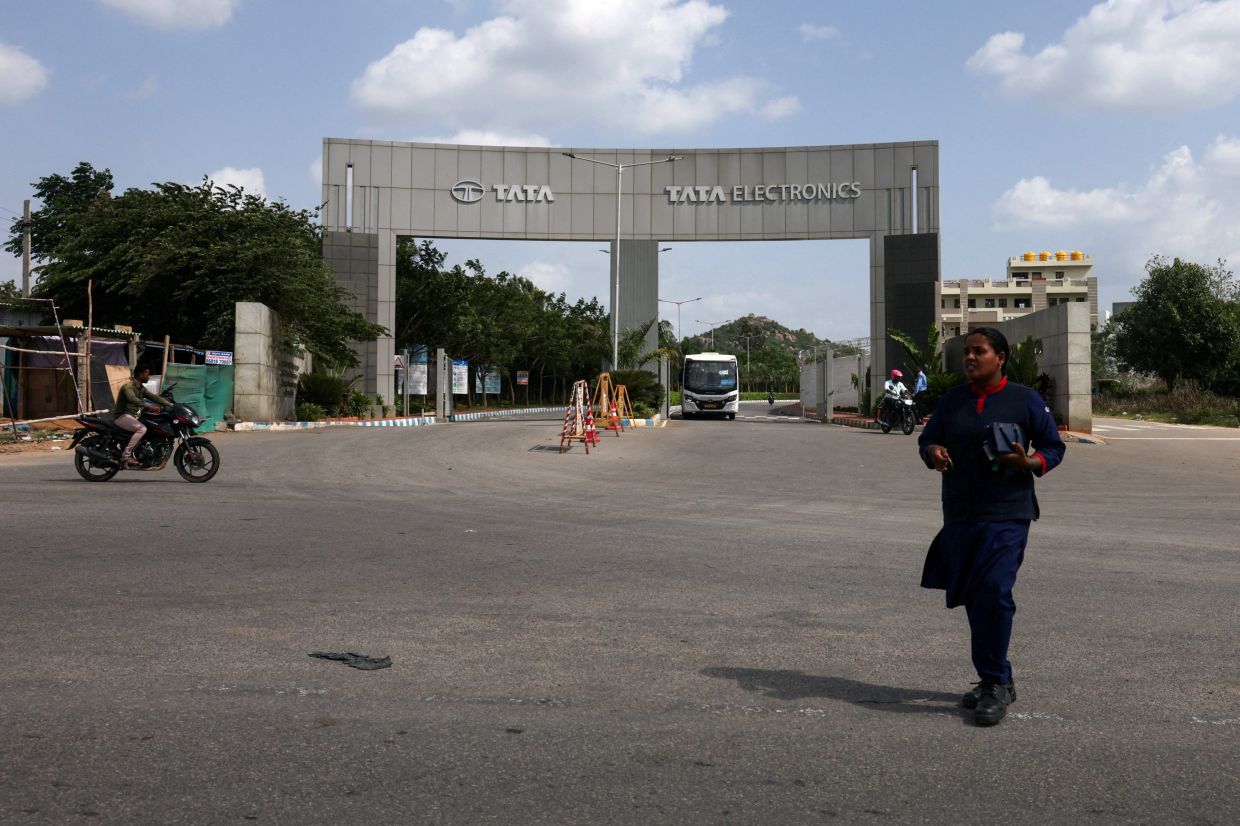
Tata Electronics acknowledged on Monday that it had identified a recent cybersecurity incident affecting some of its systems, following claims by the ransomware group World Leaks that it had obtained and published confidential component designs and specifications belonging to major clients Apple and Tesla. The disclosure marks a significant setback for one of India's most strategically important manufacturing partners, particularly as New Delhi seeks to diversify global supply chains away from China and establish itself as a critical hub for electronics production.
World Leaks has posted more than 200,000 files totalling over 630 gigabytes on the dark web, according to security researchers who reviewed the stolen data. The files reportedly include component design documents, manufacturing specifications, employee emails spanning several years, event logs, and copies of passports belonging to staff members from both Indian and foreign nationals. While Tata Electronics stated in its response to Reuters that it deployed response protocols immediately and that the incident had not disrupted operations across any of its business lines, the breadth and sensitivity of the exposed material raises serious questions about the security of production environments handling cutting-edge technology.
The compromised data appears to contain highly sensitive intellectual property from both tech giants. For Apple, researchers identified 181 files and folders in the World Leaks database, including what purports to be a 52-page document marked with Apple's proprietary classifications that details quality inspection standards for iPhone circuit board components. Additionally, 33 files and folders reference Hosur, the location of Tata's primary iPhone assembly facility in Tamil Nadu state, suggesting the breach may have exposed production-specific information. For Tesla, the stolen materials allegedly include documents classified as trade secrets detailing components such as the chargeport controller for the Model Y SUV, along with drawings and specifications related to Project Highland, Tesla's internal codename for its redesigned Model 3 sedan.
Security researchers who examined the data dump confirmed its presence on the dark web since at least June 10. Indian cybersecurity analyst Rajshekhar Rajaharia, who reviewed the files and has previously provided advisory services to Indian law enforcement on cyber incidents, stated that a search for "Tesla" returned documents including what appeared to be manufacturing specifications and an assembly document dated May 2025. Many files carried explicit footer warnings indicating they contained proprietary and confidential information belonging to either Apple or Tesla, suggesting the material was extracted from secure company systems rather than being publicly available information.
Apple launched a full investigation into the breach and has reportedly received a ransom demand from the attackers, according to sources familiar with the matter. However, Apple declined to comment when contacted by Reuters, maintaining its typically tight-lipped approach to security incidents. Tesla similarly did not respond to requests for comment. Tata Electronics refused to discuss the ransom demand aspect of the incident, limiting its public statements to confirmation that its response protocols had been activated and that business operations remained unaffected. The Indian Computer Emergency Response Team, the government unit under the Ministry of Electronics and Information Technology responsible for overseeing cyber incidents, did not immediately respond to inquiries about the breach.
This cybersecurity incident represents the latest in a series of challenges facing Tata's position as a critical supplier to global technology leaders. The company is emerging as one of Apple's most important manufacturing partners outside China, a role that sits at the heart of Prime Minister Narendra Modi's stated ambition to transform India into a global electronics manufacturing powerhouse. Tata currently accounts for approximately one-third of Apple's iPhone production capacity in India, with Foxconn accounting for the remainder. The strategic importance of this relationship cannot be overstated, as it signals to multinational corporations considering supply chain diversification that India offers viable alternatives to traditional manufacturing hubs in Southeast Asia and China.
However, Tata's credibility has been strained by multiple challenges in recent months. Beyond the current cyber breach, the company has faced scrutiny over alleged contamination of farmlands near one of its iPhone parts manufacturing facilities in the country. Additionally, Tata's British subsidiary Jaguar Land Rover experienced a significant cyberattack last year that resulted in a six-week suspension of production output, demonstrating that the group's cybersecurity vulnerabilities are not isolated to its Indian operations. These cumulative incidents raise questions about whether Tata possesses adequate safeguards and institutional processes to protect the intellectual property of its premium clients.
World Leaks, the ransomware group claiming responsibility for this breach, has previously been linked to other high-profile cyberattacks, including a 2023 incident targeting the athletic company Nike. The group operates exclusively on the dark web, where its website is inaccessible to conventional search engines and law enforcement monitoring tools. This operational model enables the group to conduct extortion activities with reduced risk of immediate detection or intervention. The fact that researchers could access and review the alleged Tata data dump suggests that World Leaks is actively promoting its theft to demonstrate credibility and pressure victims into meeting ransom demands.
For Malaysian and Southeast Asian stakeholders, this breach carries important implications for regional supply chain security and competitiveness. As India accelerates its push to attract multinational manufacturing partners seeking to establish production bases outside China, cybersecurity incidents such as this one underscore the critical importance of robust digital infrastructure and institutional governance. Malaysia, Vietnam, Thailand, and Indonesia are all competing with India to attract similar manufacturing investments. Companies considering where to establish or relocate production facilities will weigh not only labour costs and infrastructure quality but also demonstrated ability to protect proprietary information and maintain uninterrupted operations.
The incident also highlights the increasingly sophisticated nature of ransomware operations targeting supply chain operators. Rather than seeking purely financial gain through ransom payments, groups like World Leaks extract maximum value by threatening to publish stolen data, thereby creating pressure on victims' clients and partners. In this case, both Apple and Tesla face potential exposure of trade secrets that could provide competitors with valuable insights into product design, manufacturing processes, and supply chain vulnerabilities. The breach thus extends beyond Tata's direct relationship with its clients to potentially impact global competitive dynamics in electric vehicles and consumer electronics.
Government authorities in India, particularly the Ministry of Electronics and Information Technology, face pressure to strengthen cybersecurity standards across the electronics manufacturing sector. As production volumes increase and more sensitive technologies are processed on Indian soil, the regulatory framework governing data protection and incident response protocols will require regular updating. The absence of immediate comment from India's Computer Emergency Response Team suggests either a delayed institutional response or careful deliberation about how to address what is manifestly a significant breach affecting clients with global operational reach.
The Tata incident demonstrates that even companies at the forefront of India's manufacturing ambitions remain vulnerable to modern cyber threats. As the nation seeks to establish itself as a trustworthy alternative to Chinese manufacturing, incidents involving the theft of client intellectual property carry disproportionate reputational costs. Both Apple and Tesla will likely conduct comprehensive security audits of their supply chain relationships with Tata, potentially leading to demands for enhanced security protocols, increased investment in cybersecurity infrastructure, or in worst-case scenarios, diversification of production away from Tata facilities. The coming weeks will reveal whether the stolen data materializes in competitor hands or whether law enforcement and private sector investigations can mitigate the damage.

