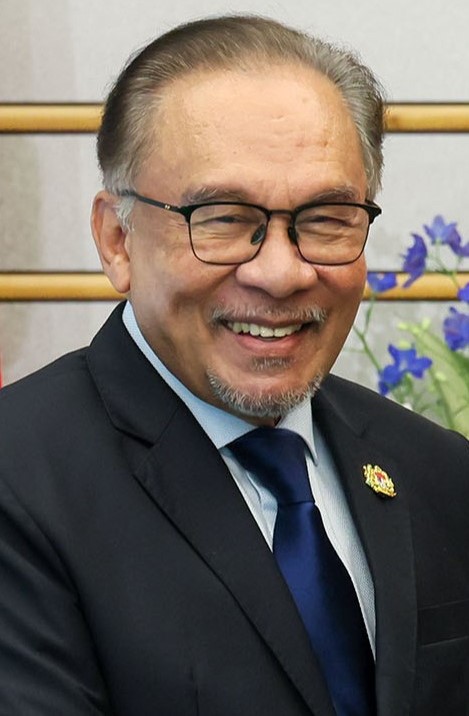
Malaysia's psychiatric landscape has lost a towering figure with the death of Tan Sri Dr M. Mahadevan, who passed away yesterday evening at his residence in Ukay Heights, Ampang, succumbing to complications affecting his heart and lungs. The 96-year-old, widely acknowledged as the architect of Malaysia's modern mental health system, breathed his last surrounded by family members at approximately 7.45 pm on June 15. His passing marks the end of an extraordinary era of medical leadership that spanned more than six decades and fundamentally reshaped how the nation approaches psychiatric care and psychological wellbeing.
Dr Mahadevan had been in declining health for some time, receiving medical treatment at a private facility in Ampang over the past month following a cardiac episode compounded by pulmonary infection. His condition had deteriorated sufficiently to warrant intensive care admission, but in keeping with his character and preferences, he elected to return to his home to spend his final days with loved ones rather than remain hospitalised. According to his carer, Thenagaran, the distinguished physician had endured extended periods of illness in recent years but maintained remarkable dignity throughout his decline.
The funeral arrangements reflect the family's wish to provide the public with an opportunity to pay respects to a man whose influence extended far beyond medical circles. Members of the public are invited to visit the family residence at No. 32, Lorong Lee Hin Neo 1, Ukay Heights, between 10 am and 1 pm, and again from 3 pm to 6 pm on both June 16 and 17. The funeral service itself will commence at 9.30 am on Thursday, June 18, at the same location, with the procession thereafter proceeding to the Sentul Hindu Crematorium at noon.
Dr Mahadevan's contributions to Malaysian psychiatry cannot be overstated. He founded and presided over the Malaysian Psychiatric Association, serving as the country's chief psychiatrist during the transformative 1980s when mental health infrastructure was beginning to mature. His appointment as the first director of what would become Hospital Bahagia Ulu Kinta, previously known as the Central Mental Hospital, proved instrumental in establishing professional standards and protocols that would influence psychiatric practice nationwide. These institutional foundations remain cornerstones of mental healthcare delivery in Malaysia today.
His intellectual reach transcended Malaysia's borders in remarkable ways. The internationally renowned Harvard University honoured his scholarly contributions, particularly his pioneering work in clinical hypnotherapy, by establishing a travel scholarship programme bearing his name. This recognition underscored his status as a figure of genuine consequence within global psychiatric circles, not merely a respected regional practitioner. He became the first Malaysian to hold the presidency of the Asian Branch of the International College of Psychosomatic Medicine, a distinction that reflected both his technical expertise and diplomatic standing within the international medical community.
Dr Mahadevan's professional journey reveals an individual shaped by international exposure and deep commitment to national development. Born on September 9, 1929, he obtained his foundational education at St John's Institution in Kuala Lumpur before pursuing medical studies at Bangalore, India, completing his training in 1961. His medical education subsequently took him to University College Dublin in Ireland, where he gained exposure to Western psychiatric methodologies and research paradigms. This combination of Indian medical training and Irish clinical experience equipped him with a distinctive perspective that he would leverage when developing Malaysia's psychiatric framework.
The significance of his decision to return to Malaysia in 1967 cannot be understated. At the express request of the nation's first Prime Minister, Tunku Abdul Rahman Putra Al-Haj, Dr Mahadevan committed himself to building the country's mental healthcare infrastructure from nascent foundations. This was a period when psychiatric services in Malaysia were rudimentary compared to developed nations, and public understanding of mental illness remained limited. His return represented not merely a career choice but a deliberate commitment to nation-building during a critical formative period.
Dr Mahadevan's legacy extends beyond institutional structures and professional associations. He fundamentally elevated public and governmental consciousness regarding mental health as a legitimate medical discipline worthy of serious resource allocation and professional development. During an era when psychiatric conditions carried profound stigma, his advocacy helped shift discourse toward clinical understanding and compassionate treatment. His work demonstrated that Malaysia could develop world-class psychiatric services comparable to international standards, a proposition that influenced policymaking and professional recruitment for generations.
The timing of his passing occurs amid a period of renewed global attention to mental health infrastructure, particularly in the aftermath of the COVID-19 pandemic's psychological toll. Malaysia's contemporary mental health challenges—rising suicide rates, increasing awareness of depression and anxiety disorders, and the psychological impacts of economic disruption—would have been familiar concerns to Dr Mahadevan, who advocated throughout his career for greater investment in preventive psychiatry and community mental health services. His warnings about the necessity of comprehensive mental healthcare infrastructure appear increasingly prescient.
For the Malaysian psychiatric community, Dr Mahadevan's death represents the passing of a direct link to the discipline's foundational period in the country. Practising psychiatrists who trained during his tenure or studied under his influence constitute a significant proportion of today's workforce. His mentorship of successive generations of mental health professionals created an intellectual lineage that persists within Malaysian institutions and training programmes. The standards he established, the institutions he shaped, and the professional culture he cultivated continue to define the character of Malaysian psychiatry.
The broader healthcare sector will similarly mark his passing as the conclusion of an exceptional career spanning the transition from colonial to independent Malaysia and forward into the modern era. Dr Mahadevan embodied the possibilities of home-grown expertise and demonstrated that Malaysian medical professionals could achieve international standing while addressing local health challenges. His trajectory from foreign training to national leadership establishment a template that influenced multiple generations of Malaysian physicians and researchers pursuing excellence within their respective disciplines.