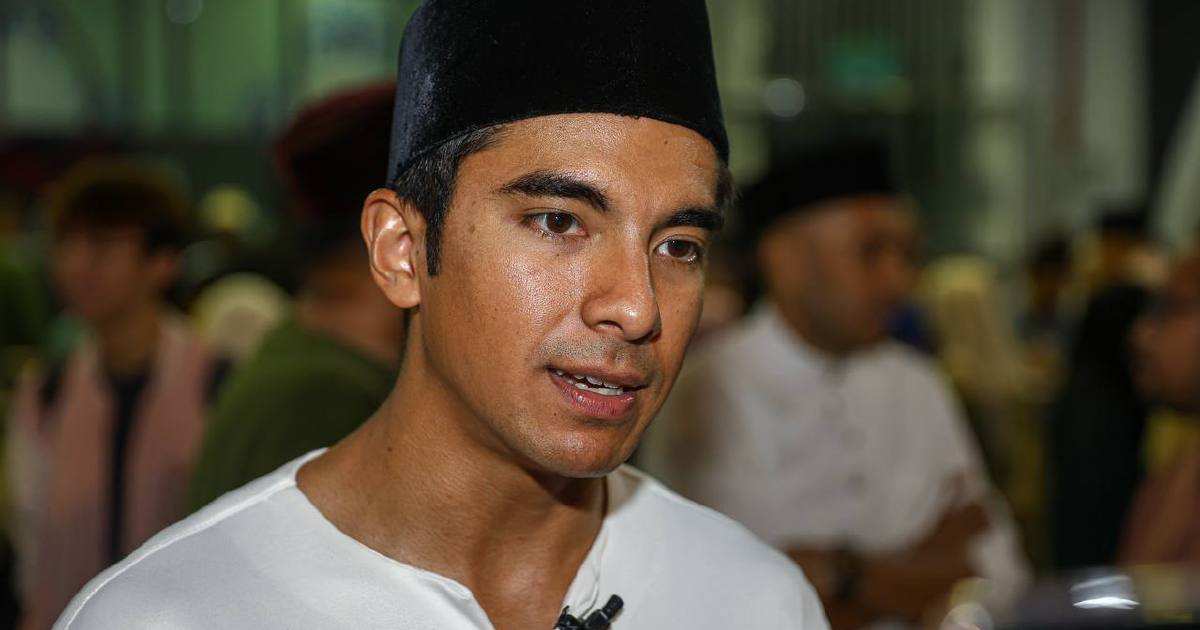
The political fortunes of Syed Saddiq Mokhtar hang in the balance as the Federal Court moves closer to delivering a judgment that will determine the next chapter of the Muar MP's contentious legal journey. The former youth and sports minister has maintained a philosophical demeanor in recent weeks, publicly stating his readiness to accept whatever outcome emerges from the nation's apex court, framing his situation as one ultimately beyond his personal control and surrendered to divine will.
Syed Saddiq's predicament traces back to allegations centred on the financial management of his political party, Muda, which he founded in 2020 as a vehicle for younger Malaysian voters seeking fresh alternatives to the established political order. The accusations involved purported irregularities in the handling of campaign funds and party contributions, matters that drew intense scrutiny from law enforcement authorities and eventually culminated in legal proceedings that have consumed considerable attention within Malaysian political circles.
The case represents far more than a personal challenge for Syed Saddiq; it encapsulates broader tensions within Malaysia's complex political ecosystem regarding youth engagement, party financing transparency, and the accountability mechanisms that govern how political organizations manage resources. As a prominent figure in Prime Minister Anwar Ibrahim's coalition-building efforts, Syed Saddiq's legal status carries implications for the stability of the ruling Pakatan Harapan alliance and the integration of newer political movements within its structure.
Historically, Syed Saddiq emerged as one of Malaysia's youngest lawmakers and ministers, symbolizing a generational shift in political leadership when he first ascended to prominence. His subsequent founding of Muda reflected ambitions to mobilize constituencies dissatisfied with conventional party politics, though the venture encountered substantial organizational and financial challenges that would eventually attract official investigation. The transition from celebrated young political upstart to defendant navigating federal legal proceedings represents a dramatic reversal of trajectory that has fascinated observers monitoring Malaysia's evolving political landscape.
The Federal Court's pending decision carries multiple potential ramifications. A judgment favoring acquittal would rehabilitate Syed Saddiq's standing within ruling coalition circles and potentially revitalize Muda's political prospects. Conversely, conviction could precipitate disqualification from political office, diminish his influence within Pakatan Harapan's deliberations, and undermine the legitimacy of youth-oriented political experiments in Malaysia's competitive electoral environment.
Syed Saddiq's public posture throughout this ordeal has emphasized acceptance and resignation to legal processes, a calculated approach that demonstrates confidence in the judicial system while simultaneously positioning him as a figure committed to democratic norms regardless of personal consequences. This rhetorical stance carries importance for his broader political rehabilitation, signaling to potential supporters and coalition partners that he maintains faith in institutional mechanisms even when facing existential professional uncertainty.
The timing of the Federal Court ruling intersects with broader movements within Malaysian politics, where questions surrounding party financing, democratic participation among younger demographics, and the viability of alternative political vehicles continue attracting substantive debate. Syed Saddiq's case has inadvertently become a proxy for examining these larger structural questions about how Malaysia's political system accommodates generational change and emerging political movements.
Observers have noted that Syed Saddiq's handling of this extended legal battle has evolved noticeably compared to his earlier, more combative public stances. His current measured tone suggests recognition that controlled, dignified presentation before the judiciary may serve his interests more effectively than defensive confrontation. This strategic adjustment reflects maturation in political instinct, even as the substantive outcome remains genuinely uncertain.
The broader Malaysian political community has maintained relatively restrained commentary during this period, with most stakeholders adopting wait-and-see positions rather than committing prematurely to interpretations of events. This cautious approach reflects awareness that Federal Court decisions carry significant implications for political calculations extending well beyond individual personalities or specific party interests.
For Southeast Asian observers tracking Malaysia's political development, the case illustrates how governance and accountability mechanisms function within a competitive multiparty democracy where institutional integrity remains contested terrain. The way Malaysian courts ultimately resolve this matter will communicate important signals about judicial independence and the mechanisms through which political legitimacy becomes established or withdrawn.
As the Federal Court prepares its pronouncement, stakeholders across Malaysia's political spectrum have settled into waiting mode, cognizant that whatever judgment emerges will reverberate through coalition dynamics, party organizational structures, and youth political participation patterns. Syed Saddiq's repeated invocations of faith and acceptance suggest he has moved toward psychological preparation for either scenario, though the professional and personal stakes involved remain extraordinarily substantial for the Muar representative and his political organization.

