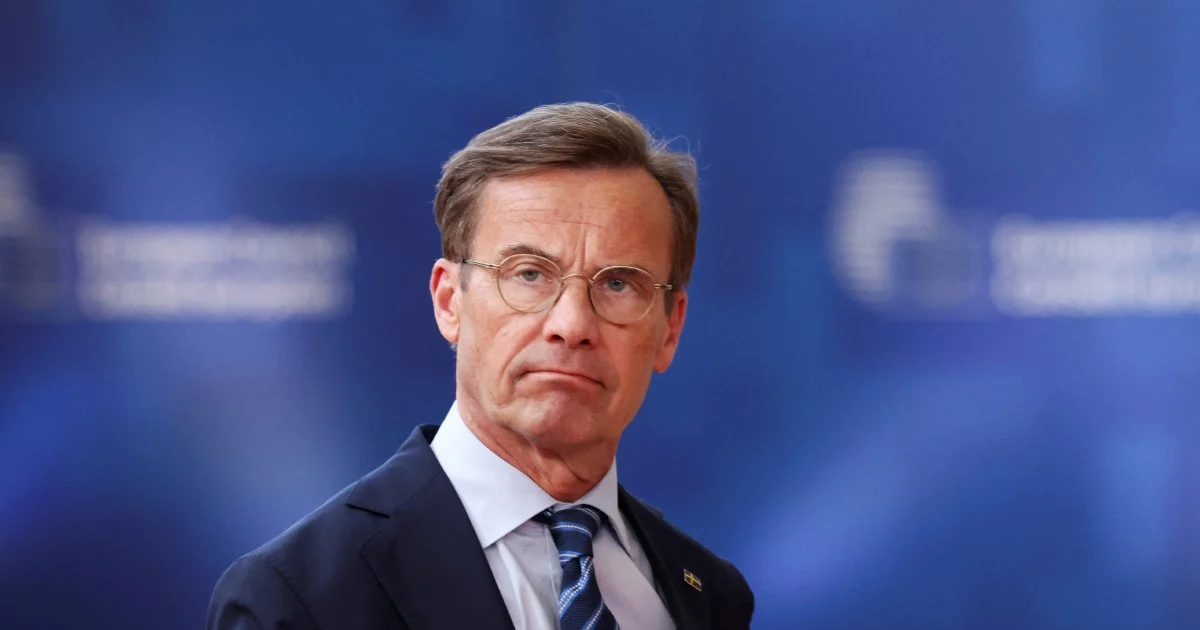
Swedish Prime Minister Ulf Kristersson has demonstrated a remarkable capacity to navigate political turbulence, emerging from successive controversies with his position largely intact despite mounting scrutiny. As the Nordic nation heads toward legislative elections in three months, fresh corruption allegations have surfaced against the prime minister, marking another chapter in what has become a defining feature of his four-year term in office.
The trajectory of Kristersson's premiership reveals a leader whose ability to deflect criticism and maintain political support has consistently outpaced the severity of the allegations levelled against him. From his first year in office through to the present, a succession of scandals has threatened to undermine his administration, yet each time the controversy has failed to generate sufficient momentum to dislodge him from power. This pattern raises important questions about Sweden's political resilience, media landscape, and the threshold at which scandals genuinely threaten ministerial survival in established democracies.
What makes Kristersson's situation particularly noteworthy for regional observers is the contrast with political accountability standards in other nations. While Southeast Asian democracies have witnessed leaders forced from office following corruption allegations, the Swedish experience demonstrates how institutional frameworks, coalition dynamics, and public sentiment can insulate a sitting prime minister from the consequences that might prove fatal elsewhere. The structural safeguards within Swedish governance appear to function as a buffer, limiting the political damage that scandals can inflict.
The timing of these new allegations, arriving so close to the electoral calendar, presents a strategic challenge for opposition parties who must convince voters that the concerns warrant electoral punishment. In previous instances, Kristersson and his coalition partners have successfully argued that the accusations lacked sufficient substance or that the political machinery should not be disrupted during crucial governance periods. Whether this defensive strategy will prove effective once more depends significantly on how the Swedish electorate views the credibility of these fresh charges.
The composition of Kristersson's governing coalition, which includes the right-wing Sweden Democrats, has itself been a source of controversy. The party's controversial positions and historical associations have generated international scrutiny, yet the coalition has maintained sufficient parliamentary cohesion to govern effectively. This stability suggests that coalition members have calculated that remaining within government offers greater strategic advantage than risking electoral uncertainty through collapse.
For Malaysian readers assessing their own political landscape, the Swedish experience offers instructive lessons about how democratic systems respond differently to executive misconduct. Malaysia's recent history demonstrates a more volatile approach to political accountability, where electoral dynamics and public pressure can rapidly transform marginal scandals into watershed moments. The contrast underscores how parliamentary traditions, constitutional frameworks, and institutional maturity shape whether controversies merely generate headlines or fundamentally alter political equations.
Kristersson's record of deflecting scandals with apparent ease has not gone unnoticed by Swedish civil society organisations and media commentators, who have expressed concerns about normalisation of political controversy. The danger, as some observers have noted, is that repeated cycles of allegation and dismissal may gradually erode public confidence in institutional integrity, even if individual cases fail to command sufficient consensus for removal. This incremental erosion of trust presents a longer-term challenge distinct from any single scandal's immediate impact.
The opposition parties now face a crucial decision about how aggressively to pursue these new allegations in the pre-election period. They must balance the appeal of highlighting government impropriety against the risk that excessive focus on scandals might be perceived as politicisation rather than genuine accountability. Historical patterns suggest that Swedish voters appreciate measured criticism more than strident accusations, and opposition strategy must therefore calibrate its messaging accordingly.
Election campaigns in mature democracies increasingly turn on multiple factors beyond individual scandals, including economic performance, social policy platforms, and international standing. Kristersson's government can point to economic indicators and policy achievements alongside acknowledging the various controversies that have marked his tenure. Whether voters ultimately weigh scandals more heavily than these alternative considerations will determine the broader significance of this moment.
The international dimension of these allegations and the presence of the Sweden Democrats within government create additional scrutiny that extends beyond Sweden's borders. European Union observers and international media have followed Swedish politics with particular attention, making any resolution of these charges a matter of broader significance for Nordic governance standards.
As Sweden approaches its electoral moment, the Kristersson government's ability to once again weather political controversy remains uncertain. The accumulation of scandals may eventually create sufficient critical mass to shift voter sentiment, or the pattern may persist as voters focus predominantly on other policy concerns. What seems clear is that Sweden's democratic institutions have thus far proven resilient enough to absorb repeated controversies without systemic breakdown, a characteristic that distinguishes it from some less stable political contexts where similar accumulations of allegation might prove destabilising.

