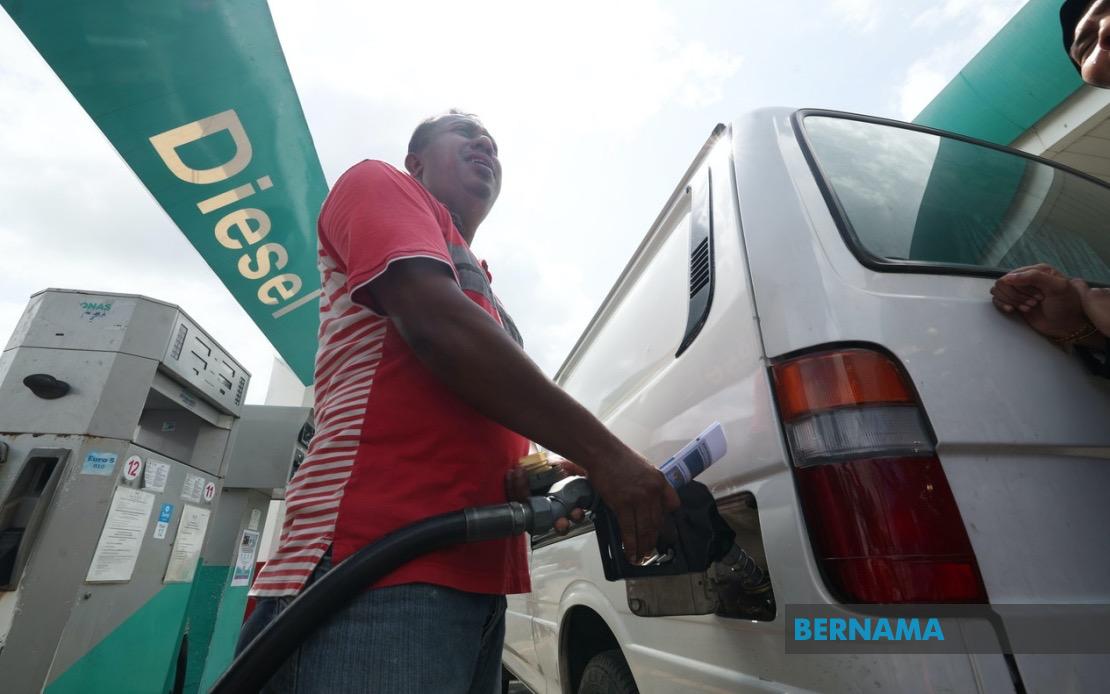
The Malaysian government will implement a significant shift in its diesel pricing structure, with Prime Minister Datuk Seri Anwar Ibrahim confirming that subsidised diesel will cost RM2.10 per litre beginning July 2026. The announcement was made in Bintulu during a ceremony marking the conversion of Bintulu Port from federal to state authority, signalling Putrajaya's commitment to reviewing fuel subsidies as part of its broader fiscal consolidation strategy under the MADANI framework.
This pricing adjustment represents a continuation of the government's gradual approach to subsidy reform, moving away from universal fuel support towards a more targeted mechanism that prioritises eligible Malaysian citizens. By restricting subsidised diesel access to registered users verified through MyKad identification, the administration aims to reduce fiscal leakage and ensure that government support reaches intended recipients rather than being exploited through cross-border smuggling or commercial misuse.
The framework mirrors the architecture of the existing BUDI MADANI RON95 programme, which has established a proven technological and administrative infrastructure for managing targeted fuel subsidies. This consistency suggests the government has learned from previous subsidy experiences and is scaling lessons from the petrol initiative to diesel markets. Finance Minister II Datuk Seri Amir Hamzah Azizan is scheduled to provide detailed implementation protocols to media in Kuala Lumpur, indicating that technical specifications regarding eligibility criteria, application procedures, and verification timelines will be clarified in the coming days.
For Malaysian motorists and businesses dependent on diesel, the RM2.10 per litre benchmark carries significant implications. Current global diesel prices fluctuate based on crude oil movements and geopolitical factors, and this fixed subsidised rate provides consumers with price certainty while insulating them partially from international volatility. However, the timing of implementation in July 2026 also suggests a transition period allowing stakeholders to adjust their operational and budgetary planning.
The announcement carries particular weight for commercial operators, hauliers, and farmers who rely heavily on diesel as an operational input. By establishing a predictable retail price through targeted subsidies, the government enables these constituencies to forecast costs more accurately, potentially supporting broader economic planning in logistics, agriculture, and transport sectors. Yet the MyKad verification system also implies that businesses purchasing diesel will need to comply with new administrative requirements, potentially necessitating system upgrades at petrol stations nationwide.
This move aligns with international best practices in subsidy reform, where many nations have shifted from blanket price controls towards means-tested or targeted mechanisms. The World Bank and International Monetary Fund have long advocated such transitions, arguing they preserve fiscal space while minimising market distortions. Malaysia's approach reflects these recommendations while attempting to balance fiscal responsibility with social protection for citizens most affected by fuel price movements.
The subsidy reform also intersects with Malaysia's climate commitments and energy transition goals. By gradually adjusting diesel pricing, the government signals that cheaper fossil fuels cannot continue indefinitely, potentially encouraging consumers to consider fuel efficiency investments or alternative technologies. This subtle price signal may stimulate demand for vehicles with better mileage or accelerate exploration of compressed natural gas alternatives in commercial fleets.
Regionally, Malaysia's subsidy recalibration contributes to a broader Southeast Asian trend of rethinking fuel support mechanisms. Indonesia, Thailand, and Vietnam have undertaken similar reforms in recent years, facing comparable pressures between fiscal sustainability and political palatability. The coordination and timing of these reforms across the region, though not formally coordinated, suggests shared economic constraints driving policy convergence.
The fiscal implications deserve scrutiny as well. Reducing the differential between global market prices and domestic subsidised rates decreases government expenditure on fuel support, potentially freeing resources for investments in infrastructure, healthcare, or education. However, the administration must carefully manage the transition to avoid triggering inflation in transport-dependent sectors or sparking public backlash, particularly among lower-income groups reliant on affordable diesel-powered public transport.
Implementation challenges remain substantial. Rolling out MyKad-based verification across thousands of petrol stations requires significant IT investment and coordination with retailers. Preventing system abuse—such as sharing MyKad credentials or falsifying purchase records—will demand robust monitoring mechanisms. International experience suggests such transitions invariably encounter teething problems, from technical glitches to queue management issues during rollout phases.
The political economy surrounding this announcement cannot be overlooked. By anchoring the subsidy price at RM2.10 before implementation, the government provides certainty that may reduce speculative behaviour or hoarding. Simultaneously, announcing the change well in advance allows businesses and consumers to plan accordingly, potentially easing the transition and demonstrating governmental transparency.
Looking forward, the RM2.10 pricing point likely represents an interim benchmark rather than a permanent fixture. Future adjustments may depend on crude oil trajectories, fiscal pressures, and economic performance. The MADANI Government's willingness to implement this reform, despite political sensitivities surrounding fuel prices, suggests a determined commitment to medium-term fiscal consolidation even if it entails short-term unpopularity among certain constituencies.

