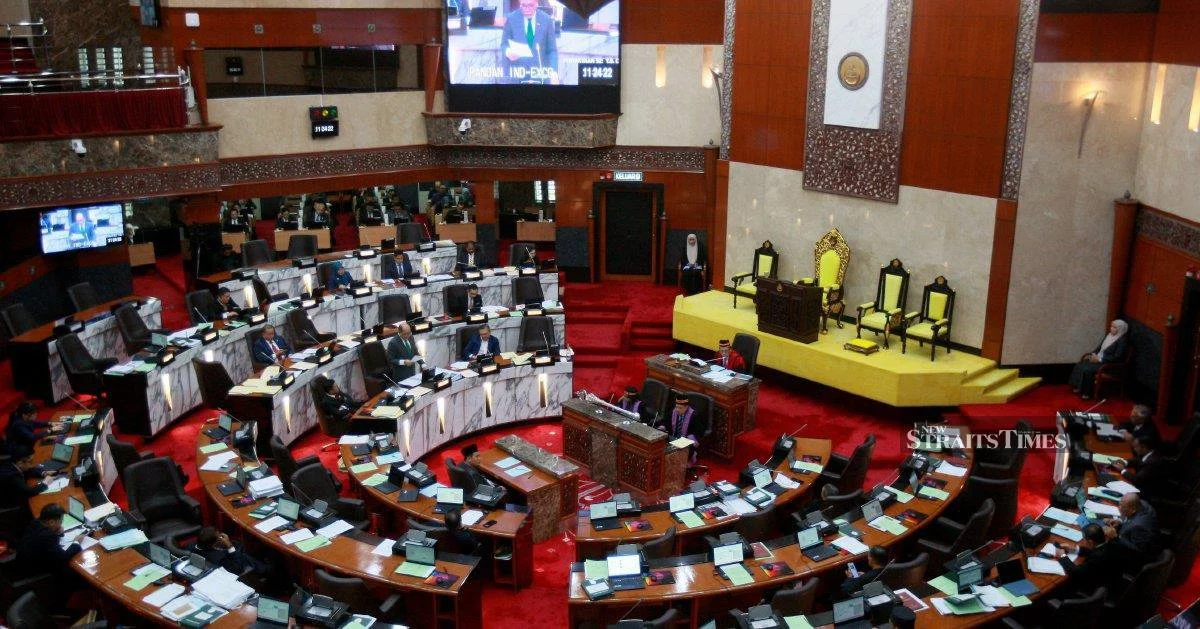
Governance standards across Malaysia's state legislative assemblies have come under scrutiny following the release of a comprehensive report by the Parliamentary Democracy and Constituency Development Caucus, which identifies critical gaps in oversight mechanisms and institutional transparency. The findings underscore growing concerns about accountability within regional legislatures, where spending decisions and policy implementation often receive limited public visibility compared to their federal counterparts.
The caucus report represents a significant intervention into subnational governance at a moment when Malaysia's federal system faces questions about power distribution and effectiveness. State assemblies control substantial resources and exercise considerable influence over development priorities, licensing decisions, and local regulatory frameworks that directly affect hundreds of thousands of residents. Yet many of these institutions operate with governance structures inherited from earlier decades, lacking the modern oversight infrastructure that contemporary legislatures elsewhere have adopted.
Transparency deficiencies identified in the report extend beyond simple disclosure practices. The research points to inconsistent documentation of assembly proceedings, limited public access to committee deliberations, and opaque processes for awarding state development funds and contracts. When constituents cannot readily obtain information about how their representatives vote, how public money is allocated, or why certain policies are pursued, democratic accountability becomes theoretical rather than functional. This gap between formal democratic structures and practical transparency represents a systemic challenge affecting all thirteen state assemblies to varying degrees.
Oversight mechanisms within state assemblies currently rely heavily on informal arrangements and individual assembly members' initiative rather than institutionalized checks. Committee systems in several states lack adequate independence from executive interference, reducing their capacity to scrutinize government spending and performance objectively. The absence of dedicated oversight staff with technical expertise means that assembly members often lack the research capacity to analyse complex policy proposals or departmental performance data effectively. This structural weakness creates an asymmetric relationship where state governments possess superior information and resources compared to their legislative oversight bodies.
The accountability implications extend beyond state government operations to affect the broader quality of regional governance. Citizens facing disputes with state agencies or questioning development decisions often discover that their elected representatives lack the tools or leverage to investigate complaints systematically. Community grievances that might warrant legislative attention sometimes remain unaddressed because assembly procedures provide limited mechanisms for formal constituent casework and complaint resolution. This gap between public expectations of representation and actual institutional capacity generates frustration with the legislative process itself.
Financial accountability represents a particularly pressing concern highlighted in the caucus findings. State development budgets fund infrastructure projects, procurement arrangements, and subsidies that collectively represent billions of ringgit annually. Yet the auditing processes that scrutinize these expenditures operate with limited assembly oversight capacity. Public accounts committees in several states function without adequate staffing, meeting schedules, or enforcement mechanisms to ensure that departmental responses to audit findings receive meaningful follow-up. The result is often a disconnect between audited irregularities and corrective action.
International comparative evidence cited in oversight research suggests that legislative transparency produces measurable improvements in governance outcomes and public confidence. Jurisdictions that publish committee records, voting patterns, and budget documents online experience greater constituent engagement and more robust accountability relationships. Malaysia's leading state assemblies have begun experimenting with live-streaming proceedings and publishing committee reports, yet adoption remains inconsistent and implementation variable. A standardized transparency framework applicable across all state assemblies could establish baseline expectations while allowing jurisdictions to exceed minimum standards.
The challenge of enhancing state assembly governance intersects with Malaysia's broader parliamentary reform agenda. Efforts to strengthen federal oversight mechanisms must be accompanied by parallel improvements at the state level, as citizens experience governance primarily through institutions closest to their communities. Building institutional capacity for effective legislative scrutiny requires investment in assembly staff expertise, committee infrastructure, and technology systems that facilitate transparency. These investments demand political commitment from sitting governments, which inevitably face short-term incentives to resist enhanced scrutiny.
Regional implications of governance improvements in state assemblies deserve consideration within the Southeast Asian context. Malaysia's federal structure and competitive state-level politics have historically served as models within the region. Advances in state assembly transparency and oversight capacity could demonstrate practical approaches that other federal systems within Southeast Asia might adapt. Conversely, continued governance deficiencies undermine Malaysia's capacity to offer constructive examples to neighbouring democracies grappling with similar federalism challenges.
Implementation of enhanced oversight mechanisms will require coordination between state governments, parliamentary leadership, and relevant oversight bodies. The caucus report provides a foundation for dialogue, yet translating recommendations into institutional reform requires sustained political pressure and technical expertise. State assemblies must establish independent committees with adequate resources to review government budgets and programmes objectively. Transparency infrastructure including online publication of proceedings, voting records, and committee deliberations should become standard practice across all thirteen assemblies rather than exceptions in particular jurisdictions.
The pathway forward involves recognizing that state assembly governance directly affects the quality of democratic practice available to millions of Malaysians. Enhancement need not be complex; straightforward measures such as published committee schedules, documented attendance records, and accessible budget summaries would represent meaningful progress. Building on these foundational improvements, more sophisticated oversight mechanisms including performance-based auditing and constituent feedback systems could gradually transform state legislatures into institutions that effectively represent public interests while scrutinizing government operations.