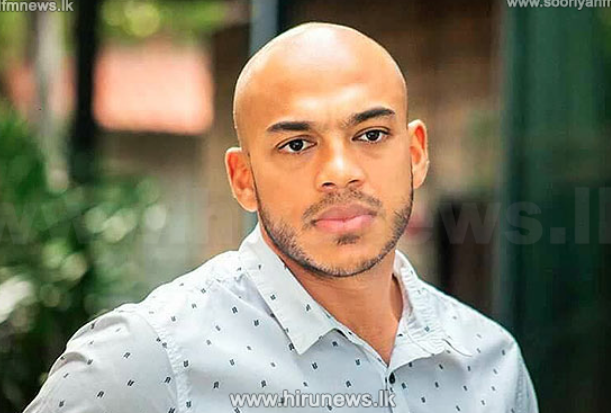
Sri Lanka's anti-corruption authorities have arrested Yoshitha Rajapaksa, the 38-year-old son of former president Mahinda Rajapaksa, on graft-related charges stemming from his military service. The Bribery Commission confirmed the detention on Wednesday, marking the latest in a series of legal actions targeting members of the influential Rajapaksa dynasty that once dominated Sri Lankan politics.
Yoshitha Rajapaksa stands accused of improperly accessing government funds to finance overseas officer training while serving in the Sri Lankan navy. The Bribery Commission's formal statement indicated that his arrest relates to charges of aiding and abetting in connection with his appointment to the naval service without meeting the minimum qualification threshold, followed by state-sponsored overseas training. The investigation suggests a pattern whereby he advanced through military ranks despite lacking the necessary credentials that would normally be required for such progression.
A significant aspect of the case centres on his attendance at Dartmouth, the prestigious naval college located in Britain. Yoshitha Rajapaksa completed a rigorous training course at the institution while his father served as president between 2005 and 2015. Critics have long contended that his placement at Dartmouth displaced a qualified naval cadet who had earned the competitive position through merit, highlighting concerns about nepotism and institutional favouritism during the Rajapaksa presidency.
Prior to his arrest, Yoshitha Rajapaksa was already implicated in two separate money-laundering investigations and had been subject to restrictions preventing international travel. He had remained free on bail pending the outcome of those earlier proceedings, but authorities clearly gathered sufficient evidence to move forward with formal arrest and charges relating to the military training scheme.
The broader context for this enforcement action involves a significant political shift in Sri Lanka. When President Anura Kumara Dissanayake secured electoral victory in 2024, he built his campaign on a powerful anti-corruption platform, explicitly pledging to dismantle networks of graft and hold powerful figures accountable. This electoral mandate has emboldened investigators and prosecutors to pursue cases against the Rajapaksa family with renewed vigour, suggesting that political will in the current administration supports such investigations.
The Rajapaksa family faces multiple outstanding legal challenges across different domains. Yoshitha Rajapaksa himself confronts additional criminal prosecution regarding his acquisition of residential property during his father's presidency. He has struggled to satisfactorily explain the financial sources underlying this real estate purchase, a common investigative technique for identifying unexplained wealth accumulation. In one implausible explanation offered to investigators, he claimed that gemstones gifted by his elderly great-aunt were sold to raise the necessary funds, yet his relative could not credibly account for how she obtained those precious stones in the first place.
Another separate case involves his apparent involvement in the acquisition of a television network, suggesting a pattern of unexplained commercial transactions. These interconnected investigations paint a picture of systematic financial irregularities extending across multiple spheres of his personal business activities during and after his father's tenure in office.
The Rajapaksa family's fall from political grace represents one of South Asia's most dramatic reversals of fortune. Mahinda Rajapaksa's elder brother Gotabaya became president in 2019, but was compelled to resign in 2022 following widespread public unrest triggered by an economic catastrophe that severely destabilised the country. The 2022 uprising reflected deep public anger over mismanagement and corruption, setting the stage for subsequent investigations into family members' conduct.
Gotabaya Rajapaksa himself confronts serious legal jeopardy. Early this month, he was imposed with a foreign travel ban by judicial authorities. He has simultaneously appealed to the courts for protective measures against potential arrest in connection with the 2019 Easter Sunday bombings, attacks that claimed 279 lives and represented one of Sri Lanka's worst security failures. His legal strategy appears focused on preventing custodial detention pending trial, signalling deep anxiety about the judicial system's trajectory.
The systematic targeting of Rajapaksa family members and close associates spans numerous categories of alleged wrongdoing, from standard corruption charges to more serious criminal accusations including homicide. Many of these cases remain in preliminary stages before the courts, suggesting that the family may face years of protracted litigation. The momentum of investigations and prosecutions shows no sign of diminishing, particularly given the political administration's explicit commitment to pursuing accountability.
For Malaysian observers, the Sri Lankan experience illuminates the challenges and possibilities associated with holding powerful families accountable in South Asian political systems. The sequence of events in Sri Lanka demonstrates both how entrenched political families can exercise near-total dominance over state institutions and resources, and conversely, how electoral change can catalyse investigative and prosecutorial action when public mandate sufficiently supports it. The contrast between the protected status these individuals enjoyed during Rajapaksa administrations and their current vulnerability underscores the contingent nature of political immunity in the region.