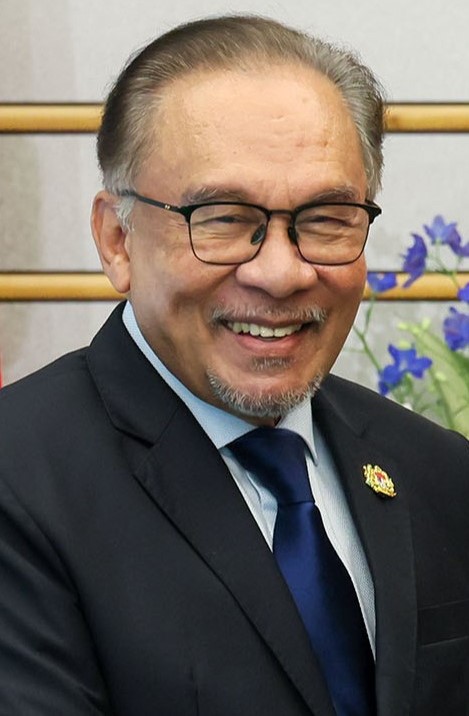
Indonesia's strengthening partnership with Germany took centre stage this week as President Frank-Walter Steinmeier arrived in Jakarta on June 15, signalling a strategic shift in bilateral relations that extends well beyond routine diplomatic courtesies. The visit to Merdeka Palace represents a significant moment in Indonesia-Germany ties, suggesting both nations view their connection as ripe for deeper engagement across multiple sectors. For Indonesia, cultivating stronger partnerships with major European economies like Germany adds another dimension to its balancing act on the world stage, even as the archipelago continues managing complex relationships with China and regional neighbours.
Meanwhile, Central Sulawesi confronted a natural disaster when a magnitude-6.7 earthquake struck the Palu region on Tuesday, prompting Governor Anwar Hafid to activate comprehensive emergency response protocols. The tremor underscores the persistent seismic risks facing Indonesia's eastern regions and raises questions about disaster preparedness infrastructure in areas prone to tectonic activity. Such events typically galvanise investment in early warning systems and resilient infrastructure, critical considerations for a nation frequently tested by earthquakes and tsunamis.
In Laos, nuclear energy has emerged as a potential game-changer for the landlocked nation's power generation strategy. Following agreements with Russia, Laotian authorities have commissioned preliminary feasibility studies examining how a nuclear power plant could be woven into the country's existing energy matrix. This exploration reflects broader Southeast Asian interest in diversifying away from hydropower and fossil fuels, though nuclear energy remains politically sensitive across the region due to safety and waste disposal concerns. For Malaysia and other neighbouring nations, Laos's nuclear ambitions carry implications for regional energy security and environmental governance.
Economic development across Laos received concrete support when the country secured over US$3.31 million in funding through the Mekong-Lancang Cooperation Special Fund 2026. Channelled toward seven development initiatives spanning human resources, poverty reduction, agricultural productivity, water management, and healthcare, this financing represents the tangible benefits of regional cooperation frameworks that connect Laos more deeply to broader Southeast Asian prosperity schemes. The allocation demonstrates how multilateral mechanisms can target specific development gaps in less developed members of regional groupings.
Lowland Southeast Asia's border economies took priority in Myanmar-China discussions, where reopening closed trade posts and strengthening border commerce management dominated the agenda. Chinese technical assistance for Myanmar's agricultural quarantine standards emerged as another key cooperation point, reflecting how bilateral engagement increasingly focuses on removing non-tariff barriers that hinder regional trade flows. Myanmar's strategic importance to China as a gateway nation and energy partner ensures these discussions will remain high-stakes for regional trade patterns.
Tourism cooperation gained momentum when Myanmar and Cambodia inked an agreement at Yangon's Mekong Tourism Forum 2026, underscoring the region's recognition that coordinated promotion of shared attractions generates greater returns than isolated efforts. The forum's theme of "Tourism for People, Travel with Purpose" reflects a broader shift toward sustainable tourism models that benefit local communities rather than simply maximising visitor numbers. For Malaysia, which competes for the same regional tourists, such cooperation between rivals suggests intensifying competitive pressure requiring stronger positioning of Malaysian attractions.
The Philippines defended its maritime interests against Chinese moves, with the Department of Foreign Affairs asserting that China's implementation of the United Nations High Seas Treaty would not erode Philippine rights over the West Philippine Sea. This statement serves notice that Manila intends challenging Beijing's interpretations of international maritime law, a posture reinforced when President Ferdinand R. Marcos Jr. departed for Kazan to lead ASEAN-Russia talks where energy and food security dominated the bilateral agenda with Vladimir Putin. The Philippines' simultaneous engagement with Russia and resistance to Chinese maritime expansionism reveals its strategy of diversifying great power partnerships to counterbalance Beijing's influence.
Singapore's economy demonstrated remarkable resilience as non-oil domestic exports surged 38.4 percent in May, extending momentum from the previous month's 24.4 percent expansion. The acceleration reflects a booming electronics sector riding artificial intelligence-driven global demand, positioning Singapore as a prime beneficiary of technology investment flows reshaping Asian economies. Malaysian policymakers studying Singapore's success in capturing AI-related manufacturing and services activity face uncomfortable questions about their own competitive positioning in attracting high-value technology operations.
Investment in urban problem-solving received a significant boost when Singapore allocated an additional S$115 million for research addressing the city-state's most pressing development challenges. This commitment to evidence-based policymaking on urban issues reflects Singapore's characteristic approach of treating governance as a technical problem requiring continuous refinement. The funds will target solutions improving quality of life across housing, transportation, and other domains where dense urban living creates persistent friction points.
Taxation of multinational corporations entered a new phase across Southeast Asia as Thailand's Cabinet approved implementing a 15 percent global minimum corporate tax under OECD auspices. The measure targets profit-shifting strategies that historically allowed large companies to minimise tax burdens by routing earnings through low-tax jurisdictions, a practice that smaller countries have long resented. Thailand expects the initiative to generate approximately 10 billion baht annually in additional revenue, potentially encouraging other regional nations to follow suit in strengthening tax collection from corporate giants.
Healthcare systems across Thailand face mounting pressure from an ageing population, with the Thai Health Report 2026 projecting citizens will spend an average 6.9 years living with illness or disability in their later years. This demographic reality demands significant expansion of long-term care capacity and chronic disease management infrastructure, challenges Malaysia will confront with equal urgency as its own population greys. The finding highlights how rapidly Southeast Asia's health priorities are shifting from infectious disease control toward non-communicable disease management.
Vietnam announced an ambitious aviation expansion programme targeting seven new airport openings by 2030, aimed at accommodating 220 million annual passengers and supporting continued economic growth. The infrastructure push reflects Vietnam's confidence in sustained tourism and business travel expansion, investments that position the nation to capture growing regional connectivity demand. For Malaysian airports competing for the same passengers and routes, Vietnam's aggressive expansion represents a regional competitive challenge requiring strategic responses to maintain market share in Southeast Asia's increasingly contested aviation sector.