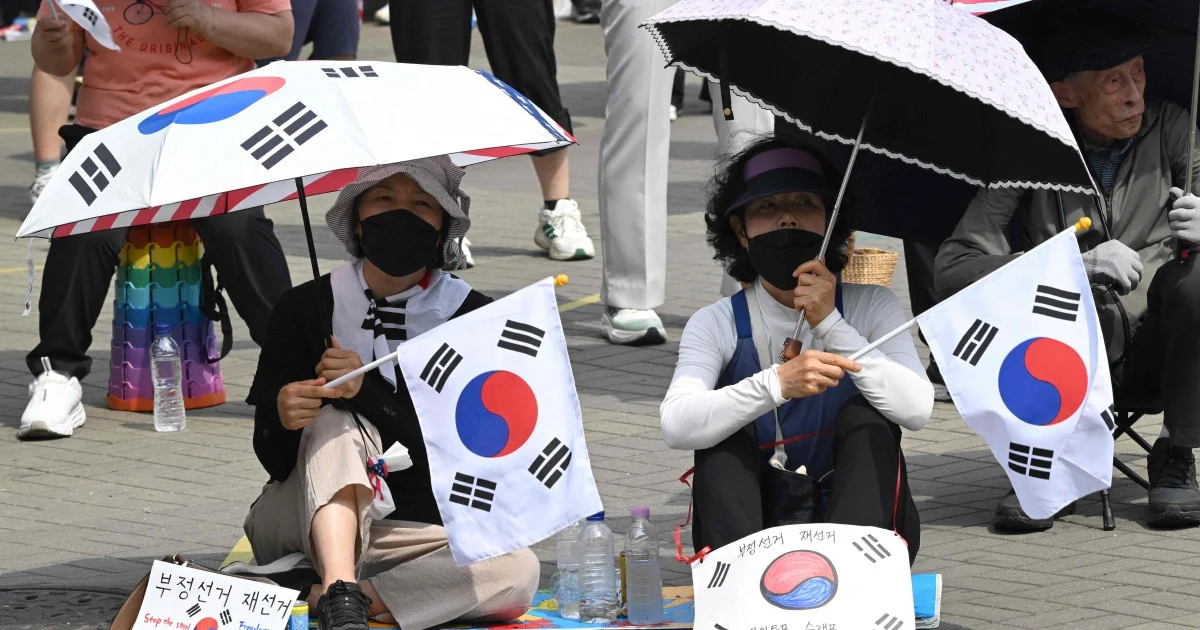
South Korea's parliamentary chamber has opened a formal 45-day investigation into the National Election Commission, responding to widespread disruptions caused by insufficient ballot papers during the June 3 local elections. The decision, ratified through a plenary session on Thursday, represents a significant institutional response to operational failures that undermined the integrity of the electoral process across the country.
The ballot shortage incident exposed considerable weaknesses in election administration at a moment when public confidence in democratic processes remains fragile. Voting locations reported depleted ballot supplies, forcing delays and creating confusion among citizens attempting to exercise their franchise in what was positioned as a key test of political sentiment ahead of broader national concerns. The National Election Commission, as the body responsible for managing South Korea's electoral infrastructure, now faces parliamentary scrutiny over how such a fundamental logistical failure occurred.
This investigation carries particular significance within the South Korean political context, where electoral transparency and procedural reliability form cornerstones of democratic legitimacy. Previous electoral controversies have prompted similar legislative inquiries, though the scale of coordination required to administer local elections across the nation makes this case distinctly complex. The 45-day timeframe allows parliament sufficient opportunity to conduct thorough hearings, examine internal commission documentation, and hear testimony from election officials responsible for ballot distribution and inventory management.
The ballot shortage exposed systemic planning deficiencies that merit close examination. Election commissions must accurately forecast demand, manufacture appropriate quantities, and distribute materials with precision to thousands of polling stations simultaneously. When these processes falter, voters experience tangible frustration, and the legitimacy of electoral outcomes comes into question—particularly when shortages concentrate in specific regions or demographic areas. Understanding whether the shortage reflected miscalculation, supply chain breakdowns, or coordination failures between central and local election authorities will guide future reforms.
For Malaysian observers, this episode offers instructive lessons about electoral administration complexity. Managing elections across diverse geographies and populations requires meticulous planning and robust backup systems. The Malaysian electoral framework, overseen by the Election Commission, similarly depends on precise logistics and coordination between federal and state-level authorities. While Malaysia has its own distinct electoral challenges, the South Korean case underscores universal vulnerabilities that democratic systems must address through continuous process improvement and accountability mechanisms.
The parliamentary investigation will likely examine whether the National Election Commission possessed adequate contingency planning, how staffing levels contributed to execution gaps, and whether communication breakdowns between central headquarters and local election offices amplified the crisis. Commissioners may be called to explain decision-making processes, budget allocations for ballot printing, and quality assurance procedures that failed to identify problems before voting commenced. These technical questions carry profound political weight in South Korea's competitive electoral environment.
Beyond immediate accountability, the investigation addresses broader questions about public institution capacity and trustworthiness. When government agencies fail at core functions—particularly those affecting fundamental democratic rights—public perception of institutional competence deteriorates. Citizens may question whether other administrative systems operate with similar inefficiencies, extending skepticism beyond electoral management. This reputational dimension explains why parliamentary investigation carries weight disproportionate to what might appear as a logistical mishap in other contexts.
The timing of this investigation reflects South Korea's political calendar and factional dynamics. The June 3 local elections served as an important political barometer, and ballot shortages provided opposition parties with legitimate grounds to challenge electoral credibility. The parliamentary probe becomes both a mechanism for genuine institutional reform and an arena for political competition, where scrutiny of the National Election Commission translates into broader commentary on government performance and preparedness.
For regional democracy watchers, South Korea's response demonstrates that mature electoral systems possess mechanisms for post-election accountability and reform. Rather than dismissing the ballot shortage as an isolated incident, parliament's decision to investigate reflects institutional confidence that identified problems can be studied, explained, and remedied through systemic improvements. This contrasts sharply with contexts where electoral malfunctions are routinely denied, minimised, or weaponised for purely partisan advantage without regard to genuine reform.
The investigation's outcomes will likely yield recommendations affecting future elections, potentially including revised ballot production standards, enhanced inventory tracking systems, improved communication protocols between election authorities and polling stations, and contingency procedures for shortage scenarios. Such reforms, if implemented thoughtfully, could strengthen electoral administration not merely in South Korea but provide models for other democracies confronting similar logistical complexities.
Stakeholders including the National Election Commission, parliamentary parties, civil society observers, and ordinary voters have substantial interest in the investigation's findings. The probe represents an opportunity to transform an administrative failure into institutional learning, demonstrating that democratic systems possess self-correcting capacity when problems are acknowledged and examined transparently. The 45-day timeline remains tight for comprehensive investigation, but South Korea's parliamentary tradition suggests the inquiry will generate substantive findings and actionable recommendations.
As the investigation proceeds, it will test whether South Korea's democratic institutions can maintain public trust by demonstrating genuine commitment to electoral integrity and administrative accountability. This inquiry into ballot shortages ultimately concerns questions extending far beyond paper and printing: whether democratic systems can acknowledge failures, investigate them rigorously, and emerge stronger through institutional adaptation.