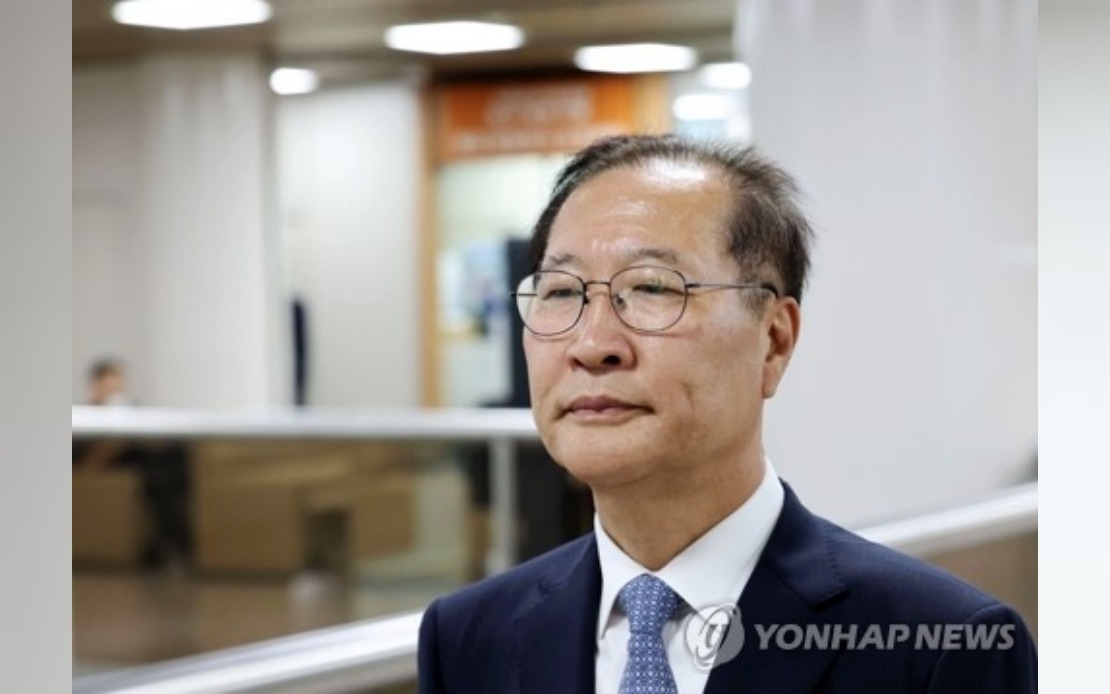
South Korea's former Justice Minister Park Sung-jae has been handed a 25-year prison sentence by the Seoul Central District Court, convicted of playing a central role in an insurrection connected to ex-President Yoon Suk Yeol's failed martial law declaration last December. The conviction represents a significant escalation in accountability for high-ranking officials implicated in the constitutional crisis that shook East Asia's fourth-largest economy. The sentence, which exceeded the 20-year term prosecutors had sought, underscores judicial determination to hold senior government figures responsible for their actions during the turbulent period.
Park's culpability centres on his conduct immediately following Yoon's martial law proclamation on December 3, 2024. Rather than oppose the unconstitutional move, Park convened a meeting of senior ministry officials to coordinate practical support for the insurrection. The court found that he orchestrated discussions about dispatching prosecutors to bodies supporting the martial law declaration, assessed the capacity of correctional facilities that would presumably detain political opponents and other arrested figures, and issued orders to staff responsible for imposing travel restrictions. These administrative actions transformed Park from a passive observer into an active participant in the constitutional breach.
The judicial reasoning provided substantial insight into the court's interpretation of official duty during constitutional crises. The bench stated that Park had fundamentally abandoned his constitutional obligation, instead choosing complicity because he believed the insurrection might succeed. This framing suggests that South Korean courts view the abandonment of constitutional duty for pragmatic or opportunistic reasons as particularly grave. The decision establishes that senior officials cannot claim detachment from unlawful governmental actions simply by delegating implementation to subordinates. The doctrine emerging from the judgment imposes an affirmative obligation on justice ministers and comparable officials to actively resist and prevent unconstitutional state actions.
Park joins a growing cohort of cabinet-level figures facing severe consequences for their martial law involvement. Former Prime Minister Han Duck-soo and former Defence Minister Kim Yong-hyun have already been convicted on identical insurrection charges, suggesting systematic judicial processing of the crisis's institutional failures. This pattern indicates that South Korea's prosecution and judiciary have adopted a comprehensive approach to accountability rather than selectively targeting individual actors. The consistency of convictions across different cabinet portfolios reflects a broader judgment about institutional responsibility during the period.
The judicial process took an unusual procedural turn regarding detention. Upon announcing the sentence, the court immediately remanded Park into custody, explicitly citing concerns that he might destroy evidence if released pending appeal. This protective measure suggests that investigators and judges assessed meaningful risks of evidence tampering, raising questions about what documentary or material evidence remained vulnerable and why officials of Park's stature would take such risks. The immediate custody decision also signals judicial confidence in the conviction and skepticism toward appellate prospects.
For Malaysian readers and Southeast Asian observers, the Park case illuminates how constitutional democracies respond to coup attempts or unconstitutional declarations of martial law. Malaysia has its own complex history with constitutional emergencies, most notably the 1969 suspension of parliament following communal violence. The South Korean precedent demonstrates a contemporary democratic approach that prioritises individual accountability and institutional reform over reconciliation or amnesty. Unlike some transitional justice models that emphasise forgetting or healing, Seoul's courts are pursuing aggressive prosecution of institutional participation in unconstitutional acts.
The broader context involves former President Yoon himself, who received a life sentence in February 2025 for leading the insurrection. Yoon has appealed that verdict, leaving open the possibility that South Korea's highest courts might revisit martial law accountability standards. Park's conviction, secured before Yoon's appellate outcome, may constrain the scope of any presidential exoneration. Should Yoon's appeal succeed, the government would face awkward questions about maintaining convictions for subordinates who merely followed presidential orders compared to acquitting the president who issued them. Conversely, upholding Yoon's conviction would create hierarchical accountability where commanders bear greater responsibility than executors.
The prosecution's office indicated it would not appeal Park's sentence, framing the judgment as appropriately addressing the justice minister's duty to defend constitutional order against illegal martial law. This prosecutorial position differs markedly from Park's defence team, which immediately announced appellate plans while characterising the verdict as legally unfounded. The divergence reflects competing interpretations of whether Park's administrative coordination constituted substantive insurrectionary conduct or merely procedural facilitation of another actor's unconstitutional decision. These interpretive questions will likely reach South Korea's Supreme Court.
Another dimension of Park's case involved allegations of abusing his power at the behest of Yoon's wife, Kim Keon Hee. Park allegedly issued inappropriate orders to prosecutors investigating corruption allegations against the former first lady, responding to her May 2024 request. The court dismissed these charges, ruling they fell outside the special counsel's investigative jurisdiction. This jurisdictional decision, while tactically advantageous for Park, leaves unresolved questions about the extent to which marital influence and personal loyalty shaped cabinet decisions during the period leading to martial law.
For Southeast Asian governance observers, the Park case exemplifies how institutional design and prosecutorial independence influence accountability outcomes. South Korea appointed a special counsel specifically to investigate martial law circumstances, a mechanism that provided prosecutorial continuity and protection from partisan interference. Malaysia's approach to institutional investigation has historically involved different mechanisms, from parliamentary inquiries to royal commissions, each with distinct advantages and limitations regarding independence and prosecutorial follow-through. The Park conviction demonstrates the potential effectiveness of specialised investigative structures insulated from the executive branch being investigated.
The sentencing also raises comparative questions about proportionality in political crime. Twenty-five years represents substantial incarceration for administrative facilitation of an unconstitutional act, even one as grave as martial law suspension of democracy. The sentence reflects judicial assessment that facilitating insurrection merits penalisation approaching sentences typically reserved for serious violent crimes. This approach differs from some jurisdictions that treat political crimes leniently or distinguish between ideological actors and bureaucratic functionaries. South Korea's approach suggests that institutional position and governmental authority elevate the culpability of officials who participate in constitutional breaches.
Park's case also illustrates how particular procedural choices—calling ministry meetings, issuing directives, coordinating with other agencies—acquire expanded significance within insurrectionary contexts. Courts scrutinise not merely what officials intended but how their actions concretely supported unconstitutional governance. The evidentiary focus on specific directives and meetings transformed what might otherwise appear as routine administrative activity into supporting conduct for insurrection. This prosecutorial and judicial approach emphasises actionable complicity over passive association or ideological sympathy.
Looking forward, Park's conviction establishes precedent for how South Korean courts evaluate official participation in future constitutional crises. The jurisprudence emphasises that high office carries affirmative obligation to resist unlawful governmental action rather than acquiescing to superior orders or political pressure. This doctrine, if consistently applied, would substantially constrain officials' ability to claim duress or superior orders as exculpatory. For regional observers and institutional designers, the Park judgment exemplifies how judicial systems can operationalise constitutional supremacy by holding officials personally accountable for administrative choices supporting unconstitutional acts.

