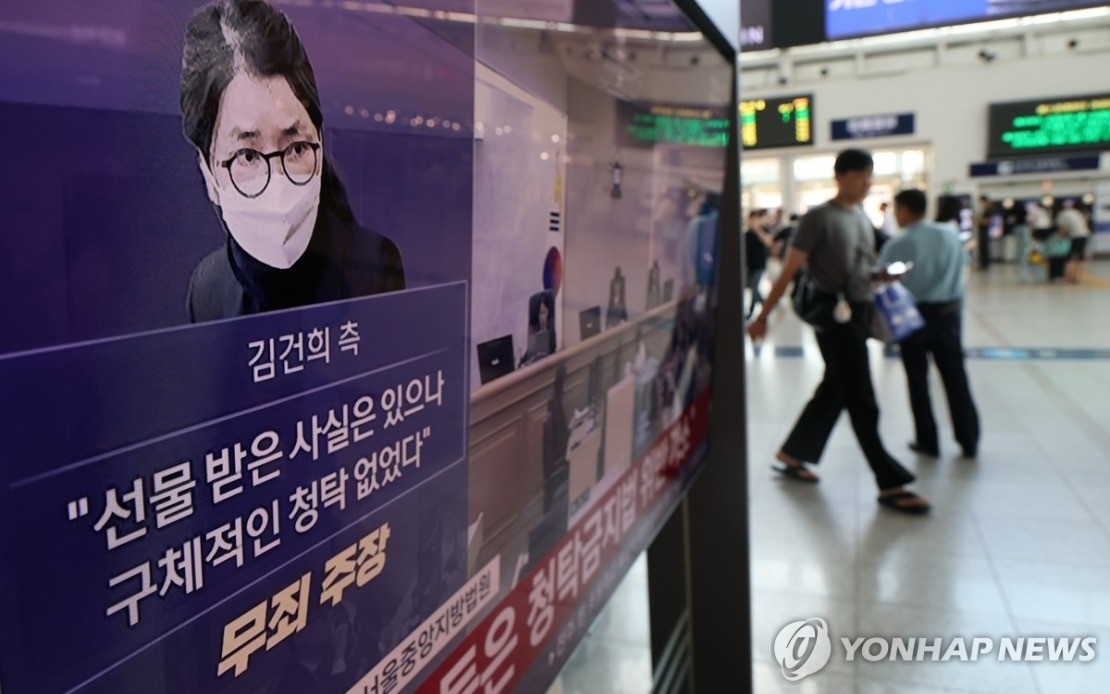
Kim Keon Hee, the wife of ousted South Korean President Yoon Suk Yeol, has been handed a seven-year prison sentence by the Seoul Central District Court for accepting expensive gifts in return for securing government positions and business advantages for wealthy benefactors. The conviction represents a significant moment in South Korea's political landscape, exposing the extent of alleged corruption linked to the country's leadership during a period of considerable institutional turbulence.
The court found Kim guilty on all charges after a comprehensive investigation revealed she had accepted luxury items totalling approximately 300 million won throughout her time as first lady. Among the most high-profile gifts were a Van Cleef & Arpels necklace and matching jewellery from a construction company chairman, worth more than 100 million won, which she received in exchange for arranging a government job for the businessman's son-in-law. Presiding Judge Cho Sun-pyo delivered a damning assessment of her conduct, stating that she had fundamentally abused the status and privilege associated with her position for personal enrichment.
The criminal transactions documented in the trial spanned the period from May 2022, when her husband assumed the presidency, until April 2025, when he was ousted from office. During this window, Kim received a variety of luxury goods from multiple sources including business leaders, government officials, and religious figures. These included a golden turtle ornament in April 2022 from Lee Bae-yong, then head of the National Education Commission, in exchange for facilitating his appointment; a Dior handbag valued at 5.4 million won from a pastor; and a Vacheron Constantin timepiece from another business associate in September 2022. Additionally, in February 2023, she was found to have received a painting by celebrated artist Lee Ufan from a former prosecutor in return for assistance in securing him an electoral nomination.
The judicial process exposed Kim's efforts to obstruct justice once authorities initiated their investigation. The court determined that she had attempted to return certain gifts after questioning commenced and falsely claimed to have purchased some items herself. Judge Cho highlighted that these actions demonstrated her awareness of the illegality of her behaviour and her deliberate attempts to conceal evidence. Such conduct is particularly serious under South Korean law, as it suggests consciousness of guilt and an attempt to tamper with evidence.
The prosecution, led by Special Counsel Min Joong-ki's team, had sought a sentence of seven and a half years, making the final seven-year penalty a substantial validation of their case. The sentencing carries significant implications for accountability in South Korean politics, signalling that those in positions of authority cannot exploit state power for personal gain without facing serious consequences. Kim's legal representatives have indicated their intention to appeal the decision, suggesting the case will likely continue through the appellate system.
Beyond Kim's individual conviction, the trial resulted in sentences for multiple co-conspirators, though notably lighter in nature. The construction company chairman who provided the primary bribes received a one-year prison term suspended for two years, while the businessman who gifted the watch received a 10-month suspended sentence. A pastor involved in the gift-giving was fined 8 million won rather than incarcerated. These differentiated penalties reflect the court's view that Kim bore primary responsibility as the state official with decision-making authority.
This conviction compounds Kim's existing legal jeopardy. An appeals court had previously sentenced her to four years in prison in a separate corruption case, meaning she now faces cumulative convictions that could result in prolonged incarceration. The stacking of sentences underscores the breadth of alleged misconduct during her tenure as first lady and suggests a pattern of behaviour rather than isolated incidents.
Perhaps most troubling for the Yoon administration's legacy is an ongoing investigation into Kim's alleged participation in a scheme to manipulate the 2022 presidential election. Court documents indicate that members of the Unification Church were reportedly pressured to join the now-main opposition People Power Party before the 2022 contest, ostensibly to influence the primary election that her husband ultimately won. If substantiated, such allegations would represent an even more serious breach of democratic principles than financial corruption, suggesting potential interference with electoral processes themselves.
The case carries particular resonance for Southeast Asian observers and analysts monitoring institutional stability in East Asia. South Korea's willingness to prosecute a former first lady, despite potential political blowback, demonstrates the functioning of its judicial independence and the capacity of its courts to hold even the highest-ranking families accountable. However, it also illuminates the vulnerability of democratic systems to abuse when officials become insulated from oversight, a cautionary tale relevant to any nation navigating the balance between executive authority and institutional checks.
The rapid succession of scandals affecting the Yoon presidency—from his own impeachment and legal troubles to now his wife's conviction—has created a unprecedented institutional crisis. These developments have prompted broader reflection within South Korean society about governance standards, conflict-of-interest regulations, and the appropriate scope of executive power. The conviction of Kim may ultimately serve as a watershed moment, prompting legislative reforms to prevent future first ladies from wielding influence over appointments and business decisions without corresponding accountability mechanisms.

