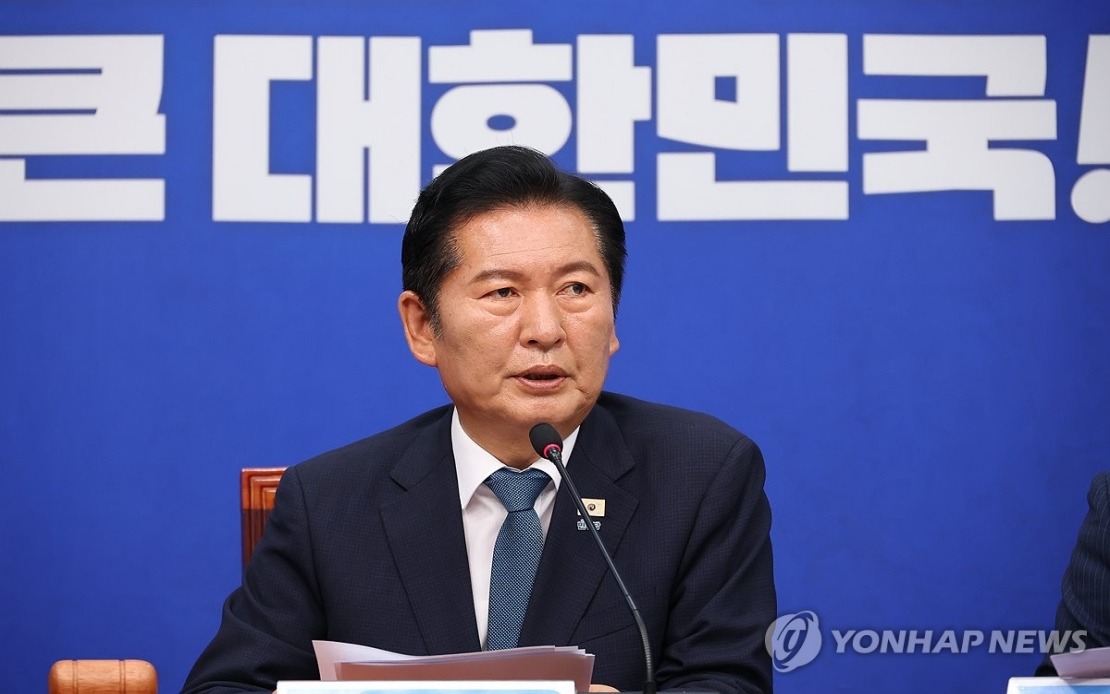
South Korea's ruling Democratic Party underwent a significant leadership transition on Wednesday as chairman Jung Chung-rae announced his resignation during a party council meeting at the National Assembly. The move is widely interpreted as a tactical manoeuvre to reset his candidacy ahead of the party's August 17 national convention, where members will elect a new chairman. By stepping down voluntarily rather than waiting for the convention, Jung aims to demonstrate party loyalty while maintaining his position as a frontline contender for the top role.
Jung used his resignation statement to emphasise his commitment to President Lee Jae Myung's administration, stressing that he had prioritised party unity throughout his tenure despite facing substantial internal and external pressures. His carefully calibrated remarks acknowledged the challenges he has navigated, presenting his resignation as a principled decision rather than a forced withdrawal. The lawmaker's framing suggests an attempt to counteract recent criticism that has questioned his leadership approach and his alignment with the president's broader political agenda.
The criticism levelled against Jung stems from concerns among pro-Lee faction members who contend that his chairmanship has favoured his own hard-line supporters at the expense of maintaining cohesion with the presidential office on critical policy matters. This internal tension within the ruling party reflects deeper strategic disagreements about the party's direction and organisational priorities. For Malaysian observers, this type of intra-party friction mirrors dynamics seen in some Southeast Asian political movements, where balance between party structure and executive office remains perpetually contested.
Jung's departure immediately creates a vacuum at the helm, filled temporarily by Democratic Party floor leader Han Byung-do, who will serve as acting chairman until the convention. This interim arrangement provides stability while the party navigates the leadership selection process over the coming weeks. The interim period is crucial for allowing candidates to campaign and mobilise support without the constraints of holding formal leadership positions.
The forthcoming convention is shaping into a competitive three-way contest that will determine the party's strategic direction heading into future electoral cycles. Prime Minister Kim Min-seok, a trusted political ally of President Lee, represents the administration's preferred direction and brings significant governmental experience and executive credibility to the race. Song Young-gil, a former Democratic Party leader, brings considerable party institutional knowledge and has reportedly signalled interest in exploring a potential candidacy merger with Kim to consolidate anti-Jung forces. This possible alignment between two heavyweight candidates underscores the level of opposition Jung faces despite his prominent position.
Song's reported communications with President Lee regarding his presidential ambitions add another layer to the leadership contest dynamics. Park Jie-won, a Democratic Party lawmaker, disclosed during a CBS radio interview that Song has indicated he might unify his candidacy with Prime Minister Kim to strengthen their collective chances against Jung. Such coalition-building at the pre-convention stage demonstrates the high stakes involved and the degree of political calculation surrounding the August election.
The timing of this leadership race carries significance for South Korean political stability and the Democratic Party's operational effectiveness. The contest occurs against a backdrop of broader national priorities including economic management, security considerations, and domestic legislative agendas that require cohesive party leadership. The convention outcome will influence whether the ruling party can present a unified front or whether factional divisions will persist and potentially weaken governmental capacity.
For regional observers in Southeast Asia, the Democratic Party's internal dynamics offer instructive parallels regarding ruling party management and leadership succession. Many regional political parties grapple with similar tensions between maintaining party discipline, supporting executive leadership, and allowing internal democratic processes. The transparent resignation strategy employed by Jung demonstrates one approach to navigating such pressures, prioritising the appearance of voluntary action over forced removal.
The August convention will test which faction within South Korea's ruling party holds greater influence: those aligned most closely with presidential authority under Lee Jae Myung, or those prioritising broader party interests and institutional independence. The eventual winner will inherit significant responsibilities for managing party affairs, coordinating legislative priorities, and potentially shaping candidacy discussions for future elections. This leadership selection therefore extends beyond mere organisational housekeeping to encompass substantive questions about the party's strategic orientation and its relationship to the presidential administration.
Assuming the convention proceeds as scheduled, the Democratic Party will complete its leadership transition by mid-August, providing clarity on party direction before the conclusion of South Korea's summer political season. The outcome will clarify whether consolidation around Prime Minister Kim's administration-friendly platform prevails, or whether Jung's retention in a renewed mandate suggests the party leadership values maintaining alternative power centres within the broader ruling coalition. Either scenario will have implications for South Korea's political trajectory and potentially serve as reference points for how ruling parties elsewhere in Asia manage competing internal interests.

