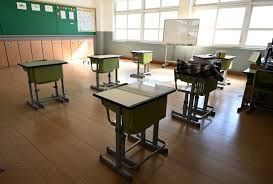
Police on South Korea's Jeju Island have launched an investigation into a high school student accused of repeatedly entering an elementary school classroom and leaving bodily fluids, marking an unusual case of what authorities describe as trespassing and property damage with potentially darker undertones. The Seogwipo Police Station disclosed the case on June 16 following complaints from school officials who became aware of the incidents through cleaning staff and direct observation.
The alleged incidents began in April when the student, whose identity has not been disclosed due to his age, reportedly gained access to the elementary school building adjacent to his own high school campus. During this first intrusion, he allegedly deposited semen in a personal tumbler belonging to a female teacher. The violation went undetected initially, but raised immediate alarm bells among school authorities when discovered, prompting heightened security awareness and the commencement of internal investigations.
The situation escalated significantly two months later when, on June 4, the same student reportedly returned to the classroom and urinated on the teacher's chair before departing hastily. This second incident proved more difficult to ignore and triggered an immediate formal report to law enforcement. The escalation in brazenness and the targeting of the same classroom suggested to investigators a pattern of intentional behaviour rather than random mischief, intensifying concern about the student's motivation.
School authorities moved swiftly to assist the police investigation by providing access to surveillance systems monitoring the corridor outside the targeted classroom. The CCTV footage proved instrumental in narrowing down suspects, eventually leading investigators to the high school student. Police apprehended him on June 8 based on suspicion of property damage and unlawful trespassing on school premises, charges that carry legal consequences under South Korean law.
During interrogation, the student's account of events diverged sharply from the allegations against him. He claimed unfamiliarity with the teacher and vehemently denied any sexual motivation underlying his actions. Instead, he offered a seemingly innocuous explanation, asserting that he had entered the classroom simply while searching for a restroom and that his presence in the space was coincidental rather than premeditated. However, the specific targeting of the same classroom on two separate occasions presents difficulties with accepting such an explanation at face value.
The psychological impact on the victim has been substantial and has become a central concern for school administrators and the teaching community. The Jeju Teachers' Union formally intervened in the case, submitting statements to police emphasising the severe emotional and psychological trauma experienced by the affected educator. The teacher has been unable to resume normal classroom activities, effectively removed from her position through fear and distress rather than administrative action. This collateral damage extends the ripple effects of the alleged incidents beyond the immediate criminal investigation.
Authorities are treating the investigation with appropriate seriousness given the ambiguities surrounding motivation. Police have indicated they are actively examining whether the acts constituted a deliberate sexual assault or harassment directed at a specific individual, or whether they might be symptomatic of deeper psychological issues requiring intervention. The distinction carries significant implications for both the legal classification of the offence and the appropriate response, whether purely punitive or incorporating rehabilitative elements.
To advance their understanding of the student's state of mind and establish a clearer picture of his online behaviour and digital communications, police are pursuing search warrants for his mobile phone, computer, and other electronic devices. This investigative avenue seeks to uncover whether the student engaged in internet searches related to the incident location, whether he maintained any communications discussing his intentions, or whether his digital footprint reveals patterns of interest in similar conduct. Digital evidence increasingly plays a decisive role in establishing premeditation and psychological motivation in such cases.
The case has ignited broader discussion within South Korean educational circles about school security vulnerabilities and the extent to which neighbouring institutions—particularly where high school and elementary school students occupy adjoining facilities—should implement stricter access controls. The incident raises uncomfortable questions about safeguarding measures protecting younger students and vulnerable staff members, particularly female teachers who may feel particularly at risk given the apparent gendered nature of this alleged harassment.
For Malaysian observers, the case serves as a stark reminder that such disturbing incidents occur across developed democracies with established legal systems and are not unique to any single nation or educational context. The incident highlights the importance of robust school security protocols, accessible reporting mechanisms for staff and students, and swift institutional responses to allegations of this nature. It underscores the need for schools throughout Southeast Asia to maintain vigilance regarding campus security, particularly in multibuilding educational complexes where access controls may be inadequate.
The case also demonstrates the critical role of technological infrastructure—specifically CCTV systems and digital forensics—in modern criminal investigations. As such incidents become more prevalent, educational institutions are increasingly investing in security technologies that can facilitate rapid identification and apprehension of perpetrators while generating contemporaneous evidence that withstands legal scrutiny. The investigation continues, with authorities expected to reach conclusions regarding the student's intent and the appropriate legal and educational responses within coming weeks.