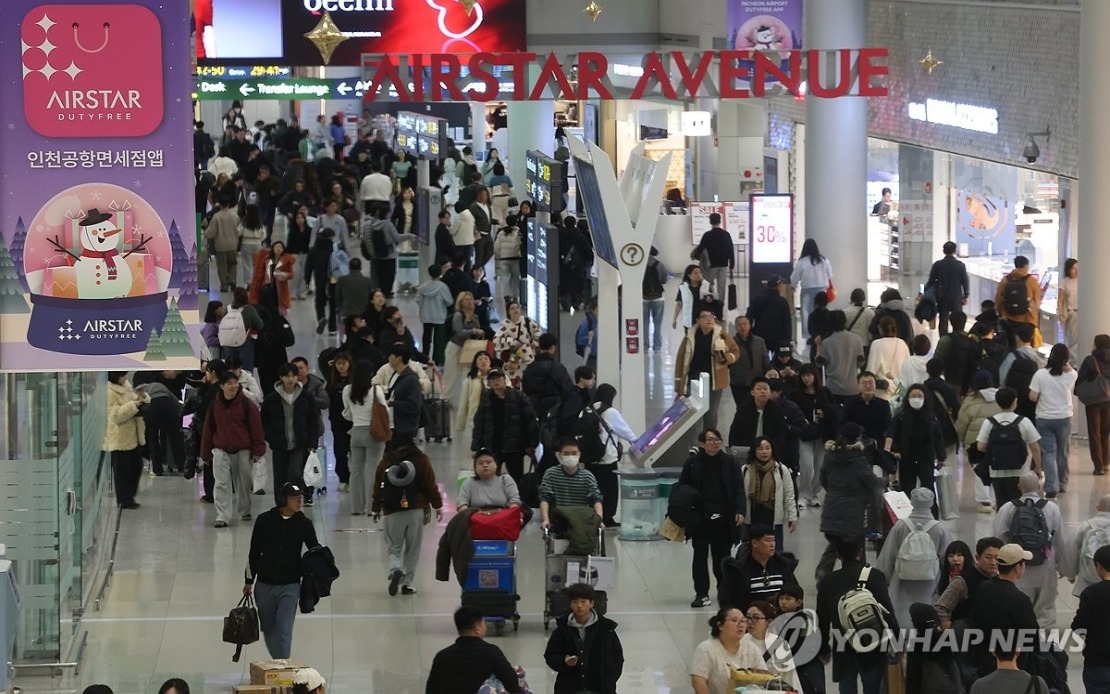
South Korea's tourism sector is experiencing robust momentum, having crossed the significant 10-million-visitor threshold by the third weekend of June—substantially ahead of the previous year's timeline. According to the Ministry of Culture, Sports and Tourism, this represents the earliest the milestone has been reached in any calendar year, positioning the nation for what could become its strongest annual tourism performance on record. The acceleration reflects a fundamental shift in international travel patterns and renewed confidence in South Korea as a preferred destination among global travellers.
When measured against 2023's trajectory, the acceleration is particularly noteworthy. Last year, South Korea did not reach the 10-million mark until mid-July, meaning this year's visitors arrived roughly a month earlier. This timing advantage suggests that sustained demand could push the full-year total significantly beyond previous peaks, assuming growth patterns hold through the remainder of 2024. The compressed timeline underscores how aggressively inbound tourism has rebounded from earlier pandemic-related disruptions and the lingering effects on international travel confidence.
May's performance exemplified the underlying strength of the recovery, with nearly 1.95 million visitors recorded during that month alone. This figure represented a 19.4 per cent increase compared to May of the previous year, demonstrating sustained expansion rather than temporary spikes. The consistency of month-on-month growth through the first half suggests structural improvements in South Korea's appeal to international markets, rather than seasonal anomalies that could prove unsustainable.
Geographic diversity in visitor origins reveals important market dynamics. Chinese nationals constituted the largest single source group in May with 560,000 arrivals, reflecting China's recovering outbound tourism sector and the enduring appeal of Korean cultural products and shopping experiences. Japanese visitors followed with 360,000 arrivals, while Americans contributed 210,000. This composition highlights South Korea's multi-market dependency and its strong positioning within Asian tourism corridors, alongside its penetration into Western markets. For Malaysian and Southeast Asian observers, the dominance of Northeast Asian sources underscores the region's purchasing power and travel propensity.
An often-overlooked dimension of South Korea's tourism recovery involves geographic distribution within the country itself. Regional airports, which often struggle to compete with the capital's concentration of attractions and infrastructure, have experienced steady growth in foreign passenger volumes. Arrivals through these provincial gateways expanded from 230,000 in January to 360,000 in May, representing a 56 per cent increase over five months. This spreading of visitor flows reduces pressure on Seoul's tourism infrastructure and creates economic benefits for rural and secondary urban regions, aligning with broader policy objectives to decentralise tourism revenue.
Foreign visitor spending patterns have reached unprecedented levels, with May's card expenditures—encompassing both physical purchases and online transactions—reaching 2.12 trillion won, equivalent to approximately US$1.38 billion. Significantly, this marks the first month since tourism statistics began being systematically tracked in 2018 that monthly spending exceeded the 2-trillion-won threshold. This metric carries particular relevance for retail, hospitality, and entertainment sectors that depend on high-value international consumer activity, and suggests visitors are spending more per capita than historical averages.
The geopolitical backdrop adds complexity to interpreting these figures. Officials specifically noted that the growth occurred despite elevated fuel surcharges stemming from Middle East tensions, which typically increases the cost of long-haul flights to Northeast Asia. That arrivals nonetheless grew 21 per cent year-on-year through May indicates demand has proven resilient against price headwinds that might otherwise suppress discretionary international travel. For Southeast Asian destinations competing for similar markets, this suggests that strong destination brand equity and cultural appeal can overcome cost barriers.
Government strategy increasingly emphasises public-private collaboration to sustain and accelerate these gains. Kang Jung-won, the Ministry of Culture, Sports and Tourism's tourism policy office head, articulated plans to deepen partnerships with private-sector entities, particularly leveraging South Korea's dominant cultural exports including K-pop entertainment and manufacturing companies. By integrating popular culture promotion with traditional tourism marketing, Seoul aims to create reinforcing feedback loops where entertainment consumption drives destination visitation and vice versa. This approach offers comparative lessons for Malaysia and other Southeast Asian nations seeking to amplify their cultural soft power.
The Korean Wave's persistent global influence remains perhaps the most distinctive factor underpinning these tourism gains. Unlike destinations relying primarily on natural scenery or historical heritage, South Korea has successfully monetised contemporary cultural products—music, television, film, and fashion—to attract younger, affluent international audiences. This demographic skews heavily toward repeat visitation and high per-capita spending, supporting the expenditure data showing record monthly card outlays.
For Southeast Asian tourism ministers and destination marketers, South Korea's experience illustrates how strategic investment in cultural industries can generate tangible tourism returns and economic diversification. The compressed achievement of the 10-million threshold, combined with record spending levels, demonstrates that recovery timelines can be substantially shortened through coordinated policy and authentic market appeal. As regional competitors vie for share of increasingly mobile Asian travel markets, South Korea's trajectory serves as both benchmark and cautionary indicator of competition intensity.
Looking forward, the trajectory suggests South Korea could potentially surpass 13 million visitors for the full year, contingent on sustained momentum through autumn and year-end periods. Such an outcome would represent meaningful growth even against pre-pandemic peaks, validating the government's long-term tourism development strategy and private sector investments in capacity expansion. The coming months will clarify whether mid-year acceleration proves durable or reflects temporary demand surges vulnerable to correction.

