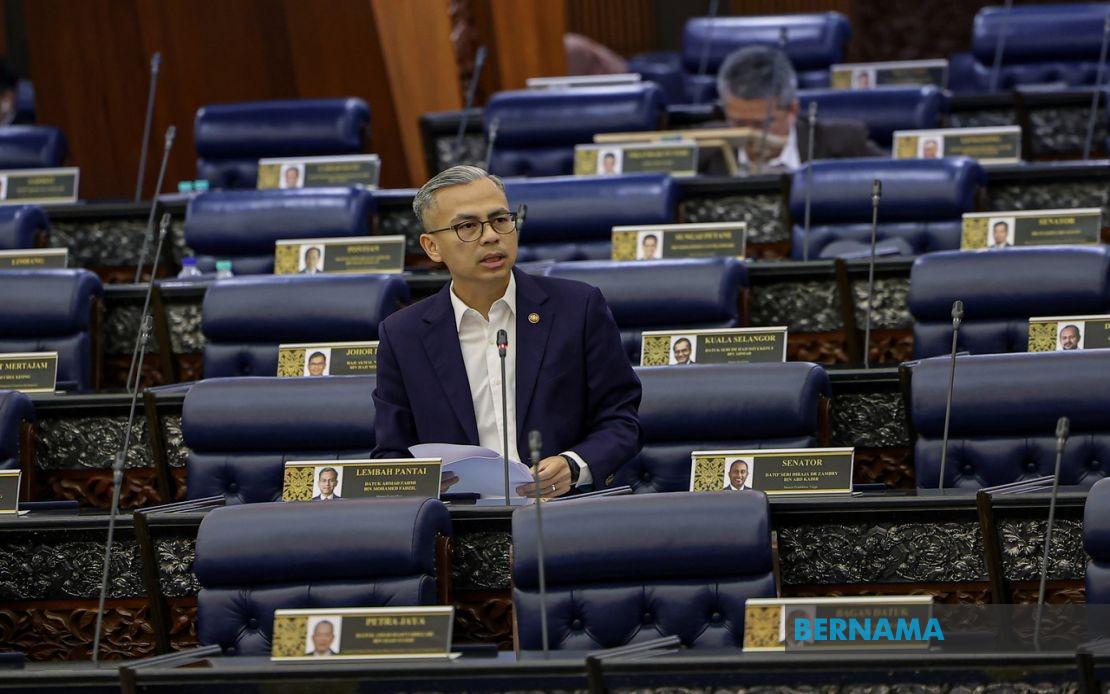
Social media platforms operating in Malaysia face substantial financial consequences if they fail to implement mandatory age-verification mechanisms under the Online Safety Act 2025. Communications Minister Datuk Fahmi Fadzil announced in Parliament that non-compliant application service providers could be penalised up to RM10 million, underscoring the government's determination to protect young users from inappropriate content and predatory behaviour online.
The regulatory framework grants the Malaysian Communications and Multimedia Commission enforcement authority over licensed service providers. When MCMC identifies violations of Part III of the Online Safety Act 2025, it can issue formal notices of non-compliance to the offending platforms. Upon receiving such notices, companies have two paths forward: they may pay the prescribed penalty or lodge representations with MCMC requesting a review of the enforcement action. This dual-option approach provides companies with a mechanism to contest findings before financial penalties take effect, balancing regulatory authority with due process considerations.
Beyond the RM10 million ceiling for Part III violations, the legislation establishes additional enforcement mechanisms to ensure compliance. Under Section 30 of the Act, MCMC possesses explicit power to issue written directives to licensed service providers concerning their adherence to any provision within the legislation. Platforms that disregard such directives face criminal liability rather than merely administrative penalties. Upon conviction, offenders can be fined up to RM1 million, with an additional RM100,000 fine for each calendar day the violation persists following sentencing. This escalating penalty structure creates strong incentives for platforms to remedy breaches promptly.
The government has adopted a collaborative approach rather than relying solely on punitive measures. Since January, Malaysian authorities have engaged in an extensive dialogue with social media companies through a regulatory sandbox initiative designed specifically to explore practical implementation pathways for age-verification technologies. These sessions, which have exceeded 30 in total and occur through both collective forums and individualised meetings, reveal significant variations in how different platforms conceptualise and execute verification systems. Each major platform confronts distinct technical, commercial, and operational hurdles when introducing such mechanisms, requiring tailored discussion of implementation strategies.
Age verification represents a complex policy challenge that extends far beyond Malaysia's borders. Over 25 countries worldwide have already adopted comparable requirements, creating an emerging international consensus around protecting minors in digital spaces. This global precedent provides Malaysian policymakers with empirical evidence regarding feasibility and effectiveness, while also establishing competitive equity—local platforms must meet the same verification standards as their international counterparts operating in Malaysian markets. The widespread adoption internationally suggests that technical and administrative hurdles, while genuine, remain surmountable with sufficient investment and commitment.
For Malaysian users and families, the age-verification mandate addresses mounting concerns about children's exposure to harmful online content, including material promoting self-harm, substance abuse, or sexually explicit behaviour. By restricting access to age-inappropriate services, platforms can create cleaner information environments for younger users while protecting them from algorithmic recommendation systems designed to maximise engagement regardless of developmental appropriateness. This is particularly significant given Malaysia's young demographic profile and rapid smartphone penetration rates among school-age children.
The enforcement architecture reflects sophisticated regulatory thinking about digital platform governance. Rather than imposing uniform technical specifications that might become obsolete as technology evolves, the legislation establishes outcome-oriented requirements while granting MCMC flexibility to update implementation directives as circumstances change. This approach recognises that age-verification methodologies continue to develop, with emerging solutions potentially employing biometric data, digital identity systems, or decentralised verification protocols that didn't exist when the legislation was drafted.
Regional observers are watching Malaysia's implementation closely, as Southeast Asia struggles collectively with platform accountability issues. While Singapore and Indonesia have pursued different regulatory models—ranging from content removal mandates to platform transparency requirements—Malaysia's focus on user verification and age-gating mechanisms represents a distinct approach targeting upstream access control rather than downstream content moderation. Successful implementation could influence policy frameworks across the region, while implementation difficulties might shape how other ASEAN economies design their own digital governance structures.
Platforms can reasonably be expected to accelerate their age-verification deployments given the financial consequences of continued non-compliance. Major technology companies have demonstrated capacity to implement sophisticated verification systems in other markets, suggesting that resistance stems primarily from cost considerations and business model preferences rather than genuine technical impossibility. The RM10 million penalty threshold potentially exceeds annual operating margins for some smaller platforms while representing mere overhead costs for global technology giants, creating differentiated incentive structures that may reshape the competitive landscape.
Longer-term implementation success will depend upon MCMC's consistency in enforcement and the government's willingness to pursue penalties against prominent platforms. Regulatory credibility rests upon demonstrable application of sanctions, not merely their announcement. If enforcement appears selective or insufficiently rigorous, platforms may calculate that non-compliance remains economically rational despite stated penalties. Conversely, swift enforcement action against high-profile violators would signal serious governmental commitment, likely compelling rapid industry-wide adoption.
The age-verification initiative also reflects evolving public health and child protection frameworks that increasingly treat digital access as a governance issue comparable to tobacco and alcohol regulation. Just as Malaysia restricts alcohol sales to licensed venues where age verification occurs at point-of-sale, the Online Safety Act 2025 applies similar logic to digital services. This conceptual parallel helps explain the substantial financial penalties—they reflect societal judgment that uncontrolled youth access to certain online content merits enforcement mechanisms comparable to those protecting against other acknowledged harms.

