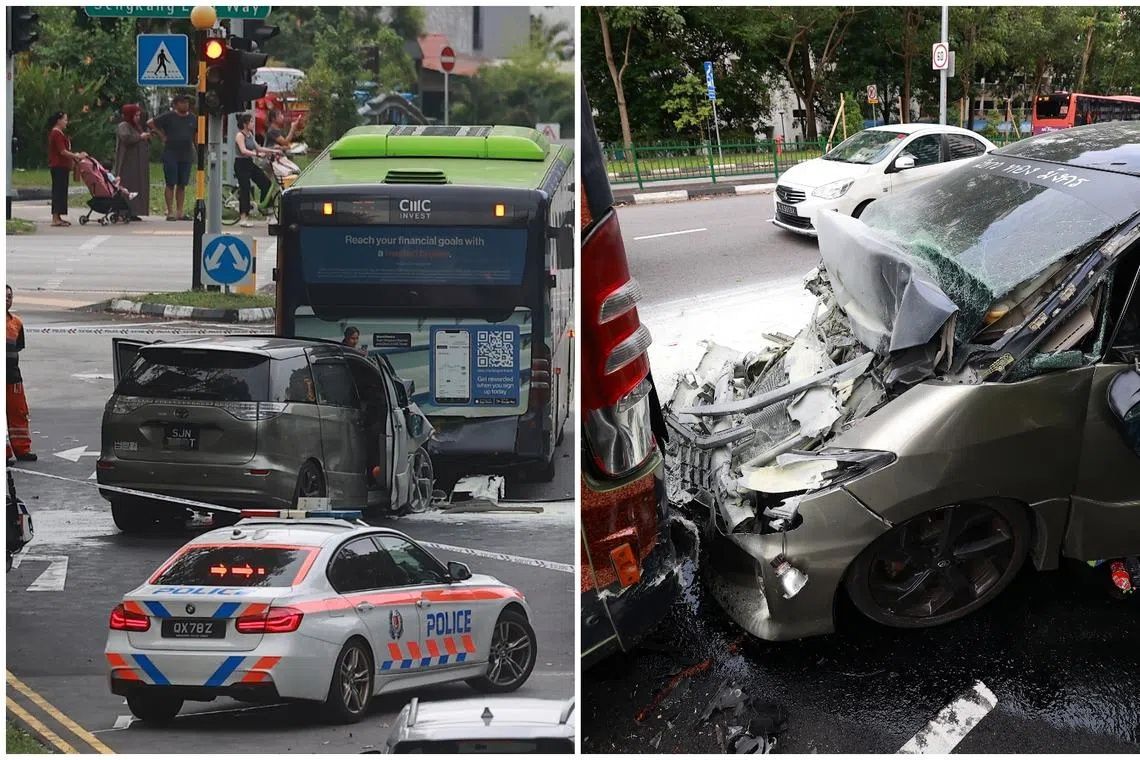
Singapore is grappling with a mounting public safety crisis as drug-impaired driving incidents escalate sharply, with medical professionals warning that an anaesthetic substance increasingly being inhaled through e-vaporisers poses unprecedented risks to road safety across the nation.
In a troubling pattern emerging over recent months, law enforcement has identified multiple drivers operating vehicles under the influence of illicit substances, with consequences that have proven fatal. During just 12 days in June alone, three separate motorists faced charges related to driving while impaired by drugs. Two cases involved methamphetamine, commonly known as Ice, while a third individual had consumed etomidate—an anaesthetic typically used in hospital settings but now appearing in recreational e-vaporiser pods known as Kpods. These three incidents represent only a fraction of a much larger problem that has drawn the attention of medical authorities and policymakers alike.
Dr Jonathan Tang, a clinical toxicologist at the Emergency Medicine Department of the National University Hospital, has become an unexpected expert on the dangers of etomidate impairment through his work with trauma patients. He has treated multiple individuals who suffered serious injuries in traffic collisions where the at-fault driver had been using etomidate-laced vapes. His professional assessment draws a direct parallel to alcohol intoxication: the substance significantly undermines a driver's cognitive and motor capabilities, creating substantial danger not only to the impaired individual but to everyone sharing the road. The chemical's effects manifest in ways that prove particularly hazardous in traffic situations, including delayed reaction times, compromised ability to perceive hazards, and loss of vehicle control—a combination almost guaranteed to produce catastrophic outcomes.
One case illustrates the deadly consequences. On May 13, 2025, a car collided with a bus in Punggol, killing the 28-year-old female passenger. Police discovered 42 vapes and over 1,200 pods in the vehicle, some containing etomidate. Testing revealed both the driver and the deceased woman had etomidate in their bloodstreams. The incident sparked renewed concern among safety advocates and led parliamentary member Valerie Lee to question whether standard police protocols adequately screen for drug and substance impairment following accidents.
Coordinating Minister for National Security K. Shanmugam responded by confirming that Traffic Police assess motorists for impaired driving at accident scenes and will order blood tests if substance use is suspected. However, his parliamentary reply also disclosed alarming statistics that underscore the severity of the situation. Between 2023 and 2025, police documented 38 traffic accidents connected to drug or etomidate use, resulting in 19 deaths. The trend has accelerated dramatically in 2025, when 29 of the 38 accidents occurred—with 18 involving etomidate and seven involving both substances combined. Among the 19 fatal cases, ten involved conventional drugs while nine involved etomidate alone.
The medical dangers extend beyond impaired driving performance. Dr Tang has highlighted that etomidate use triggers psychiatric symptoms including depression, heightened aggression, and impulsivity that can precipitate suicide attempts. These psychological effects compound the driving impairment, creating a driver whose judgment, emotional stability, and physical coordination are all simultaneously compromised. The combined effect transforms an etomidate user behind the wheel into a genuine threat to themselves and everyone around them on the road. This psychological dimension distinguishes etomidate from some other recreational substances and suggests the harm may be even more severe than initial accident statistics reveal.
Recent court cases provide concrete examples of how these impairments translate into real-world consequences. Mohamed Firdouz Mohamed Akram, arrested on June 19, faced multiple charges after colliding with a taxi in Kallang while under the influence of Ice, injuring both the taxi driver and a passenger. Police discovered drugs, vaporisers, and weapons in his vehicle. Remarkably, he abandoned his car and fled the scene, ultimately apprehended later. Similarly, Puah Zhe Cong, charged on June 10 after allegedly driving under etomidate's influence, caused one death and two injuries in what police classified as dangerous driving. A third case involved Sivakandesh, who crashed his Mercedes-Benz into a rubbish chute and multiple parked vehicles in Yishun while allegedly impaired by methamphetamine.
Singapore's overall road safety picture has deteriorated significantly. Traffic deaths reached a decade-high of 149 in 2025, compared with 141 in 2016 and 142 in 2024. The number of injured persons also climbed from 9,342 in 2024 to 9,955 in 2025, indicating that even non-fatal accidents are becoming more frequent. These statistics suggest that drug-impaired driving, while a distinct problem, is part of a broader deterioration in road safety that demands comprehensive attention.
Legal penalties for driving under the influence reflect the seriousness with which authorities regard the offence. First-time offenders face potential imprisonment up to one year, fines up to S$10,000, or both. Repeat offenders face more severe consequences: up to two years imprisonment and fines reaching S$20,000. However, deterrent sentences may prove insufficient if users remain unaware of the specific dangers posed by etomidate, a substance many may not recognise as impairing.
For Malaysia and other Southeast Asian nations monitoring Singapore's experience, the situation signals an emerging public health threat that may not remain confined to Singapore's borders. The availability of etomidate in e-vaporiser form suggests a distribution network operating across the region. Malaysian authorities and neighbouring countries should consider whether similar incidents are occurring domestically but remaining underdiagnosed or unattributed to etomidate. The substance's medical legitimacy may cause both law enforcement and medical professionals to overlook its recreational use.
The convergence of powerful intoxicating substances, recreational drug delivery methods, and motor vehicle operation creates a perfect storm for traffic fatalities. Medical experts like Dr Tang are essentially sounding an alarm that existing frameworks for detecting and preventing drug-impaired driving may be inadequate for substances like etomidate. The 19 fatalities between 2023 and 2025 represent families torn apart and communities disrupted. As Singapore's authorities work to address this crisis through enhanced screening, public education, and enforcement, the underlying challenge remains: preventing intoxicated individuals from operating vehicles before tragedy strikes.
The path forward requires coordination between law enforcement, medical professionals, and public health authorities to identify emerging substances, understand their effects, educate the public about their dangers, and implement effective prevention strategies. For a densely populated island nation where traffic is heavy and escape routes minimal, the stakes of failing to address drug-impaired driving are simply too high to ignore.

