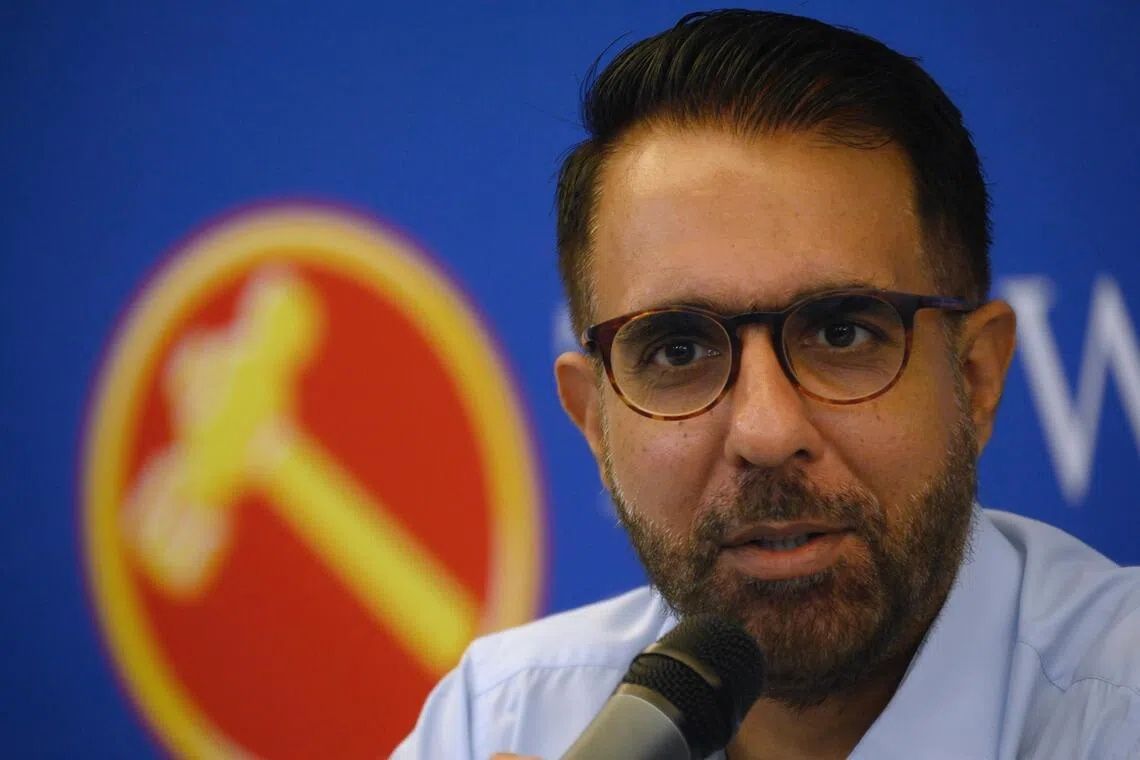
Singapore's Workers' Party heads toward a pivotal internal contest that could reshape opposition politics in the city-state, with discontented cadres preparing to mount a serious challenge against Secretary-General Pritam Singh at elections scheduled for June 28. The brewing leadership struggle reflects deeper rifts within the party over Singh's handling of recent crises, his legal troubles, and broader questions about the opposition's strategic direction and moral authority at a time when Singapore's political landscape faces significant scrutiny.
Since a High Court decision in December 2025 upheld Singh's conviction for providing misleading information to a parliamentary committee, discontent has crystallised into concrete action. More than 25 party cadres submitted a formal request in December for a special conference where Singh will be compelled to explain his conduct and face potential removal. This represents an unprecedented challenge to Singh, who has led the party without facing organised opposition during his eight-year tenure. The gathering momentum among dissidents reflects not merely personal dissatisfaction but serious ideological and strategic disagreements about the opposition's future direction and credibility.
The search for a viable challenger has consumed party circles in recent months, with internal discussions focusing on several heavyweight contenders. Aljunied GRC MP Gerald Giam, Hougang MP Dennis Tan, and Sengkang GRC MPs He Ting Ru and Jamus Lim have all been mentioned as potential candidates. Notably, He and Lim served on the three-member disciplinary panel that found Singh had violated party constitution provisions through his conviction. Party insiders emphasise that the situation remains fluid, with final decisions potentially deferred until voting day itself, reflecting the complex calculations cadres face in determining whether to commit openly to challenging the incumbent.
The institutional mechanics of the June 28 proceedings add complexity to the unfolding drama. The party will hold two separate meetings: first a specially convened conference where Singh must account for his actions, followed by the regular biennial cadre conference for leadership elections. During the special meeting, if Singh does not resign voluntarily, cadres will conduct a secret ballot on his continued leadership. This procedural structure creates multiple decision points where momentum for change can either build or falter. Under party rules, only a simple majority is required to remove or retain Singh, a relatively low threshold that could embolden challengers.
The roots of current discontent extend beyond Singh's legal troubles, reaching into the party's strategic performance and internal governance. The 25 cadres initiating proceedings felt Singh mishandled the crisis involving former Sengkang GRC MP Raeesah Khan, who made false claims in Parliament in August 2021 before admitting the deception in November that year. Parliamentary investigators and courts determined that Singh had guided Khan in maintaining her falsehood rather than encouraging immediate clarification. This failure of leadership during a critical moment established the foundation for current grievances and raised fundamental questions about the party's integrity and judgment.
Party veterans and current cadres argue that Singh's continued leadership threatens the Workers' Party's distinctive brand positioning. In Singapore's constrained political environment, the opposition has maintained legitimacy partly through claims to moral superiority and adherence to higher ethical standards. With Singh convicted of misleading Parliament and leading the party at a moment when its leader faces reputational damage, cadres fear the party has squandered its ethical high ground. One unnamed cadre articulated this concern bluntly: "People vote for WP because they trust us to be different. If our leader is convicted of lying, we lose the moral high ground." This perception that Singh's continued presence undermines the party's core identity motivates many dissidents more profoundly than personality-driven factors.
The withdrawal of former party chief Low Thia Khiang's apparent support for Singh has introduced an intriguing variable into succession calculations. Low led the party from 2001 to 2018 and remains influential among cadres despite having relinquished the top position. Reports indicate Low voted against Singh during a central executive committee meeting discussing the disciplinary panel's findings, though he has not publicly declared support for any challenger. Low's continuing role on the CEC and his substantial historical credibility within party ranks means his endorsement of an alternative candidate could prove decisive. During the 2016 election, Low himself faced a challenge from then-Aljunied GRC MP Chen Show Mao, supported by many of the same veteran cadres now mobilising against Singh. If Low were to actively back a challenger, analysis suggests that approximately 30 openly dissatisfied cadres, combined with those who follow Low's lead, could marshal sufficient votes to remove Singh.
Separate from the conviction controversy, Singh has weathered criticism over the party's performance at the 2025 general election and strategic decisions made during the campaign. Several cadres expressed disappointment that the party failed to capture additional constituencies despite deploying what they considered a strong slate of candidates. Additionally, Singh's decision to withdraw from the Marine Parade-Braddell Heights GRC contest on Nomination Day generated internal questioning about tactical judgment. These performance-related grievances, combined with the conviction crisis, have created a climate where Singh's leadership competence itself has become contested terrain rather than a settled question.
A significant blow to Singh's authority came when Prime Minister Lawrence Wong removed him as Leader of the Opposition in January 2026, a formal demotion that diminished the party's parliamentary prominence. When Wong invited the Workers' Party to nominate another elected MP for the opposition leadership role, Singh and the party chose to decline and close ranks instead. While this decision reflected party solidarity in one sense, some cadres privately questioned whether the loyalty damaged the broader opposition cause and ultimately harmed party interests by surrendering parliamentary platform opportunities. This strategic disagreement illustrates how Singh's difficulties extend beyond personal conviction to encompass fundamental questions about opposition tactics and party positioning within Singapore's political system.
The procedural pathway ahead offers multiple junctures where the balance could shift decisively. If Singh resigns at the special conference, he remains eligible to contest again at the biennial elections, preserving theoretical opportunity for his comeback. If he faces a secret ballot vote and wins by a narrow margin, the narrowness of victory itself could galvanise further challenges at subsequent meetings. Alternatively, if Singh prevails substantially or if no credible challenger emerges, the party could temporarily resolve its leadership question while underlying ideological and strategic divisions persist unresolved. Party insiders emphasise that outcomes at the first meeting will significantly influence whether challengers step forward for the second contest.
For Malaysia and broader Southeast Asian observers, the Workers' Party's internal struggle carries implications beyond Singapore's boundaries. Opposition parties throughout the region frequently grapple with questions of leadership credibility, succession planning, and maintaining principled positions while competing in constrained political environments. Singh's conviction for parliamentary dishonesty has highlighted fundamental tensions between loyalty to leadership and maintenance of moral authority—tensions that opposition movements elsewhere must also navigate. The outcome of June's elections will signal how opposition parties balance pragmatic political survival with ethical standards, a balance question that resonates throughout Southeast Asia's fragmented opposition landscape.
The uncertainty surrounding likely contenders, combined with the compressed timeline before June 28, means that final outcomes remain unpredictable. Nevertheless, the intensity of mobilisation among dissident cadres suggests that Singh faces a genuine challenge rather than a ceremonial election. Whether Low Thia Khiang commits his considerable influence to a challenger, whether a strong alternative candidate emerges willing to absorb the political costs of challenging an incumbent, and whether dissident cadres maintain cohesion through the dual-meeting process will ultimately determine whether Singh retains the leadership he has held uncontested for eight years. The Workers' Party's resolution of this leadership crisis will reverberate through Singapore's political ecology and provide instructive lessons for opposition movements navigating the perpetual tension between institutional stability and principled reform.

