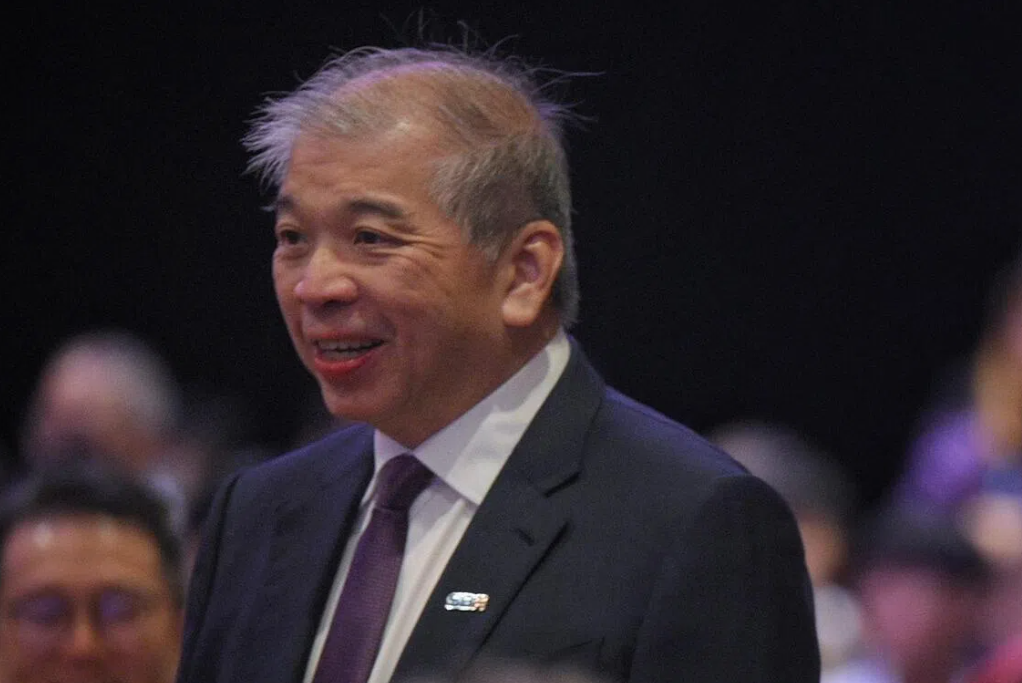
Singapore's prominent shipping magnate Teo Siong Seng has become entangled in a significant legal battle unfolding in American courts, facing civil lawsuits that extend the allegations against him and fellow container industry executives well beyond criminal proceedings. Two separate class-action suits filed in California's District Court for the Northern District in early June represent a new phase of legal challenge—this time driven by private American businesses seeking to recover substantial financial losses they claim to have suffered as victims of an alleged international price-fixing cartel.
These civil filings, submitted by manufacturing firm C.A. Spalding Company on June 2 and transportation company Daybreak Express on June 9, operate independently from the criminal indictment issued by the US Department of Justice. The distinction matters significantly: while criminal charges target potential jail time and reputational damage, civil lawsuits open the door for American companies to pursue monetary compensation through the courts. The two cases collectively represent the private sector's formal response to what prosecutors allege was a coordinated scheme to artificially restrict the global supply of shipping containers and manipulate pricing.
At the heart of these allegations lies a cartel that controlled approximately 95 percent of worldwide standard dry container production. The conspiracy allegedly involved executives from China International Marine Containers (CIMC), Shanghai Universal Logistics Equipment, CXIC Group Containers, and Singamas Container Holdings—the latter company where Teo serves as chief executive. The indictment, formally presented on January 22 and made public on May 19, provided the evidentiary foundation upon which the civil suits were constructed, offering American plaintiffs concrete allegations of wrongdoing to pursue damages.
The mechanics of the alleged conspiracy reveal a sophisticated operation designed to control market supply and maintain artificially elevated prices. Rather than engaging in overt price-fixing discussions, the conspirators allegedly employed production restrictions as their primary tool. They deliberately limited the number of operational shifts and daily working hours across container manufacturing lines, effectively constraining global supply. More remarkably, they installed 87 video surveillance cameras positioned across 49 production lines at their respective factories—ostensibly to monitor compliance with agreed output restrictions and prevent any manufacturer from secretly increasing production to undercut competitors.
The financial impact of this alleged scheme manifested dramatically in global container markets. A standard 20-foot shipping container, the industry's most common unit, more than doubled in price during the conspiracy's alleged peak years. The cost climbed from approximately US$1,600 in 2019 to US$3,500 by 2021, a trajectory that devastated American importers and exporters reliant on these containers for their supply chains. This price trajectory extended far beyond what normal market conditions would have justified, particularly given that container demand remained relatively stable throughout this period.
The alleged conspirators enjoyed extraordinary profitability from these inflated prices, according to court documents. CIMC's container manufacturing division experienced explosive profit growth: from 137 million yuan in 2019, profits surged to 1.99 billion yuan in 2020, then skyrocketed to 11.3 billion yuan in 2021. Singamas Container Holdings, Teo's company, demonstrated an even more dramatic reversal of fortune, transitioning from a substantial 110 million US dollar loss in 2019 to a profit of approximately US$186.8 million by 2021. These financial results suggest that the alleged price manipulation generated billions in additional revenue that would not have materialized in a competitive market.
The civil lawsuits specifically request treble damages from the courts, a legal remedy that would multiply the actual financial losses suffered by US businesses by three. This provision creates the potential for enormous financial liability: if found liable, the defendants and their companies could face penalties three times the value of actual damages incurred by American plaintiffs. Such penalties are designed not merely to compensate victims but also to deter future antitrust violations by imposing costs substantially exceeding the conspirators' gains. For executives and companies involved, the prospect of treble damages represents an exceptionally serious legal and financial threat.
Court records accessed through PACER, the federal electronic filing system, confirm that summonses were formally issued on June 8 and 11, creating binding legal obligations for the named defendants to respond within 21 days. The failure to mount a timely defense could result in default judgments being entered against them without further proceedings. Among the individuals named alongside Teo are Mai Boliang, former president and chief executive of CIMC who became chairman in August 2020; Huang Tianhua, CIMC's vice-president; Wan Yongbo, general manager of CIMC's Operation Management Centre; Li Qianmin, general manager of Shanghai Universal Logistics Equipment; and Zhang Yuqiang, chief executive of CXIC Group Containers. Additionally, Vick Ma, Singamas's marketing director, is named in the suits and currently faces extradition proceedings to the United States after his April arrest in France.
Teo himself has maintained silence regarding the civil lawsuits, declining to comment when approached by journalists. However, the 71-year-old has already taken significant measures to distance himself from his various leadership positions since the criminal indictment became public. He has taken leaves of absence from multiple roles that collectively underscore his prominence in Singapore's business establishment and governance structure. These positions include the executive chairmanship of Pacific International Lines, Singapore's long-established shipping company; the chairmanship of the Singapore Business Federation, the country's apex business chamber representing thousands of companies; his board membership at Enterprise Singapore, the government trade agency; and his pro-chancellor role at the National University of Singapore.
Teo's departure from the Singapore Business Federation chairmanship represents a particularly significant development given his deep historical involvement with the organization. He announced on May 28 that he would not seek re-election as SBF chairman when his current term concludes on June 24, effectively ending his tenure before completion. This decision followed his recent election to the position on May 20, 2025, when he succeeded Lim Ming Yan, who stepped down early to assume the chairmanship of Changi Airport Group. Teo's earlier service as SBF chairman from 2014 to 2020 encompassed three consecutive two-year terms, establishing him as one of the organization's most significant recent leaders during a period of major transformation in Singapore's economic landscape.
In his sole public statement addressing the allegations, released on May 28, Teo explained his decision to step back from his various roles by emphasizing the need for personal time to manage the legal situation and protect the interests of the organizations involved. "I have proactively decided to take these leaves of absence to afford myself sufficient time to attend to this matter, and for the best interests of the aforementioned organisations," he stated. This measured but sparse statement contrasts with the magnitude of the legal challenge confronting him, suggesting a strategy of limited public engagement while focusing resources on legal defense in American courts. The unfolding litigation in California will likely dominate both Teo's immediate future and Singapore's business discourse for months or years to come, with implications extending across the region's shipping and logistics sectors.

