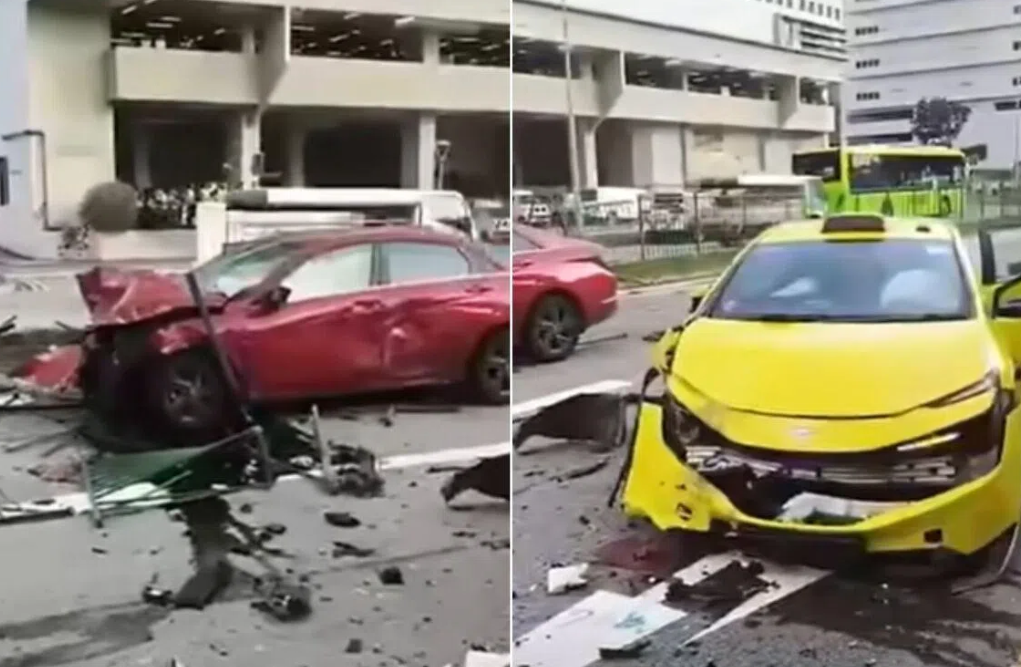
A 36-year-old Singapore driver has been charged with a string of criminal and traffic offences stemming from a vehicle collision in Kallang that left two people injured, including allegations that he was operating a motor vehicle while under the influence of methamphetamine, commonly known as Ice. Mohamed Firdouz Mohamed Akram appeared in court on June 19 to face the charges, which encompass dangerous driving causing bodily harm, operating a vehicle without the requisite Class 3 licence, and two separate weapons possession counts.
The incident unfolded on the morning of June 17 when authorities allege Firdouz consumed Ice before getting behind the wheel of his car and driving along Kallang Bahru at approximately 8am. Police investigations suggest that while driving under the influence of the drug, he failed to maintain adequate control over his vehicle, resulting in a collision with a taxi that was travelling the same route. The crash, though not described as catastrophic, was serious enough to cause injuries to both occupants of the cab.
The taxi driver, a 60-year-old man, complained of chest pains following the impact, while his 43-year-old passenger suffered pain in her tailbone area. Both received medical attention for their injuries. The circumstances of the collision—involving a driver apparently impaired by drugs and losing vehicle control—highlight ongoing concerns about substance-related traffic safety across the region, a problem that law enforcement agencies in Malaysia and other Southeast Asian nations have similarly grappled with in recent years.
What made this incident particularly notable was Firdouz's conduct immediately after the crash. Rather than remaining at the scene to assist the injured parties or cooperate with authorities, he allegedly abandoned his vehicle and fled the scene before police officers arrived. This hit-and-run response compounded the severity of his legal jeopardy and suggested consciousness of guilt regarding his impaired driving.
Police conducted a swift investigation and located Firdouz within five hours of the initial report being filed. During the arrest and subsequent searches, officers discovered a troubling array of items inside his vehicle. According to a police statement released on June 18, investigators seized suspected drugs, drug-related paraphernalia, vaporisers, and a knuckleduster from the car. Additionally, court documents revealed that when officers apprehended him at a room in the Village Hotel Katong on Marine Parade Road around 1pm on June 17—several hours after the crash—they found two knives in his possession, leading to the separate weapons charges.
The discovery of vaporisers alongside the suspected drugs suggests a pattern of substance use that extends beyond a single incident of impaired driving. Vaporisers are sometimes employed by users to consume methamphetamine and other drugs, indicating this may not have been an isolated instance of drug consumption. The presence of weapons including a knuckleduster and two knives raises additional concerns about the circumstances under which Firdouz was operating and the potential risk he posed to public safety.
The speed with which police identified and apprehended Firdouz demonstrates effective police work, though it also underscores the visible trail that modern surveillance and investigative techniques can establish. Court documents reveal that police managed to establish his identity shortly after the crash and located him before the day had ended. His arrest came within hours of the initial report, suggesting either readily available identification information or quick detective work in narrowing down the suspect's location.
Under Singapore law, the consequences for operating a vehicle while impaired by drugs are severe. A person convicted of driving under the influence of controlled substances faces potential imprisonment of up to one year, a fine of up to S$10,000, or both penalties combined. The more serious charge of causing injury to others through dangerous driving carries potential jail time of up to one year alongside a fine ranging from S$2,000 to S$10,000. The weapons possession charges would likely carry their own separate penalties, and the cumulative impact of multiple convictions could result in substantial imprisonment if Firdouz is found guilty on all counts.
Firdouz's case touches on a persistent regional concern regarding drug-impaired driving. Methamphetamine abuse has proliferated across Southeast Asia, and its effects on driving ability—including impaired judgment, reduced motor control, increased aggression, and tunnel vision—make it particularly hazardous when combined with vehicle operation. The incident illustrates how substance abuse does not exist in isolation but often correlates with other criminal activities, as evidenced by the weapons found in his possession.
The case will return to court on July 17 for further mention, where prosecutors will likely present additional evidence and the defendant's legal team will respond to the charges. The injuries sustained by the taxi driver and passenger may also factor into sentencing considerations if Firdouz is convicted, particularly given the damage to innocent parties resulting from his alleged recklessness. For Malaysian readers, the case serves as a sobering reminder of the multi-faceted dangers posed by drug abuse in traffic contexts, an issue that transcends international borders and demands consistent vigilance from regional law enforcement agencies.

