Singapore's Internal Security Department has moved against two citizens for radicalisation fuelled by the Israeli-Palestinian conflict, marking the latest escalation in the city-state's response to extremism triggered by overseas geopolitical tensions. The cases underscore how distant conflicts can catalyse domestic security threats through online exposure and ideological blending, a pattern increasingly recognised across Southeast Asia.
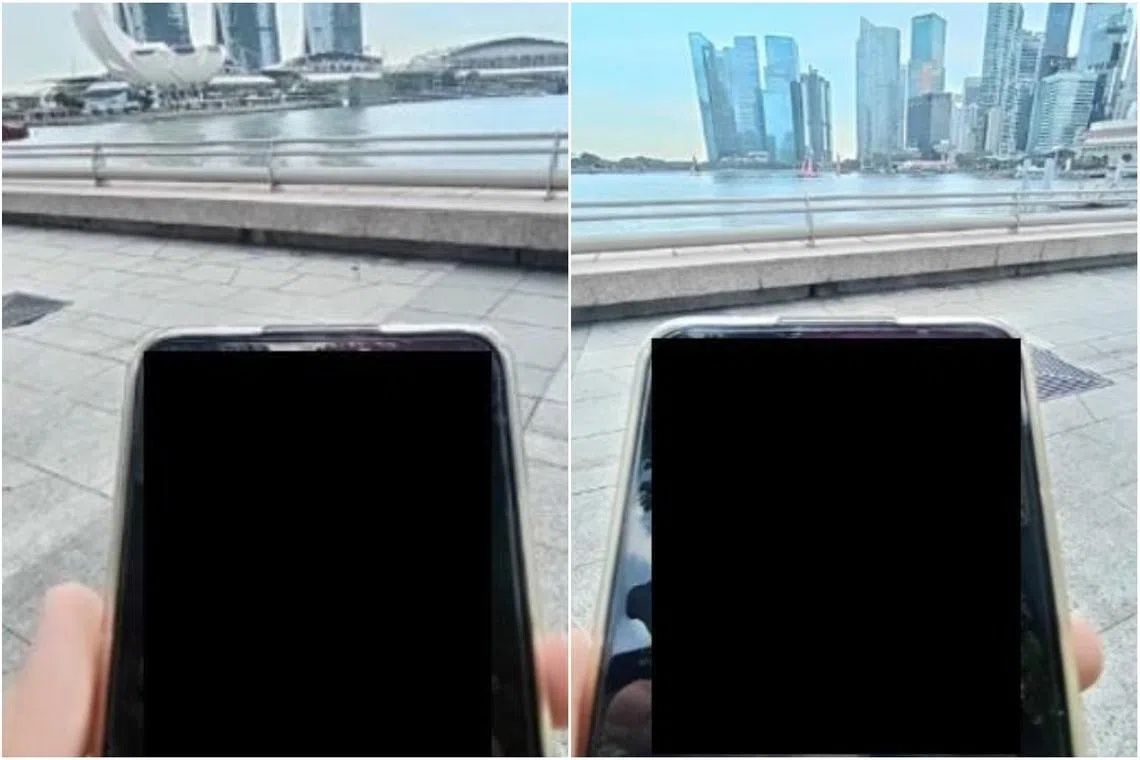
Cyrus Dzulqarnain Al-Shahriar, a 19-year-old student, was issued a restriction order after authorities discovered he had documented extremist materials with Marina Bay Sands as his backdrop—images he later posted publicly as a pledge of allegiance to an online Islamist group. The second individual, Tarmizi Mohd Taha, a 30-year-old customer service officer with previous service in the Singapore Police Force, received a detention order after admitting willingness to conduct attacks if Hamas directed him to do so. While operationally unrelated, both cases stemmed from radicalisation sparked by Hamas's October 7, 2023 assault on Israel, bringing the total number of Singaporeans detained under the Internal Security Act for conflict-related radicalisation to eight.
Cyrus's trajectory reveals how online exposure can transform casual religious curiosity into violent extremism across multiple ideological strands. Beginning in 2022 with membership in religious learning groups, he progressively consumed anti-Western, anti-LGBTQ content before pivoting toward pro-Hamas narratives following the October 2023 escalation. He openly endorsed Hamas's targeting of civilians as legitimate jihad, even contemplating travel to Gaza to join fighters—an idea he abandoned only due to practical constraints and personal fear rather than ideological rejection. The radicalisation intensified when he discovered a niche online group practising what extremism analysts term "composite violent extremism" or the "salad bar" approach, whereby individuals assemble a personalised ideology from disparate extremist sources rather than adhering to a single coherent system.
This group's ideology combined violent accelerationism with anti-Zionist conspiracy thinking, framing First World nations including Singapore as extensions of American and Zionist control requiring destruction to establish an Islamic-led global order. Within this environment, Cyrus began venerating terrorist attacks, including Al-Qaeda's September 11 operation that killed over 2,900 people and the 2002 Bali Bombings that claimed more than 200 lives. His participation in the group's "digital jihad" involved crafting disinformation to defame perceived anti-Islam figures and inciting violence against them online, whilst simultaneously glorifying Hamas and the Syrian militant organisation Hay'at Tahrir al-Sham.
A particularly concerning dimension of Cyrus's radicalisation involved exposure to incel ideology, the male-dominated online subculture centred on resentment toward romantic rejection and sexual deprivation. After encountering online content about school shooter Elliot Rodger, whose 2014 attack near the University of California, Santa Barbara claimed six lives and wounded fourteen, Cyrus adopted incel identity markers and made explicit threats of sexual violence against women online, using dehumanising terminology such as "foid." He fantasised about executing violence in school settings against LGBTQ individuals and romantic couples, representing a fusion of anti-Western Islamist extremism with misogynistic mass-violence ideology—a volatile combination authorities increasingly identify in younger radicalised individuals globally.
The authorities stressed that whilst Cyrus did not progress beyond ideation and took no concrete preparatory measures, his public endorsement of terrorism and incitement of violence constitute material security threats. He did not share these views with family or schoolmates, suggesting a compartmentalised online existence disconnected from his physical social networks—a pattern common among self-radicalised youth who develop extremist identities primarily through digital interaction. The lack of institutional knowledge among those closest to him indicates that traditional community-based detection mechanisms may prove ineffective against individuals operating entirely within encrypted and private online spaces.
Tarmizi's case, whilst operationally distinct, reflects similar radicalisation pathways rooted in the Gaza conflict. His prior service in the Singapore Police Force, where he trained as a logistics assistant, created a perceived operational value to militant groups—a professional skillset he explicitly offered to Hamas in exchange for the spiritual reward of martyrdom. This willingness to weaponise his former state security training for designated terrorist organisations represents a particularly acute counterterrorism challenge, as defectors from official institutions carry structural knowledge potentially valuable to adversaries.
The concentration of eight ISA cases stemming from the October 2023 conflict represents a significant spike in conflict-driven radicalisation within Singapore's security landscape. Malaysia, sharing demographic and religious similarities with Singapore, likely confronts comparable vulnerabilities as online extremist narratives circulate freely across the Strait of Malacca. Southeast Asian intelligence agencies have previously raised alarm over recruitment pipelines exploiting regional conflicts, whether involving Myanmar, the Philippines, or the Middle East. The transnational reach of encrypted platforms and online forums means that Gaza-related content radicalising Singaporeans operates identically across the region, warranting coordinated regional counter-messaging and intelligence-sharing protocols.
The emergence of composite violent extremism as a dominant threat category distinguishes contemporary self-radicalisation from earlier patterns. Rather than progressively deepening commitment to a single ideology or militant organisation, individuals now construct personalised extremist frameworks from menu selections—combining anti-Western Islamism, anti-Zionism, accelerationist chaos-creation philosophy, and misogynistic incel ideology into internally coherent justifications for violence. This ideological porousness creates analytical and preventative challenges, as traditional terrorism expertise centred on organisational hierarchies and doctrinal consistency provides limited utility. Cyrus's case exemplifies this: he belonged to no formal organisation, answered to no central command, yet posed measurable security risk through his publicly promoted violent narratives and demonstrated technical capacity to amplify extremist content.
Singapore's rehabilitation regime for Cyrus, coupled with Tarmizi's detention, reflects official recognition that security measures alone prove insufficient. The ISD has indicated commitment to addressing the ideological pathologies underlying radicalisation, suggesting psychological and ideological counselling designed to dismantle the appeal of composite extremist frameworks. Success in such programmes requires understanding what functions these ideologies serve for individuals—in Cyrus's case, potentially addressing social isolation, sexual frustration, and perceived victimisation through anti-Western narratives promising redemptive violence. The efficacy of rehabilitation remains contested, with recidivism rates in comparable programmes internationally showing mixed outcomes.
For Malaysian readers, the Singaporean cases illuminate emerging security vulnerabilities shared across the region. Online radicalisation increasingly transcends national boundaries, with algorithms amplifying extremist content irrespective of citizenship or residency. The specific fusion of Gaza-related grievances with incommunal ideologies and personal grievances evident in Cyrus's trajectory mirrors patterns intelligence agencies across Southeast Asia have documented among younger cohorts. Both Malaysia and Singapore, having experienced significant terrorist incidents and maintaining extensive security establishments, continue adapting detection and intervention strategies to address radicalisation pathways that bypass traditional institutional entry points. The eight cases stemming from the Gaza conflict suggest that geopolitical flashpoints distant from Southeast Asia generate immediate domestic security consequences, requiring sustained attention to online spaces where regional populations encounter and internalise extremist narratives.

