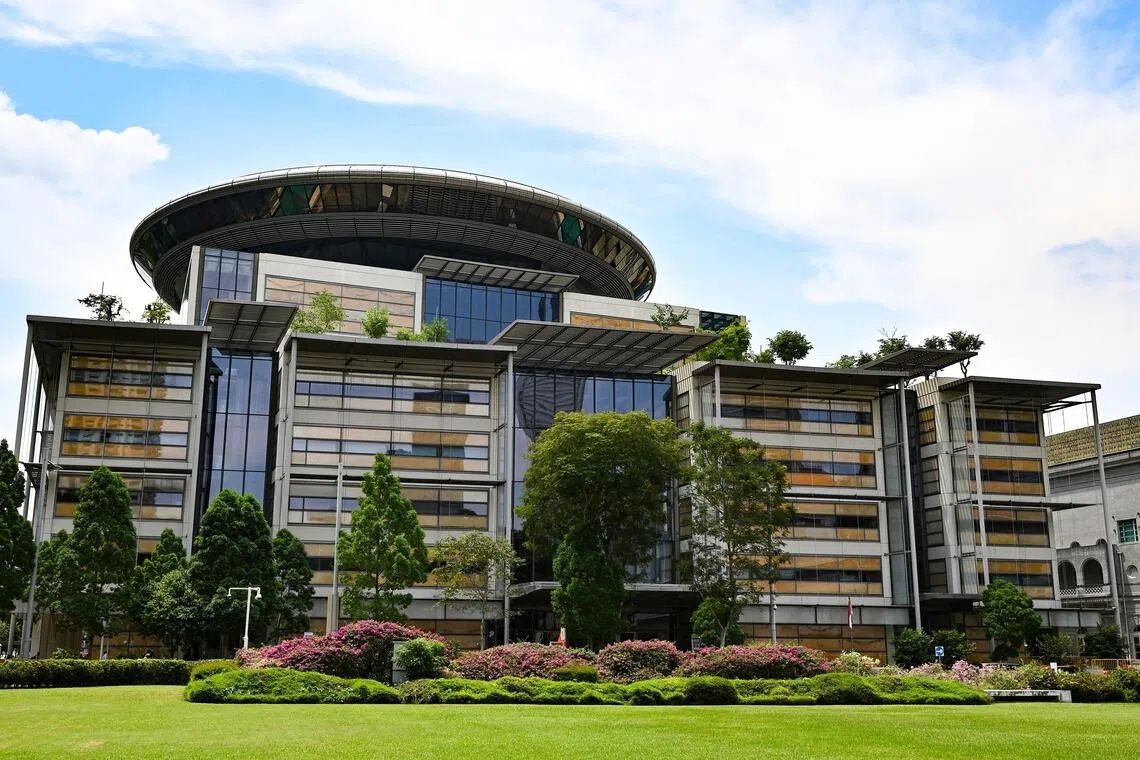
A Chinese national accused of creating and distributing malicious software that infected millions of computers worldwide has failed in his attempt to overturn Singapore police's seizure of his personal belongings. Wang Yunhe's appeal against the confiscation was dismissed by the Court of Appeal on July 9, with detailed reasons released on August 4, marking a significant setback in his ongoing legal battles in Singapore.
Wang, who faces potential extradition to the United States on multiple cybercrime charges, has contested nearly every procedural step since his arrest in Singapore on May 24, 2024. American authorities initiated the extradition request and sought seizure of evidence related to his alleged criminal enterprise. During the arrest, police confiscated 50 items belonging to Wang, though his challenge focused specifically on 12 of these items: bank cards, mobile phones, flash drives, a laptop computer, and a processing unit.
The three-judge Court of Appeal, headed by Chief Justice Sundaresh Menon alongside Justice Hri Kumar Nair and Justice Debbie Ong, identified fundamental procedural errors in Wang's legal strategy. The court ruled that Wang's initial application to a magistrate was made without proper jurisdiction, since the Extradition Act contains no mechanism permitting fugitives to challenge police seizures at the magistrate level. This finding revealed a critical misunderstanding or deliberate circumvention of proper legal channels that ultimately undermined his entire case.
Wang's core contention was that the American request for seized items lacked sufficient specificity and clarity, making it impossible for Singapore authorities to lawfully identify and take the 12 disputed belongings. He further argued that police had no reasonable grounds for suspicion that these items constituted either direct evidence of crimes or proceeds derived from criminal activity. These arguments might have carried weight if presented through appropriate legal procedures, but the court found them irrelevant once the procedural flaws became apparent.
The judgment underscores a critical timing problem that severely prejudiced Wang's position. Singapore law requires that judicial review applications challenging police conduct be filed within three months of the seizure. Wang waited nearly nine months before approaching the magistrate, placing himself far outside this statutory window. By disguising a judicial review petition as a routine application before the magistrate, the court found that Wang "effectively circumvented" the mandatory timeline requirement. This temporal barrier proved insurmountable regardless of the merits of his underlying claims.
Wang's legal missteps compounded as his case progressed through higher courts. When the High Court rejected his initial bid to begin judicial review proceedings, Wang appealed rather than pursuing the correct alternative route. The Court of Appeal noted that he should have filed an application for criminal revision as his first recourse when challenging the magistrate's decision. This sequential error in choosing remedies reflected either poor legal advice or a calculated but ultimately unsuccessful attempt to navigate procedural complexities in his favour.
Even if every procedural irregularity could have been overlooked, the Court of Appeal concluded that Wang had failed to establish any arguable case suggesting that police acted with unreasonable suspicion. The threshold for challenging evidence seizure is high, requiring substantial grounds to demonstrate that authorities lacked reasonable justification. Wang's contentions about vagueness and lack of evidentiary foundation did not meet this exacting standard, leaving the court unconvinced that the seizure itself was unlawful.
The judgment reveals an interesting dynamic in how the magistrate and lower courts may have inadvertently facilitated Wang's procedural confusion. The Court of Appeal suggested that because Wang's application was bundled together with other extradition-related matters that properly fell within the magistrate's jurisdiction, the jurisdictional gap may have been overlooked by all parties involved. However, this institutional oversight could not serve as grounds to validate an application that was fundamentally and legally improper.
For Malaysian readers and Southeast Asian observers, this case carries broader implications regarding how regional judicial systems handle extradition proceedings and international law enforcement cooperation. Singapore's handling demonstrates that common-law jurisdictions in Asia are maintaining strict adherence to procedural requirements even when dealing with individuals accused of transnational cybercrime. The decision affirms that legal technicalities, while sometimes appearing arcane, serve essential functions in protecting due process and preventing defendants from gaming the system through deliberately chosen procedural avenues.
Wang remains in remand pending a committal hearing that will determine whether he should be extradited to the United States. He has repeatedly contested extradition in court despite Singapore amending its Extradition Act in 2022 to allow fugitives to consent to handover, thereby reducing unnecessary detention periods and conserving state resources. The indictment against Wang in Texas, filed on May 10, 2023, encompasses conspiracy to commit computer fraud, aiding and abetting computer fraud, conspiracy to commit wire fraud, and conspiracy to commit money laundering—crimes that carry severe penalties in American courts.
The Court of Appeal's decision effectively forecloses one avenue of challenge for Wang, removing the seizure of evidence as a viable focal point for his defence. With this procedural pathway definitively closed, his remaining options for contesting extradition have narrowed substantially. The ruling serves as a cautionary tale about the importance of pursuing legal remedies through correct channels within statutory timeframes, a lesson applicable to criminal defendants throughout Southeast Asia facing increasingly sophisticated prosecution in the digital age.
This case also highlights the regional cooperation between Singapore and the United States in combating cybercrime, reflecting how developed jurisdictions coordinate to address threats that transcend national borders. Wang's alleged malware distribution network operated globally, affecting millions of residential computers, underscoring why law enforcement agencies prioritize swift legal resolution rather than extended procedural delays. The Singapore courts' firm stance on proper procedures, combined with refusal to permit tactical circumvention, demonstrates judicial commitment to supporting international law enforcement while maintaining rigorous adherence to rule of law principles.

