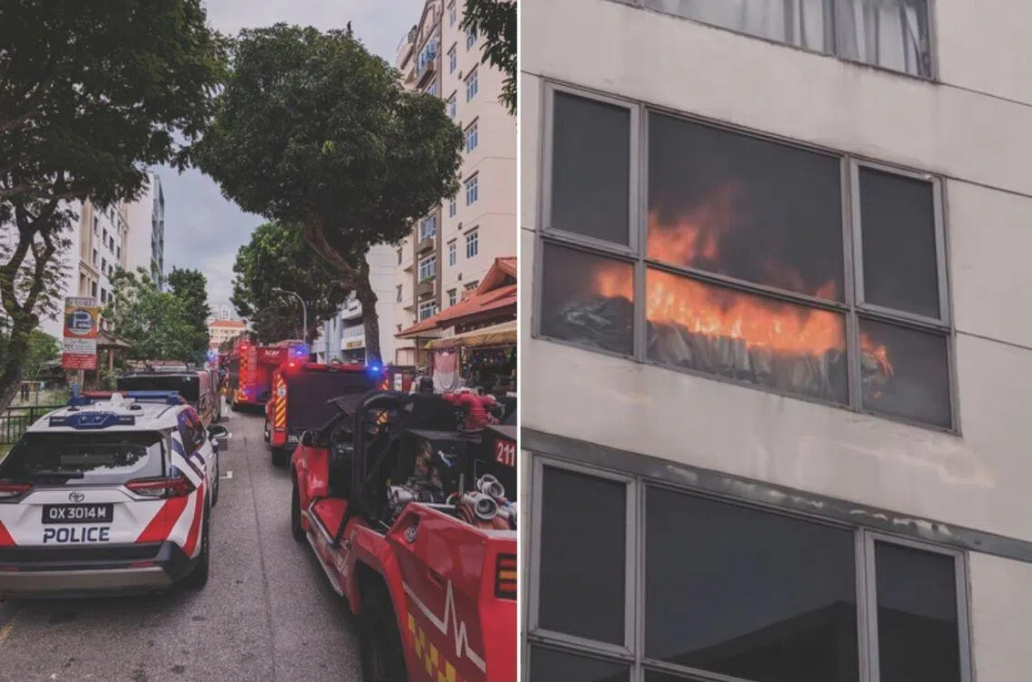
A residential fire in Singapore's Geylang district on Sunday evening has reignited concerns about the safety risks posed by electric mobility devices when charged carelessly. The incident at Casa Aerata condominium in Lorong 26 Geylang saw the Singapore Civil Defence Force respond to reports of a blaze originating from a power-assisted bicycle battery that had been left charging unattended in a seventh-floor living room. The SCDF received the emergency call at 5.35pm and swiftly evacuated five residents from neighbouring units as a safety precaution, though fortunately no injuries were sustained in what could have been a far more serious event.
The battery fire was eventually extinguished using standard equipment including a hosereel and a compressed air foam backpack, but the intensity of the blaze was sufficient to crack and shatter a window from the extreme heat generated. This dramatic detail underscores the destructive potential of battery fires in confined residential spaces, where rapid heat generation can cause secondary damage and create additional hazards for occupants. Preliminary investigations by the SCDF confirmed the fire's electrical origin was directly linked to the power-assisted bicycle, a finding that will likely intensify ongoing discussions about battery safety standards for these increasingly popular devices.
Member of Parliament Cai Yinzhou, who represents Bishan-Toa Payoh GRC, responded quickly to the incident after observing smoke and hearing emergency sirens in the area. He personally coordinated evacuation efforts for residents in the vicinity of the burning unit, demonstrating the scale of concern such fires generate within the community. His immediate action to clear the area below the affected unit in anticipation of falling debris or window fragments exemplifies the real dangers that thermal runaway in lithium-ion batteries can pose to multi-unit residential buildings, where a single unit's problem can quickly threaten neighbouring homes.
The underlying cause of this particular fire traces back to common but dangerous practices surrounding electric mobility device batteries. The SCDF's investigation identified that the battery was charging without supervision in the living room, a setting that offers minimal protection if thermal issues develop. The proximity to household furnishings and the enclosed nature of the space created conditions where a battery malfunction could rapidly escalate into a full structural fire. This incident serves as a stark reminder of why charging protocols matter considerably, particularly in densely populated high-rise residential environments where quick fire spread poses exponential risks.
In response to the Geylang incident, the SCDF has emphasised several critical safety guidelines that remain frequently ignored by consumers. The agency specifically cautioned against purchasing or installing non-original batteries in active mobility devices, a cost-cutting measure that many users adopt despite substantially increased fire risk. Third-party batteries often lack the sophisticated thermal management and protection circuitry built into legitimate manufacturer products, rendering them substantially more prone to malfunction. Additionally, the SCDF advised that both power-assisted bicycle and personal mobility device batteries should never be charged for extended periods or left charging overnight, practices that increase the likelihood of overcharging and internal electrical faults.
The data on active mobility device fires in Singapore reveals a troubling trend that extends beyond power-assisted bicycles. According to SCDF statistics released in February, active mobility devices were responsible for 34 of 304 residential electrical fires recorded in 2025. While the overall count of active mobility device fires decreased from 67 incidents in 2024 to 49 by mid-2025, personal mobility device fires specifically increased from 25 to 31 cases, suggesting that the problem is shifting rather than diminishing. This shift reflects the rapid proliferation of PMDs and e-scooters across Singapore and the broader Southeast Asian region, where regulatory frameworks have sometimes lagged behind market expansion.
For Malaysian and Southeast Asian readers, the Geylang incident carries significant relevance given the rapid adoption of e-bikes and personal mobility devices across the region. Malaysia has witnessed an explosion in e-bike usage among delivery workers and commuters, yet consumer awareness about battery safety remains inconsistent. Many riders, particularly those in the gig economy sector, may lack awareness about proper charging practices or the risks associated with cheaper non-certified batteries purchased through online channels. The incident highlights how a seemingly minor decision—leaving a battery charging unattended—can create cascading dangers for entire residential communities.
The fire also underscores broader questions about enforcement and standardisation of battery safety across Southeast Asia. Unlike Singapore's developed regulatory environment, neighbouring countries often face challenges in implementing consistent safety standards for imported mobility devices and replacement batteries. This regulatory gap has created an environment where substandard batteries circulate freely in markets throughout the region, potentially concentrating risk in residential areas where many delivery workers and commuters store and charge their devices. Without coordinated regional standards or enforcement mechanisms, the problem may intensify as e-mobility adoption accelerates.
The Casa Aerata fire demonstrates that battery safety transcends individual consumer choice and becomes a collective residential safety issue. In Singapore's context of high-density housing, a single resident's negligent charging practice endangered five neighbours and their property. This reality has prompted insurance companies and property management associations to increasingly scrutinise charging practices, with some developments implementing charging stations with built-in safety features or restricting battery charging in residential units. However, such measures remain inconsistently applied across the region, leaving many residential communities vulnerable to preventable incidents.
Moving forward, the incident suggests a need for more aggressive public education campaigns tailored to Southeast Asian markets. Many users of e-bikes and PMDs are first-time adopters unfamiliar with the operational hazards of lithium-ion technology. Community awareness programmes, particularly targeting delivery workers and gig economy participants who depend on these devices daily, could significantly reduce preventable fires. The Geylang incident also reinforces the importance of manufacturer compliance with safety standards and proper labelling of battery specifications, areas where enforcement remains variable across the region.
The broader implications of this fire extend to how Southeast Asian nations approach rapid technological adoption in urban transport. As governments promote e-mobility as part of sustainability initiatives, parallel investment in safety infrastructure, consumer education, and regulatory oversight becomes equally critical. The five evacuated residents at Casa Aerata were fortunate that emergency response was swift and effective, but not every residential area enjoys the same level of SCDF coverage. Regional authorities must learn from Singapore's experience and implement preventative measures before similar incidents proliferate across Malaysian and Southeast Asian cities. The cost of inaction—measured in property damage, injuries, and lives—will ultimately far exceed the investment required to establish proper safety standards and enforcement mechanisms now.

