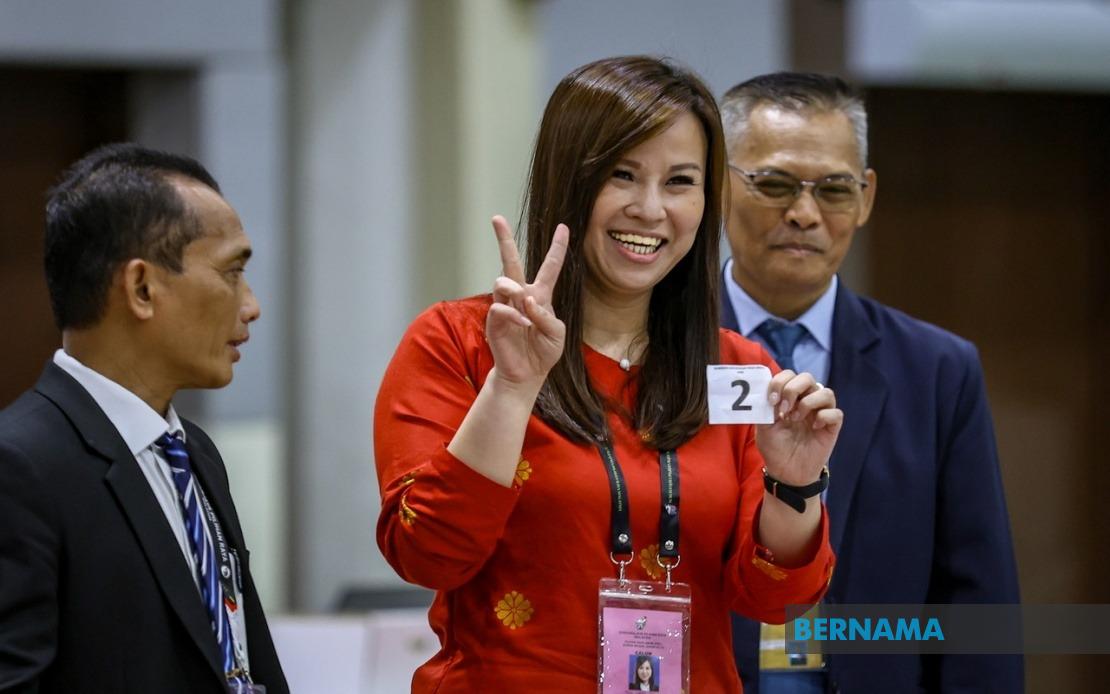
Sharon Teo, the Pakatan Harapan candidate contesting the Permas state seat in Johor's upcoming election, has centred her campaign on two core concerns that dominate conversations with voters across the constituency: fixing deteriorating road conditions and strengthening welfare provisions for residents. Speaking after the nomination process on June 27 at Dewan Muafakat in Taman Mawar, the Johor Amanah Women's Youth chief underscored her commitment to treating road safety as a non-negotiable priority, reflecting the urgency that constituents have repeatedly expressed during her grassroots outreach.
Teo brings relevant political experience to her bid, having previously worked as an aide in the neighbouring Pulai parliamentary constituency under the late Amanah deputy president Salahuddin Ayub. That background in parliamentary support work has given her insights into constituency management and the machinery required to deliver on campaign promises. She indicated that a comprehensive manifesto detailing her specific vision and action plan for Permas will be released imminently, signalling that her campaign team is finalising detailed policy positions beyond the broad themes of infrastructure and welfare.
The challenge before her is formidable: she faces incumbent Baharudin Mohamed Taib, who won the Permas seat in the 2022 Johor state election under the Barisan Nasional banner. Taib has already acknowledged the intensity of the contest, remarking that each opponent possesses distinct strengths and that underestimating any challenger would be strategically unwise. His determination to retain the seat reflects both the competitive nature of contemporary Malaysian politics and the acknowledgment that voter sentiment has shifted since his previous victory just two years earlier.
Barisisan Nasional's strategy in Permas, through its incumbent, appears to differ from Teo's approach. Rather than unveiling a personal manifesto tailored specifically to Permas voters, Taib indicated his intention to operate within the broader Barisan framework and its established electoral positioning. This approach suggests the coalition believes its broader party brand and track record remain sufficient to sway voters, though it may also reflect difficulty in articulating fresh local initiatives compared to his challenger's targeted focus on visible community problems.
The Permas contest has evolved into a four-way battle, adding complexity to what might otherwise be a straightforward two-party affair. Joining Teo and Taib are T. Vela, fielded by Perikatan Nasional, and Dr Zamil Najwah, representing the relatively newer Parti Bersama Malaysia. The presence of two additional candidates could fragment voter support, potentially benefiting whichever camp can consolidate its base most effectively. Permas, situated within the larger Pasir Gudang parliamentary constituency, encompasses 113,963 registered voters, a substantial electorate that will determine the outcome on polling day.
The constituency's position within Pasir Gudang is strategically significant for the broader parliamentary landscape, as state-level results often influence perceptions of momentum heading into federal contests. Johor, Malaysia's second-largest state and a traditional powerhouse of Malaysian politics, carries disproportionate weight in national political calculations. Victories here shape narratives about which coalitions are genuinely ascendant, particularly given Johor's historical role as a Barisan stronghold that has gradually become more competitive.
The specific emphasis on road quality in Teo's platform speaks to a tangible grievance that resonates across urban and semi-urban constituencies nationwide. Deteriorating road conditions affect daily commuting, commercial logistics, public safety, and quality of life in measurable ways that residents experience constantly. By foregrounding this infrastructure concern, Teo is anchoring her campaign in material, observable problems rather than abstract political ideology, a strategy that has proven effective in recent Malaysian electoral cycles where voters increasingly demand evidence of government efficacy in delivering basic services.
Public welfare considerations take on added significance in constituencies like Permas, where demographic diversity and economic variation mean that different resident groups face distinct challenges. The combination of infrastructure investment and welfare provisions suggests Teo's campaign has identified vulnerable populations within the constituency who feel insufficiently supported by current arrangements. Whether these are lower-income families, elderly residents, or precariat workers, the welfare plank of her platform indicates responsive listening to constituency-specific needs.
The electoral calendar provides relatively compressed timeframes for campaigning. With nomination completed in late June, candidates have approximately two weeks before early voting on July 7 and the main polling day on July 11. This compressed schedule means campaign messages must crystallise quickly and resonate powerfully with voters, leaving little room for extended persuasion efforts. Both Teo and Taib will need to deploy their resources strategically during this period to maximise visibility and reinforce their respective appeals.
For Malaysian observers tracking political dynamics in Johor and nationally, the Permas outcome will offer signals about whether Pakatan Harapan can sustain its challenge to Barisan Nasional in the state, or whether the incumbent coalition is successfully rebuilding electoral dominance following the 2022 general election's competitive results. The performance of newer entrants like Parti Bersama Malaysia will also merit attention, as their viability in state contests may foreshadow broader shifts in Malaysia's party system architecture. Ultimately, Permas represents one of several constituencies where Malaysian voters will decide whether established parties merit continued mandate or whether alternative platforms merit their support.

