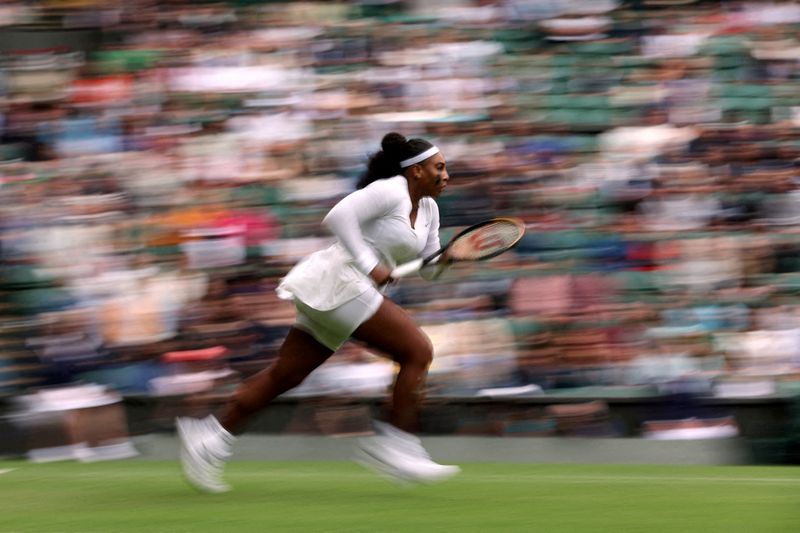
Serena Williams is returning to Wimbledon as the tournament's dominant headline after receiving the final women's singles wildcard, a decision that was never really in doubt once the American champion signalled her intention to compete at the All England Club. The 44-year-old, who has claimed seven singles titles and six doubles crowns at the venue alongside her sister Venus, transforms what threatened to be a muted edition of tennis's most prestigious event into a compelling narrative about endurance, ambition, and the prospect of equalling Margaret Court's all-time record of 24 Grand Slam titles.
The wildcard decision represents a moment of clarity for the tournament's selection committee. With Williams expressing her desire to grace Centre Court once more, awarding her a special invitation became straightforward. No player in the modern era carries the cultural weight and global appeal that Williams generates, a phenomenon that transcends her accomplishments on court and resonates across continents. Her presence immediately eclipses the storylines surrounding world number one Aryna Sabalenka's hunt for maiden grass-court glory, Iga Swiatek's title defence, and the perpetual British fascination with homegrown talent Emma Raducanu.
Four years have elapsed since Williams last competed at Wimbledon, when she exited in the opening round to Harmony Tan. That defeat preceded her poignant farewell at the U.S. Open weeks later, where she announced she was evolving away from professional tennis. The intervening period has witnessed the emergence of a new generation of champions and the retirement of figures like Roger Federer, Rafael Nadal, and Andy Murray. Yet despite this generational shift, no active player possesses the psychological presence or the transformative impact on a tournament that Williams commands. For Malaysian and Southeast Asian tennis followers, her return represents a reconnection with an athlete whose dominance defined a sporting era and whose comeback challenges conventional assumptions about competitive longevity.
Williams's preparation has been deliberate and thorough. Her appearance at Queen's Club earlier this month, partnering Victoria Mboko in doubles, showcased a player moving with renewed purpose. Insiders have confirmed that serious singles preparation has been underway since late last year, suggesting this comeback represents far more than a nostalgia tour. The American has also employed a GLP-1 weight-loss medication to shed 34 pounds, a decision she credits with making her feel "better than in years." While such drug usage has sparked debate about performance-enhancement protocols, former world number one Andy Roddick has endorsed the approach, characterising it as a pragmatic injury-prevention measure that enables proper training intensity at a lighter bodyweight.
Roddick's assessment of Williams's capacity remains bullish despite the years away from elite competition. He expresses absolute confidence in the durability of her fundamental weapons—her serve, her power, and her ability to punish loose balls when she identifies their trajectory. What genuinely intrigues observers is whether lateral movement has withstood the passage of time, a crucial metric for singles success on grass. During the Queen's Club doubles competition, Williams demonstrated serving speeds exceeding 120 miles per hour, statistics that tantalised commentators with the prospect of watching her operate across a singles court. Roddick articulates this sentiment compellingly, noting that observing such serves and general performance prompted an immediate desire to witness her competing in singles matches.
Beyond the technical dimension lies the psychological dimension of Williams's return. Roddick invokes what he terms the "Tiger effect"—a reference to golf legend Tiger Woods—to describe how Williams's mere presence across the net can intimidate opponents, particularly those lacking experience against champions of her stature. In an era where established titans have departed competitive tennis, the reappearance of someone with Williams's history and aura provides younger competitors with a genuinely novel and psychologically taxing challenge. For Malaysian audiences familiar with sporting excellence and competitive intensity, this psychological warfare aspect resonates as a crucial component of championship-level performance.
The timing of Williams's return proves fortuitous for the sport's commercial and narrative interests. Professional tennis has navigated a transition period marked by uncertainty following the retirements of Federer, Nadal, and Murray. The absence of Carlos Alcaraz through injury further threatened to undermine the tournament's global appeal. Against this backdrop, Williams's comeback functions as a stabilising force, restoring gravitas to a competition that risked becoming overshadowed by the concurrent soccer World Cup. Television executives, tournament organisers, and broadcasters throughout Southeast Asia and globally recognise the commercial and viewer appeal that Williams invariably generates.
The prospect of Williams equalling Court's 24-title record nine years after her last Grand Slam triumph would rank among sporting history's greatest comebacks. Such an achievement would rewrite narratives about athletic decline, career trajectory, and the possibilities available to aging competitors operating at elite levels. Whether she attains that specific milestone remains uncertain, but her entry into the singles draw guarantees compelling tennis and renewed engagement with a tournament where she has previously dominated.
Commentators express measured optimism tempered with authentic curiosity about her capacity to navigate the specific demands of singles competition. Mary Joe Fernandez, the former world number four who will provide ESPN coverage, describes Williams's decision as "pretty bold" whilst emphasising her eagerness to observe Williams's movement, serve consistency, and overall performance levels. Fernandez's assessment captures the broader sentiment within professional tennis: skepticism exists about whether a player absent from singles competition for four years can sustain elite performance, yet confidence simultaneously exists that if any athlete possesses the temperament and skill to achieve such a feat, it is Williams.
The draw ceremony on Friday will generate significant intrigue, with potential opponents understandably preferring to avoid Williams's section of the draw. Her entry transforms Wimbledon from a tournament defined primarily by generational transition into a competition featuring a genuine titan of the sport. For regional audiences across Malaysia and Southeast Asia, Williams's return represents a compelling sporting narrative that transcends tennis—a story about ambition, preparation, resilience, and the enduring competitive hunger that defines genuine champions, regardless of age.

