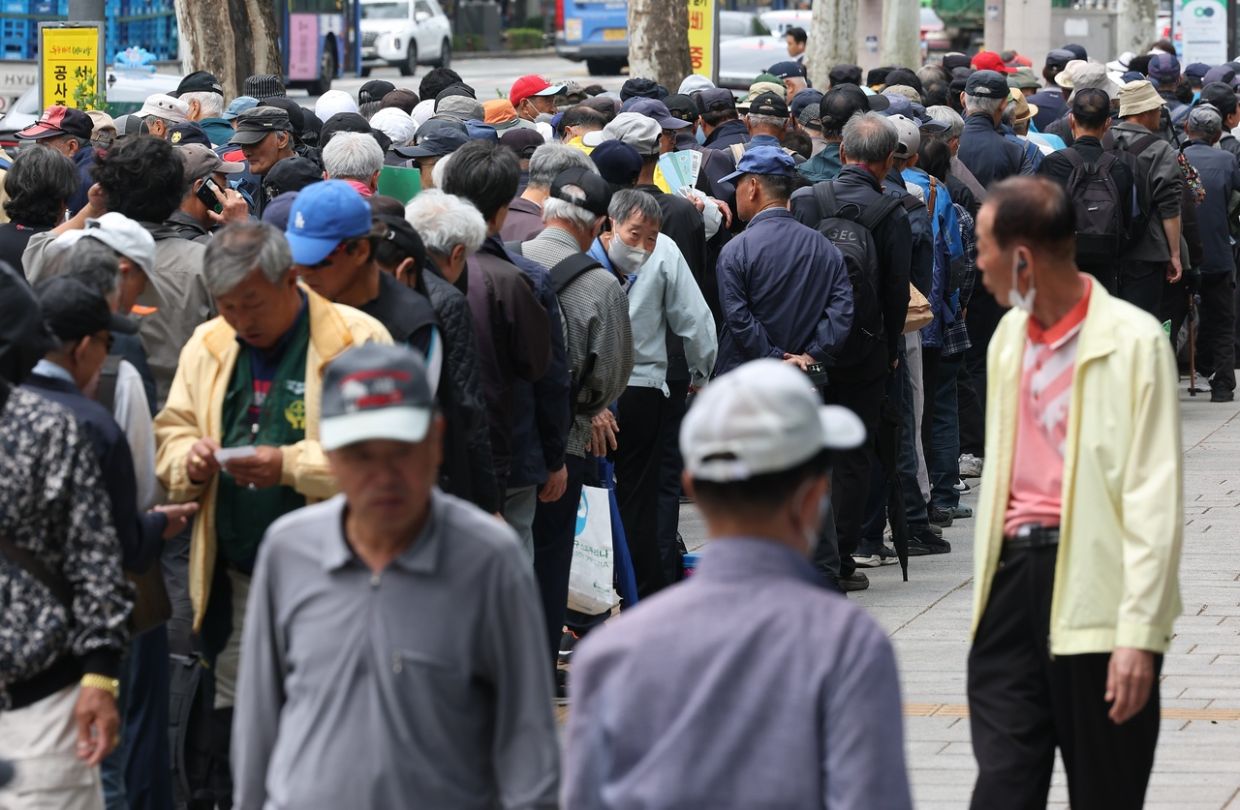
South Korea's capital is grappling with a contentious question that mirrors challenges facing ageing societies across East Asia: how can cities afford expanding transportation benefits for growing elderly populations? Seoul's Metropolitan Council is considering a significant expansion of senior mobility support by introducing free or subsidised bus fares for citizens aged 70 and above, complementing a decades-long policy of free subway travel for those 65 and older. The measure cleared a committee vote and heads to the full council for consideration, reflecting Seoul Mayor Oh Se-hoon's election platform commitments but also triggering serious debate about municipal finances.
The proposal carries particular weight because Seoul's demographic profile reflects broader regional trends. Senior citizens currently constitute 21.2 per cent of the city's population, a proportion expected to rise significantly as South Korea faces one of the world's fastest ageing populations. This demographic shift transforms what might appear as a straightforward social welfare initiative into a complex fiscal puzzle. The city's existing subway subsidy system already strains municipal finances, with Seoul Metro reporting losses of 448.8 billion won specifically attributed to free rides for seniors, people with disabilities and national merit recipients in 2025 alone—a figure that has averaged 364.5 billion won annually over the past five years.
The bus fare proposal would apply only to city and neighbourhood buses, deliberately excluding express and intercity services to contain costs. However, even with these boundaries, the financial projections are sobering. The Seoul Metropolitan Council Secretariat estimates that universal bus-fare subsidies for all residents aged 70 and above would require approximately 104.7 billion won in its inaugural year, assuming implementation begins in 2027. As the elderly population in this age bracket expands from roughly 1.27 million currently to a projected 1.63 million by 2031, annual expenditure could balloon to 127.5 billion won. Over a five-year period, total spending is estimated at nearly 579 billion won, an amount that must be absorbed by Seoul's general revenue.
Understanding the full fiscal picture requires recognising that this proposal would layer onto existing transportation subsidies rather than replace them. Seoul already operates what is effectively a semi-public bus system, compensating private operators for operating losses. Last year alone, the city distributed more than 450 billion won in support to bus companies to sustain service networks. Adding a new senior benefit programme during a period when labour costs across the bus industry are expected to increase—following recent court decisions on ordinary wage calculations—raises legitimate questions about municipal budgetary sustainability.
Supporters of the initiative contend that the current system creates inequities for elderly residents. While subway passengers aged 65 and above enjoy free travel, bus riders do not receive equivalent benefits, burdening older people who live beyond convenient walking distance of metro stations or depend primarily on buses for daily mobility. This argument resonates with equity principles, yet it collides with fiscal constraints that affect programme design at every level of government across the region. The proposal represents an attempt to harmonise transportation access across modal choices, a principle that sounds straightforward until one examines the budgetary implications.
Other South Korean regions have already pioneered similar programmes, offering a cautionary blueprint. Daegu initiated free bus rides for seniors in 2023 and plans to gradually lower the eligibility age from 75 to 70 by 2028, essentially committing to escalating expenditure as participation grows. Daejeon has moved ahead with free rides for those aged 70 and older, while Incheon is preparing to launch its own scheme for residents aged 75 and above this year. These initiatives demonstrate both the political appeal of such policies and the practical reality that once implemented, they prove difficult to adjust or curtail, creating momentum toward broader and costlier coverage.
Policy experts caution that expansionary welfare programmes generate structural rigidities in governance. Sohn Jong-pil, a senior researcher at the Fiscal Reform Institute, warned that cash-type welfare benefits become politically resistant to reduction once introduced to constituencies, compelling policymakers to proceed with exceptional care. The concern extends beyond mere budgetary arithmetic; it touches on the fundamental architecture of public finance and intergenerational equity. If Seoul commits substantial resources to transportation subsidies for elderly residents, those funds become unavailable for investments in other priorities—infrastructure, public health, education, or debt service—creating opportunity costs that ripple across urban systems.
A parallel tension haunts the debate around Seoul's existing subway subsidy structure. Seoul Metro has repeatedly argued that free rides for seniors represent a primary source of its chronic financial difficulties and has persistently appealed to the central government for assistance in covering these losses. This position creates an awkward contradiction: if the city genuinely cannot afford senior subway benefits and requires national government bailouts to sustain them, how can it justify introducing another major transportation subsidy? Critics question whether municipal authorities are attempting to satisfy electoral constituencies without honestly confronting the fiscal limits of their commitments.
The ordinance introduced by Transportation Committee Chair Lee Byeong-yoon of the People Power Party would create a legal framework for establishing a senior bus-fare support programme rather than mandating immediate implementation of universal free rides. This architectural choice offers strategic flexibility that deserves serious consideration. The ordinance would enable Seoul to determine eligibility criteria, benefit levels, and funding mechanisms through subsequent administrative processes rather than having all parameters fixed in legislation. Policymakers could potentially target support toward low-income seniors, establish caps on subsidised trips, restrict benefits to particular times of operation, or provide partial fare discounts rather than complete fare elimination.
The distinction between creating an institutional framework and mandating specific benefit levels matters significantly for fiscal planning and policy responsiveness. A Seoul city official explained that the ordinance should be understood as establishing the institutional basis for a future programme rather than triggering immediate universal provision. This interpretation allows the city to pilot schemes, measure outcomes, assess fiscal impacts, and adjust parameters without requiring full legislative reconsideration. Such flexibility reflects sophisticated governance practice and might serve as a model for how other cities in the region approach politically popular but fiscally demanding initiatives.
For Malaysian and broader Southeast Asian observers, Seoul's deliberation offers instructive lessons about demographic change and fiscal sustainability. Malaysia's own population is ageing, and major cities will increasingly confront similar questions about how to extend meaningful social benefits to expanding elderly populations without destabilising municipal finances. The Seoul case demonstrates that good intentions and electoral popularity are insufficient when disconnected from rigorous fiscal planning. It also illustrates how neighbouring jurisdictions influence policy choices through demonstration effects—once some cities implement a benefit, others face political pressure to follow, even if their fiscal circumstances differ.
The timing of Seoul's consideration proves particularly significant. Rather than treating the bus fare initiative as an urgent necessity requiring immediate universal implementation, the city could adopt a measured, evidence-based approach that begins with targeted pilot programmes for vulnerable senior populations. Such an approach would generate data on actual costs, implementation challenges, and impact on elderly mobility patterns while preserving flexibility to expand, adjust, or curtail the programme based on demonstrated results. This strategy respects both the legitimate welfare concerns of elderly citizens and the fiscal realities constraining municipal governance in contexts of rapid population ageing.
As Seoul's Metropolitan Council moves toward a final vote, the decision will ultimately reflect broader societal choices about resource allocation, intergenerational equity, and the proper scope of municipal responsibility. The measure's passage would not immediately trigger free bus rides—additional implementation steps remain necessary. However, it would commit Seoul to a policy direction with significant long-term fiscal implications. The debate surrounding this ordinance transcends bus fares; it fundamentally concerns how prosperous East Asian cities can sustain social solidarity during demographic transitions that reshape the relationship between workers and retirees, revenue and expenditure, promises and capacity.

