Residents of Selangor should exercise heightened caution against online fraud schemes mimicking the KitaSelangor Voucher programme, the state government warned on June 16 through its State Secretary's Office. The advisory comes as scammers increasingly exploit public anticipation surrounding the financial assistance initiative by sending deceptive short message service notifications and fraudulent links designed to compromise personal information or financial data.
The State Secretary's Office emphasised that citizens must ignore unsolicited SMS messages or communications claiming to be connected to the voucher scheme unless they originate from official Selangor government channels. Clicking links from unverified sources poses significant risks, including identity theft, unauthorized account access, and financial fraud. The government stressed that residents should not be swayed by unverified claims or rush into responding to suspicious messages, particularly those demanding personal details or immediate action.
Critically, the Selangor authorities clarified that the formal application window for the KitaSelangor Voucher Programme has not yet commenced. This timing is crucial because fraudsters typically exploit information gaps and public eagerness during programme announcements. By explicitly stating that applications remain closed, the government aims to prevent premature engagement with counterfeit portals or phishing attempts that may appear during the transition period.
Eligible beneficiaries will receive official notification beginning June 23, marking the transition from preparatory phases to direct recipient engagement. The state government plans a staged rollout to manage the volume of applicants and verify recipient information systematically. This phased approach, while methodical, creates a window where impatient applicants might fall prey to scam operators offering seemingly faster or alternative pathways to access the funds.
Residents have been advised to await the official state government announcement scheduled for June 22 before taking any programme-related steps. This one-day advance notice will provide authentic guidance on application procedures, required documentation, and legitimate portals where beneficiaries can register. Following official channels represents the safest approach to participation and protects against financial manipulation or data compromise that plague hastily undertaken online interactions.
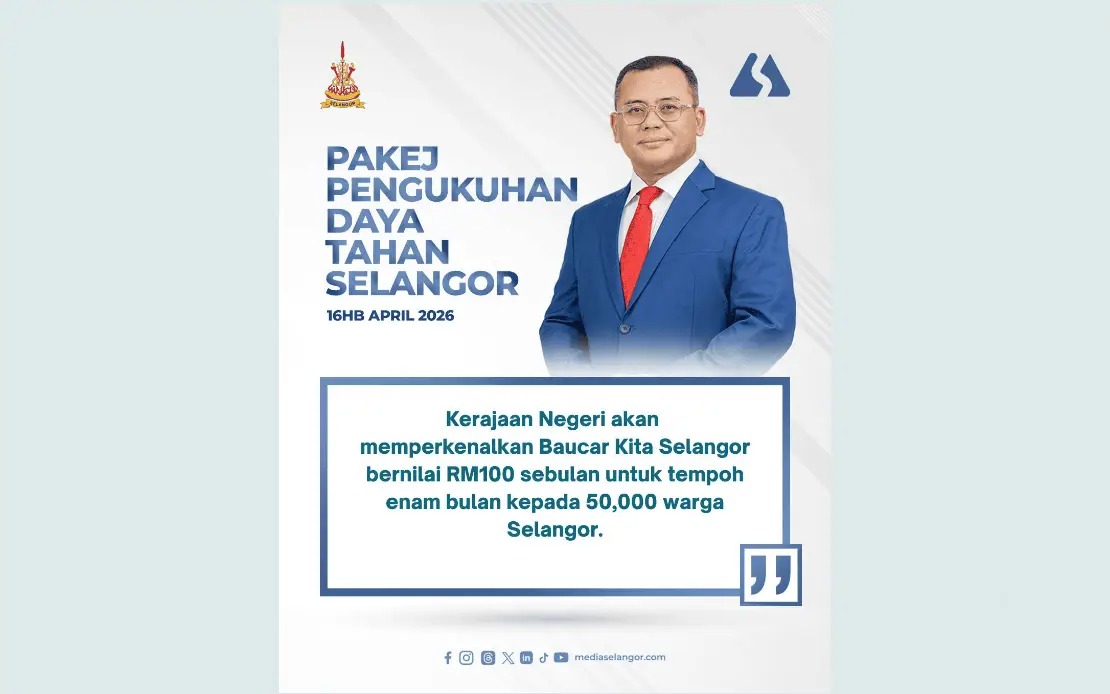
The KitaSelangor Voucher Programme represents a significant financial commitment targeting vulnerable populations across the state. Selangor Menteri Besar Datuk Seri Amirudin Shari indicated that approximately 50,000 low-income households would receive RM100 monthly for six consecutive months, beginning June 30. This RM600 total disbursement per household constitutes meaningful relief for struggling families navigating persistent economic pressures and elevated cost-of-living challenges.
The initiative forms part of the broader RM140 million Selangor Resilience Strengthening Package Phase 1, which the state government unveiled on April 16. This comprehensive economic support framework acknowledges multiple interconnected challenges facing residents, including global economic uncertainty, climbing living expenses across essential categories, and disruptions to supply chains affecting product availability and pricing. The phased approach enables the government to manage implementation while addressing the most pressing welfare requirements first.
Beneficiary identification follows a data-driven methodology utilising established government databases and institutional records. Eligible groups include households registered in the eKasih system indicating poverty status, workers who experienced recent layoffs, individuals classified as vulnerable according to Social Welfare Department assessments, and single mothers satisfying specific income and family structure criteria. This targeted approach ensures resources reach those facing the greatest financial hardship rather than providing universal disbursement.
The fraud warning carries particular significance in Malaysian context, where SMS-based phishing schemes have proliferated across government assistance programmes. Scammers frequently exploit public unfamiliarity with digital government services, creating sophisticated-looking counterfeit notifications and portals that closely mirror authentic state communications. For elderly residents or those with limited digital literacy, distinguishing legitimate government SMS from fraudulent imitations presents genuine difficulty, making the preventive warning essential for community protection.
Citizens should immediately report suspected fraudulent communications to relevant authorities rather than engaging with suspicious messages or forwarding them to others. Sharing scam messages inadvertently amplifies their reach and credibility within social networks. The Selangor government encourages residents to verify information directly by contacting official state offices or consulting the government's verified digital platforms, which provide authentic programme details without intermediaries or unauthorised agents.
The distinction between legitimate notification and fraud becomes increasingly blurred as criminal technology improves, necessitating public education alongside policy implementation. Government agencies must consistently reinforce messaging about verification practices and official communication channels. For Malaysian residents receiving state assistance for the first time, understanding these security protocols protects against exploitation while building confidence in digital government services essential for modern welfare administration and economic inclusion.