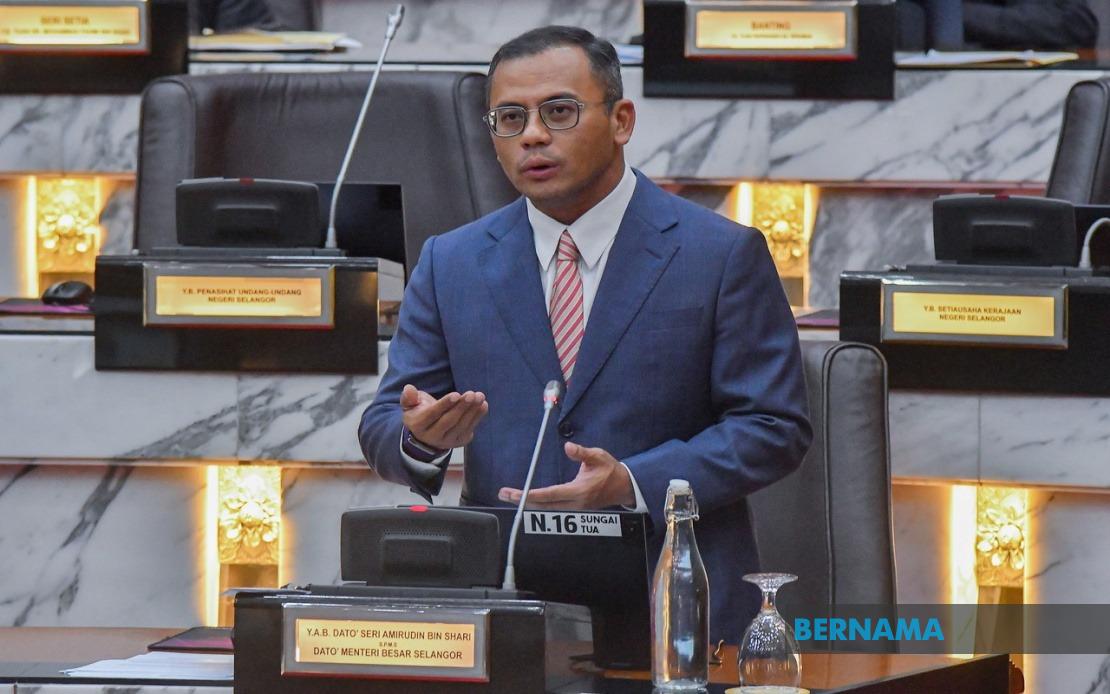
Selangor Menteri Besar Datuk Seri Amirudin Shari has tasked the state's local authorities with conducting a comprehensive assessment of public transportation connectivity infrastructure, signalling the government's intention to tackle accessibility gaps that have drawn public attention on social media. Speaking during the Selangor State Legislative Assembly debate on the Resilience Strengthening Package, Amirudin emphasised that the state stands ready to inject further financial resources into improving facilities, particularly pedestrian walkways that are both comfortable and secure for commuters making their first and last-mile journeys.
The directive comes in response to growing concerns about the disconnect between major transit hubs, most notably the LRT3 line, and surrounding residential and commercial areas. Assemblyman Danial Al-Rashid Haron Aminar Rashid from Batu Tiga had raised the issue during parliamentary proceedings, noting that the problem had gained traction on social media platforms including X and Threads. Rather than waiting for public complaints to escalate online, Amirudin stressed that local authorities must adopt a proactive stance, engaging directly with council members and community stakeholders to identify and resolve connectivity problems before they become viral grievances.
The Menteri Besar framed the initiative not as an expensive infrastructure overhaul but as a strategic intervention aligned with the state's broader mobility objectives. By improving the ease with which residents can access public transport, Selangor aims to encourage a shift away from private vehicle dependency and toward greater utilisation of mass transit systems. This approach addresses both congestion and environmental concerns while potentially lowering transportation costs for ordinary citizens. However, Amirudin acknowledged that financial support alone cannot resolve the issue, suggesting that operational coordination among transport providers is equally critical.
Amirudin has instructed Ng Sze Han, chairman of the Selangor Investment, Trade and Mobility Committee, to convene meetings with all major public transport operators functioning within the state to develop comprehensive service mapping. This exercise aims to pinpoint specific areas suffering from connectivity gaps and to understand how existing subsidies and support mechanisms can be optimised. The mapping process represents a data-driven approach to identifying underserved locations and assessing whether current service routes and frequencies meet genuine demand.
Central to the Menteri Besar's message is his concern that subsidies provided by the state government risk becoming ineffective if transport operators do not align their operational hours and service patterns with genuine passenger needs. If commuters perceive gaps in connectivity—such as long waiting times at interchanges or inadequate feeder services—they will naturally revert to private vehicles regardless of how cost-effective public transport might be in theory. This logic underscores why service coordination must accompany financial incentives.
The connectivity challenge reflects a broader Southeast Asian urban planning issue where rapid transit infrastructure, often developed through major capital projects, operates in isolation from ground-level accessibility. LRT3, like many regional metro systems, serves as a backbone for mobility but without effective feeder networks and last-mile solutions, its utility remains constrained. Malaysian commuters in urban areas like Selangor have grown accustomed to private car convenience, and shifting that behaviour requires seamless, integrated transport ecosystems rather than isolated transit lines.
The role assigned to Ng Sze Han suggests that the state government intends to treat this as an operational rather than purely technical problem. By bringing transport operators into dialogue and establishing a unified service map, authorities can identify whether gaps stem from missing routes, poor coordination, operational inefficiencies, or inadequate infrastructure. Each category of problem demands different solutions, and a comprehensive audit should clarify which issues require capital investment, regulatory intervention, or better service planning.
For Malaysian readers, this development carries implications beyond Selangor. Other states grappling with rapid urbanisation and transit expansion—including Kuala Lumpur, Penang, and Johor—face similar connectivity challenges. The approach taken in Selangor, emphasising stakeholder engagement and operator coordination, could serve as a model for how state governments might tackle fragmented transport networks. Rather than viewing public transport as isolated projects, integrated mobility requires viewing the entire journey chain from home to transit hub to final destination.
The social media dimension of this story is also noteworthy. Amirudin's explicit reference to avoiding reliance on X and Threads for identifying public concerns suggests recognition that governance in the digital age demands proactive communication with residents rather than reactive responses to viral complaints. By institutionalising regular engagement with council members and stakeholders, authorities can anticipate problems before they accumulate into major public grievances, strengthening both service quality and government credibility.
Looking ahead, the success of this initiative will depend heavily on implementation. Mapping exercises and stakeholder meetings, while necessary, must translate into concrete improvements in service connectivity within a reasonable timeframe. Commuters will judge the effort not by intentions but by tangible improvements in their daily transport experience. If Ng Sze Han and the state's local authorities can use this directive to create a more coherent public transport ecosystem in Selangor, the model could demonstrate how Malaysian states can evolve toward truly integrated mobility systems that compete effectively with private vehicle convenience.

