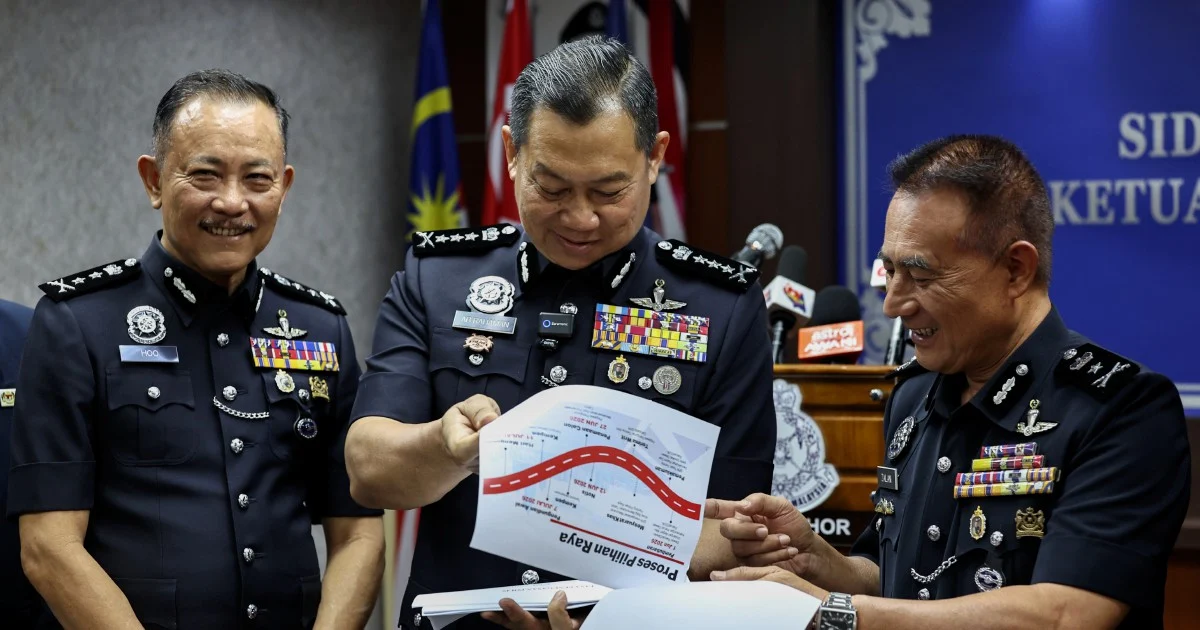
Johor's police force is mounting an unprecedented security operation ahead of the 16th state election, with over 11,000 officers mobilised across the state to maintain order and prevent disruption during the polling period. The police department has completed a comprehensive assessment of the electoral landscape and pinpointed 39 locations of concern that will receive enhanced supervision and monitoring to forestall potential violence or unrest. This substantial deployment represents one of the most significant peacekeeping operations the state police have undertaken for an election cycle, reflecting heightened awareness of the need to safeguard the democratic process.
The identification of these hotspots follows a systematic risk assessment conducted by Johor police intelligence units, drawing on data from previous electoral events, incident reports, and intelligence gathering. The 39 locations span various categories of concern, including areas with histories of electoral violence, neighbourhoods divided along political lines, and precincts where inter-community tensions have occasionally surfaced. By flagging these zones in advance, law enforcement aims to prevent problems before they escalate, positioning uniformed and plainclothes officers strategically to deter wrongdoing whilst maintaining a light touch that avoids intimidating voters or dampening participation.
The scale of police deployment underscores how seriously state authorities are treating election security. With 11,000 personnel involved, the police operation will extend far beyond election day itself, encompassing periods before and after polling to monitor for any sedition, intimidation campaigns, or attempts to destabilise the outcome. This includes surveillance during the campaign period to prevent violence between rival candidates' supporters, as well as post-election monitoring in case losing factions attempt to challenge results through illegal means. The breadth of this operation also reflects the importance of Johor politically—as Malaysia's second-largest state by population and a key political battleground, its election carries weight beyond the state itself.
Johor's police command structure has coordinated extensively with federal law enforcement agencies and intelligence bodies to ensure seamless cooperation during the election. This inter-agency approach allows officers to share real-time information about emerging threats, pool expertise in crowd control and intelligence gathering, and respond swiftly to any incidents. The police have also worked with local government bodies, community leaders, and civil society organisations to build trust and gather grassroots intelligence that might alert them to local grievances or tensions that could boil over into election-related disruption.
The 39 identified hotspots likely include several categories of areas commonly flagged during Malaysian elections. Rural constituencies where tribal or clan politics run deep may see heightened tension between competing factions. Urban centres with mixed demographics occasionally experience friction when communities feel their interests are not adequately represented. Areas bordering other states, particularly Selangor to the west, sometimes see spillover effects from broader regional political movements. Additionally, certain neighbourhoods known for gang activity or organised crime may pose secondary risks if criminal elements attempt to exploit the chaos of election day to settle scores or disrupt order.
The police deployment model emphasises prevention over reaction. Rather than waiting for violence to occur and then deploying riot control units, officers will maintain a steady presence at vulnerable locations throughout the polling period, acting as a visible deterrent to would-be troublemakers. This approach has proven effective in previous Malaysian elections, where a substantial police presence often succeeds in maintaining calm without needing to make large numbers of arrests. Specialist units trained in de-escalation and community policing will be embedded in these hotspots, enabling them to address simmering tensions before they ignite into larger confrontations.
Communication and coordination will be critical to the operation's success. Johor police have established a dedicated election command centre that will function as a nerve centre for the entire security apparatus during the campaign and polling period. This hub will monitor reports flowing in from the field in real time, assess emerging threats, and direct resources to areas where incidents are developing. Radio networks, mobile data terminals in patrol vehicles, and direct lines to hotspot personnel will enable rapid information sharing and swift tactical adjustments as situations evolve.
The decision to publicise the deployment of 11,000 officers and the identification of 39 hotspots serves multiple purposes beyond the practical matter of positioning personnel. It signals to the public that authorities take election security seriously and will not tolerate violence or intimidation. This transparency may also subtly deter potential troublemakers, who will know that police are aware of problematic areas and prepared to intervene. Simultaneously, publishing these figures reinforces public confidence that the electoral process will be administered fairly and protected from manipulation through force or coercion.
For Malaysian voters and observers, the scale of Johor's police operation reflects broader patterns in Southeast Asian elections, where maintaining order during democratic exercises has become increasingly challenging. As urbanisation intensifies, political divisions sharpen, and organised factions become more sophisticated, election security has evolved from a peripheral concern into a central component of electoral management. The Johor operation demonstrates how Malaysian authorities are adapting to these realities, deploying resources at levels unthinkable a generation ago whilst attempting to preserve the integrity and legitimacy of the democratic process itself.