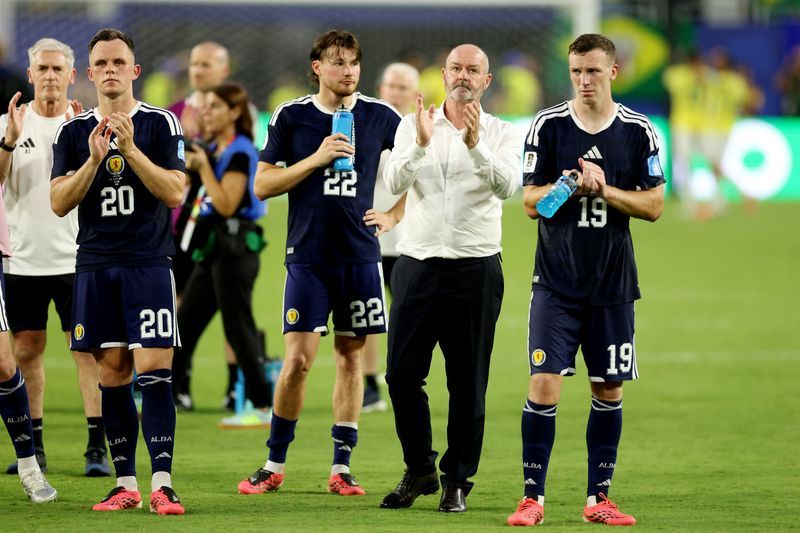
Scotland's return to the World Cup stage after a 28-year absence appears destined for an early exit, with coach Steve Clarke accepting that his side will probably depart Miami empty-handed following Wednesday's 3-0 drubbing by Brazil. Despite technically retaining a mathematical chance of progression as one of eight third-placed teams advancing from the 12 groups, Clarke expressed little optimism about Scotland's prospects, conceding that other nations with matches still to play would almost certainly finish ahead of his team's current six-point tally.
The Scottish manager's candid assessment reflected genuine frustration with how his players gifted Brazil the opportunity to inflict such a comprehensive defeat. In Clarke's view, the outcome represented a fair punishment for lapses in concentration and discipline that allowed one of world football's elite attacking forces to operate with alarming freedom. He acknowledged that Brazil's clinical finishing exploited defensive vulnerabilities that Scotland created through poor positioning and decision-making, though he did note that goalkeeper Angus Gunn made several important saves that could have seen the margin expand even further.
Brazil's devastating performance in the final third exposed exactly what Clarke had feared entering the tournament. The South Americans demonstrated the kind of technical proficiency, physical presence and coordinated attacking movements that consistently punish opponents at international level. Scotland's inability to contain this threat, combined with their own laboured approach play, underscored a gulf in quality that extended beyond tactical misunderstanding into fundamental preparation and execution during crucial moments.
While Clarke's disappointment centred on his team's failure to execute their tactical plan, he deliberately refrained from directing anger toward the players themselves. He acknowledged the achievement of this group in qualifying for Scotland's first World Cup since France in 1998—a feat that had eluded multiple generations of Scottish footballers and fans. The coach recognised that these same individuals had galvanised the nation, inspired the famous Tartan Army supporters, and generated genuine optimism about Scotland's competitive future before the tournament began.
Instead, Clarke channelled his frustration into identifying structural issues within Scottish football that demand urgent attention. He pointed specifically to the physical and technical standards demonstrated by both Morocco and Brazil as benchmarks that Scottish development programmes must now aspire toward. The implication was unmistakable: Scotland's youth academies and grassroots infrastructure need substantial investment and reform to produce players capable of competing consistently against the world's elite teams.
Clark's comments resonate across Southeast Asian football academies and federations, many of which face similar challenges in bridging the gap between regional competitiveness and global standards. The absence of sufficient numbers of technically gifted, physically robust young players willing to challenge themselves at elite international levels remains a persistent obstacle for Scotland—and indeed for most nations outside Europe's top tier and South America's established powerhouses.
Despite the bleak outlook, Clarke sought to redirect some of the narrative around Scotland's campaign toward the contribution of the supporters who travelled to the United States in massive numbers. The Tartan Army earned widespread praise throughout the tournament for their enthusiasm, conduct, and genuine ambassadorial role, embodying the passion that Scottish football represents globally. Clarke's reminder that these fans would not have journeyed to America without this particular squad's efforts served as a partial vindication of the players' efforts, even as their on-field performance fell short of expectations.
Scotland's creative opportunities remained limited throughout Wednesday's encounter, with Clarke observing that the team managed to fashion only one or two genuine attacking moments rather than the sustained pressure required to trouble Brazil's defence. This reflected a broader pattern throughout their group campaign: Scotland proved sufficiently organised and determined to remain competitive, yet never truly threatened to impose their own style of play on matches against superior opposition.
The mathematical possibility of advancement hinges on unlikely scenarios involving other third-placed teams failing to accumulate points at the same pace Scotland managed. With 20 matches remaining across the tournament's final rounds, Clarke's assessment that Scotland would be overtaken by at least two other third-place finishers appears grounded in realistic calculation rather than pessimism. The narrow corridor through which Scotland might progress continues to narrow with each result elsewhere.
Clark's post-match analysis ultimately painted a picture of a team that had accomplished something remarkable simply by reaching this stage, yet simultaneously revealed how much work remains before Scottish football can genuinely compete on the game's grandest stage. The players' ability to inspire their supporters and bring the nation together transcended the ultimate outcomes of individual matches, yet this soft achievement cannot obscure the hard truth that superior preparation, technique and physical standards separated Scotland from their opponents.
Looking forward, Clarke's candid assessment of structural deficiencies provides Scottish football with a blueprint for change. Investment in player development, expansion of elite youth academies, and sustained competition against high-calibre international sides will be necessary if Scotland hopes to return to future World Cups with realistic aspirations of progressing beyond the group stage. For now, however, the Tartan Army must content itself with memories of supporting their nation on the world stage, even as the team prepares for the journey home.

