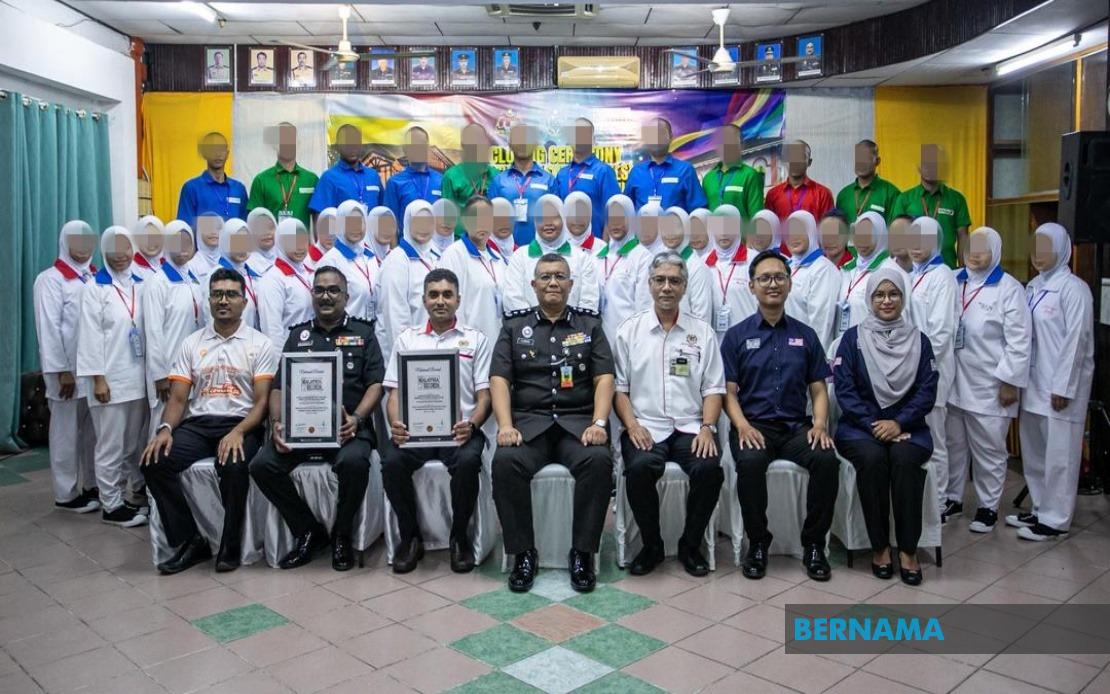
Home Minister Datuk Seri Saifuddin Nasution Ismail has commended the Malaysian Prisons Department for a remarkable achievement: the Batu Gajah Correctional Centre has earned recognition in the Malaysia Book of Records for organizing and delivering a comprehensive Basic Life Support and Automated External Defibrillator training programme to 42 inmates. The recognition represents a significant milestone in the department's broader efforts to transform incarceration from purely punitive confinement into a genuine pathway for personal reformation and social reintegration.
According to Saifuddin, this accomplishment embodies a fundamental philosophy that has increasingly shaped correctional policy across the region—namely, that prisons function most effectively when they prioritize rehabilitation alongside accountability. The initiative demonstrates that custodial institutions can serve as platforms for meaningful skill development and character formation, rather than merely as holding facilities for those who have transgressed the law. By equipping inmates with medically recognized competencies in life-saving techniques, the Batu Gajah facility has created tangible evidence that incarcerated individuals can acquire credentials and knowledge applicable in civilian employment and community service.
The breadth of what the training programme accomplishes extends well beyond technical instruction in cardiopulmonary resuscitation and defibrillator operation. Saifuddin emphasized that such initiatives simultaneously cultivate humanitarian values, instill disciplinary habits, foster a sense of personal responsibility, and build self-confidence among participants. These intangible outcomes arguably matter as much as the formal qualifications gained, since they address the psychological and social deficits that often underlie criminal behavior. When inmates develop genuine compassion for others' welfare and internalize standards of reliability, they emerge from incarceration fundamentally transformed in outlook and capacity.
The Prison Department's overarching vision, as articulated by the Minister, remains clear: rehabilitation, not mere punishment. This philosophical commitment has profound implications for Malaysia's criminal justice system and for how society views the purpose of imprisonment. Rather than viewing prisons solely as instruments of retribution or warehouses for offenders, this approach treats them as rehabilitation hubs where individuals facing their lowest point can access education, skills training, psychological support, and moral development. The Batu Gajah programme exemplifies this vision in practice.
For Malaysian society broadly, the significance lies in recognizing that the majority of incarcerated individuals will eventually be released back into their communities. Their trajectories upon release—whether they become productive contributors or reoffend—profoundly affects crime rates, family stability, and social cohesion. By investing in comprehensive rehabilitation programmes during their time in custody, the state increases the likelihood that returning citizens will integrate successfully, obtain employment, support dependents, and refrain from criminality. This creates a virtuous cycle beneficial to public safety and economic productivity.
The regional context adds further weight to Malaysia's initiative. Many Southeast Asian nations grapple with overcrowded prisons and high recidivism rates driven partly by inadequate rehabilitation infrastructure. Singapore, Thailand, and the Philippines have each implemented various educational and vocational programmes in their corrections systems with measurable success in reducing reoffending rates. Malaysia's recognition of and commitment to similar approaches positions it as a progressive voice within the region's corrections landscape and may inspire neighboring countries to expand their own rehabilitation offerings.
Saifuddin's hope that more such programmes will be implemented across the prison system reflects an understanding that scaling these initiatives requires both institutional commitment and resource allocation. Each programme requires trained facilitators, course materials, certification partnerships, and administrative oversight. The Malaysia Book of Records recognition serves partly as validation that justifies the investment of such resources, demonstrating that the Prisons Department can execute world-standard programming despite operating within constrained budgets.
The broader implications for inmates are equally important to consider. Individuals leaving prison with recognized qualifications in Basic Life Support and AED operation possess immediately marketable skills that employers—particularly in healthcare, security, hospitality, and emergency services—actively seek. This dramatically improves employability prospects for formerly incarcerated persons, who already face significant discrimination in hiring. Better employment outcomes translate directly into reduced poverty and increased stability, both protective factors against recidivism.
From a human rights perspective, the initiative also reflects evolving international standards regarding treatment of incarcerated populations. United Nations principles on corrections emphasize that imprisonment should enable inmates to maintain or develop their links with the outside world and to acquire knowledge and skills. Malaysia's demonstrated commitment to these standards enhances its standing internationally and reflects maturation in how the state conceptualizes its obligations toward all citizens, including those temporarily deprived of liberty.
The Batu Gajah Correctional Centre's achievement carries particular symbolic weight. Rather than being marked primarily as a place of confinement and punishment, it is now nationally recognized as an institution generating certified, life-saving expertise. This reframing—from negative to positive identity—may help shift broader public perception of prisons and imprisoned persons, gradually building social support for rehabilitation-focused corrections policy. When communities understand that prisons are producing individuals with valuable skills and reformed character, they become more receptive to employing returning citizens and welcoming them back into civic life.
Moving forward, the challenge lies in replicating this success systematically across Malaysia's network of correctional facilities. Not every institution will be suited to every programme, and customization based on facility resources and inmate demographics will be necessary. Nevertheless, the Batu Gajah model provides a proof of concept that sophisticated, formally recognized training can be delivered successfully within prison settings. Success requires sustained political will, dedicated personnel, and adequate funding—elements that Saifuddin's public endorsement helps to secure.
Ultimately, the recognition of the Batu Gajah programme reflects a maturation in Malaysian corrections policy toward evidence-based practices that international research has repeatedly validated. Rehabilitation works when it is systematic, intensive, and targeted at building genuine competencies and character. As Malaysia advances these approaches, it not only improves outcomes for individuals in the justice system but strengthens the entire social fabric through reduced crime, increased employment, and enhanced community stability.

