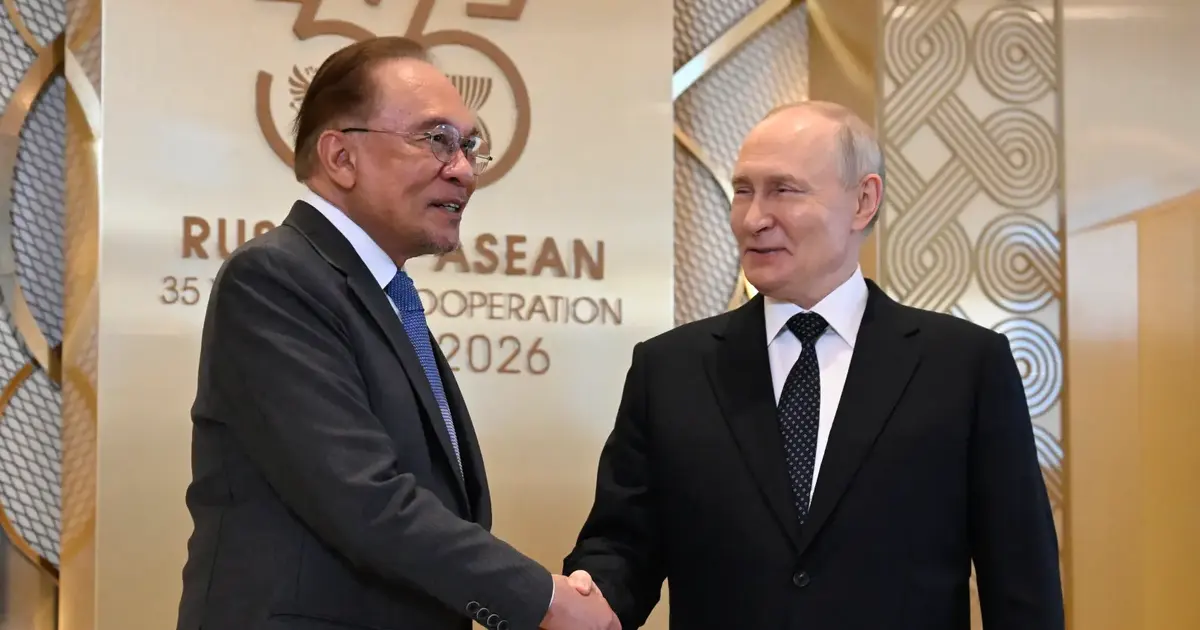
Prime Minister Anwar Ibrahim announced that Russian President Vladimir Putin has committed to maintaining consistent supplies of oil and gas to Malaysia over the next two decades, underscoring the importance of bilateral energy cooperation in an era of global supply chain uncertainty. The assurance comes at a time when Malaysia, like other Southeast Asian economies, is navigating volatile global energy markets and seeks to secure stable sources of fossil fuels amid competing regional and international demand.
The long-term supply commitment represents a strategic dimension of Malaysia's energy security planning. With oil and gas remaining critical components of Malaysia's energy mix and export economy, establishing predictable agreements with major suppliers such as Russia reduces exposure to sudden price shocks or supply interruptions that could disrupt industrial operations and household energy costs. The two-decade timeframe suggests a formalised understanding that extends well beyond typical annual commercial contracts, indicating a government-to-government partnership framework.
Anwar's engagement with Russia on energy matters reflects Malaysia's pragmatic approach to international relations, maintaining partnerships across geopolitical divides while pursuing national economic interests. Despite global tensions surrounding Russian sanctions and energy policy disputes in Europe, Malaysia has continued to balance commercial ties with Moscow alongside relationships with Western partners. This diversification of energy sources and diplomatic relationships provides Malaysia with flexibility in securing resources essential for its manufacturing base and economic growth.
Beyond the energy agreements, Anwar indicated that his concurrent diplomatic tour encompasses Turkmenistan, a significant player in Central Asian energy markets. This multi-country approach suggests Malaysia is pursuing a comprehensive strategy to strengthen ties with energy-producing nations across different regions. Turkmenistan possesses substantial natural gas reserves and has historically served as an important supplier to regional markets, making bilateral engagement relevant to Malaysia's broader energy procurement objectives.
The Prime Minister's focus on leveraging these diplomatic visits to enhance Malaysia's export competitiveness reveals the interconnected nature of trade and energy diplomacy. By cultivating stronger relationships with major Central Asian and Russian partners, Malaysia aims to create pathways for increased market access in vital destination markets. China, Japan, and South Korea represent three of Asia's largest economies with substantial purchasing power and manufacturing sectors that depend on imported goods across multiple categories.
Expanding exports to China, the world's second-largest economy and Malaysia's top trading partner, holds particular significance given the intense competition within the region and the importance of maintaining bilateral economic momentum. Japan remains a crucial destination for Malaysian manufactured goods, semiconductors, and agricultural products, while South Korea's advanced industrial base creates demand for component inputs and raw materials that Malaysia can provide. Access to these markets translates directly into employment, foreign exchange earnings, and economic growth across Malaysia's export-dependent sectors.
The timing of these diplomatic initiatives reflects Malaysia's strategic positioning as Southeast Asia charts its economic course amid great power competition and shifting supply chains. Regional economies are increasingly recognizing that energy security and export market access are inextricably linked to successful diplomacy and international partnership cultivation. By securing long-term energy supplies while simultaneously pursuing trade advantages in major Asian economies, Malaysia demonstrates sophisticated statecraft that addresses both immediate operational needs and medium-term economic expansion.
Energy cooperation agreements between nations often include framework provisions for expanded collaboration beyond simple commodity exchange. Such partnerships may encompass technology transfer, joint investment in energy infrastructure, or coordinated positions on international energy policy matters. The multi-dimensional nature of Malaysia's engagement with Russia and Central Asian partners suggests potential for deeper cooperation that extends the relationship beyond transactional energy purchases.
For Malaysian businesses and policymakers, the assurance of stable Russian energy supplies over two decades provides valuable planning certainty. Manufacturers can make long-term investment decisions with greater confidence regarding input costs, while government agencies can structure energy pricing policies and industrial development strategies with predictable supply dynamics in mind. This certainty facilitates strategic planning across sectors dependent on affordable, reliable energy access.
The diplomatic tour also underscores the importance of direct, high-level political engagement in securing national economic interests. Prime ministerial involvement in trade and energy negotiations signals to international partners the seriousness with which Malaysia prioritizes these relationships and the political commitment backing commercial arrangements. Such high-level diplomacy often produces outcomes more substantial than routine ministerial or technical negotiations.
Looking forward, Malaysia's success in balancing energy security with export market expansion will likely influence how regional economies approach their own international partnerships. As Southeast Asia seeks to maintain growth and prosperity amid geopolitical tensions, the Malaysian model of pragmatic engagement with diverse international partners while prioritizing tangible economic benefits may resonate across the region. The outcomes of Anwar's current diplomatic initiatives will provide important indicators of Malaysia's ability to translate political relationships into sustainable commercial advantages.

