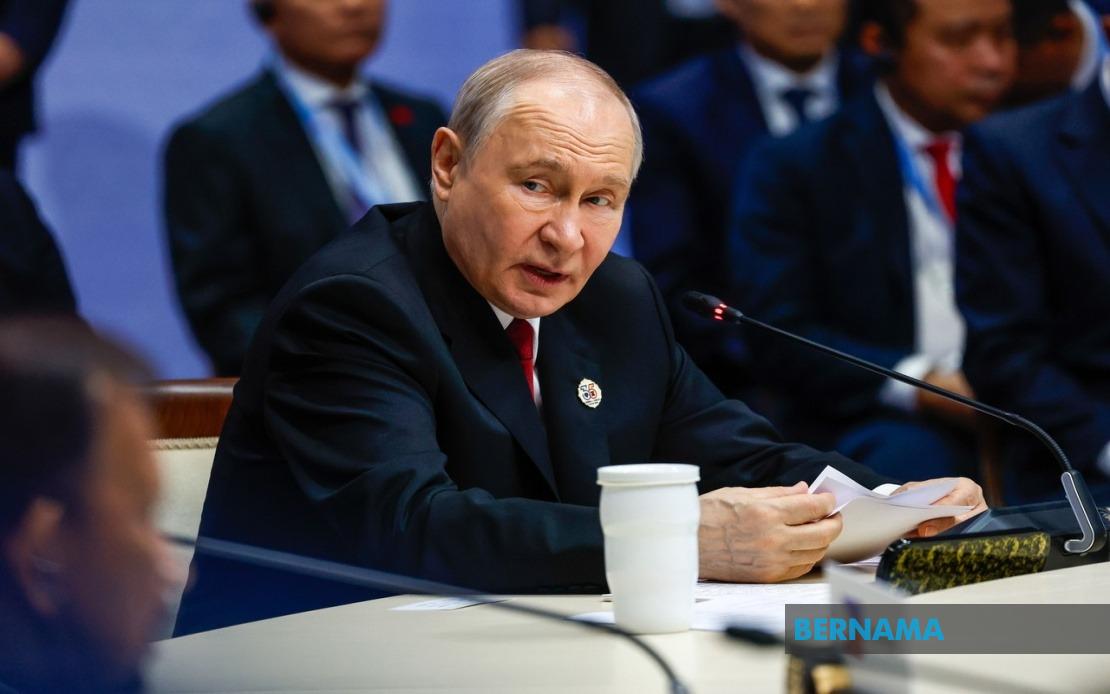
Russia and ASEAN have forged a strategic partnership spanning more than three decades that now functions as a crucial stabilising mechanism across the Asia-Pacific region, according to Russian President Vladimir Putin speaking at a commemorative summit held in Kazan. The remarks underscore Moscow's commitment to deepening engagement with the ten-member bloc even as the international landscape grows increasingly fractious, with competing powers vying for influence across Southeast Asia.
The relationship between Russia and the Association of Southeast Asian Nations traces its formal origins to 1991, when the newly independent Russian state opened diplomatic channels with the bloc in Kuala Lumpur. This initial contact evolved substantially over the following years. By 1996, Russia had progressed to full Dialogue Partner status—a designation reflecting meaningful capacity for engagement on substantive regional matters. The trajectory culminated in 2018 when both sides elevated their association to a Strategic Partnership, a recognition that cooperation had matured beyond transactional exchanges into a framework addressing political, security, economic, and cultural dimensions.
Putin characterised the accumulated architecture of bilateral engagement as comprehensive and multifaceted. The two sides have constructed an intricate web of legal instruments and institutional mechanisms spanning security cooperation, commercial relations, energy partnerships, agricultural collaboration, technological development, scientific exchanges, tourism promotion, and people-to-people contacts. This breadth reflects neither superficial goodwill gestures nor narrow commercial interests, but rather a deliberate scaffolding designed to embed Russian engagement across multiple sectors of Southeast Asian society and economy.
For Southeast Asian readers, Russia's positioning in the region carries particular significance given Malaysia's own emphasis on strategic autonomy and balanced partnerships. Moscow explicitly grounds its ASEAN relations in international law and reciprocal interests rather than coercive frameworks, a framing that resonates with ASEAN's traditional preference for non-interference and mutual respect. The bloc's established policy of maintaining equidistant relations with major powers finds reinforcement through Russia's consistent messaging around equal, mutually beneficial cooperation rather than hegemonic aspirations.
The timing of the commemorative summit reflects broader geopolitical context. Global uncertainties—encompassing economic volatility, supply chain disruptions, and strategic competition—have intensified Southeast Asian interest in diverse partnerships that provide insurance against over-reliance on any single power. Russia's acknowledged strengths in energy supply, technological expertise, agricultural productivity, and educational capacity position it as a complementary partner alongside China, the United States, India, and Japan in the intricate balancing act that characterises modern Southeast Asian diplomacy.
Energy security represents a particularly salient dimension of Russia-ASEAN cooperation. As Southeast Asian economies expand and urbanisation accelerates, demand for reliable power sources continues climbing. Russia's hydrocarbon reserves and expertise in extractive industries have made it a valued supplier and technical partner. Beyond oil and gas, Moscow's involvement in nuclear technology development and renewable energy partnerships creates additional leverage points for engagement across the region's diverse energy portfolios.
Technological and educational exchanges constitute another pillar of strategic significance. Southeast Asian governments increasingly recognise that technological sovereignty and human capital development are foundational to sustained economic growth. Russian expertise in mathematics, engineering, space technology, and scientific research offers alternative sources of knowledge transfer and institutional partnership compared to the technology giants based in North America and East Asia. These connections also generate soft power returns as Russian-trained professionals carry positive impressions of Russian innovation back to their home countries.
The agricultural dimension warrants particular attention for Malaysia and regional partners facing food security challenges. Russia and Ukraine together produce roughly a quarter of the world's wheat, and Russia maintains substantial production across grains, oils, and other staples. Diversifying agricultural import sources and establishing direct partnerships with Russian producers reduces vulnerability to global market shocks and creates more stable commodity relationships than reliance on auction-based spot markets.
Putin's emphasis on Russia's stabilising role in the Asia-Pacific reflects Moscow's broader strategic calculations. With China ascendant regionally and American attention fragmenting across multiple geopolitical challenges, Russia occupies a distinctive niche as a major power genuinely interested in Southeast Asia yet lacking the comprehensive economic and military dominance that characterises Beijing and Washington. This positioning allows Russia to serve as a balancing force without the zero-sum competitive dynamics that mark great power rivalry elsewhere.
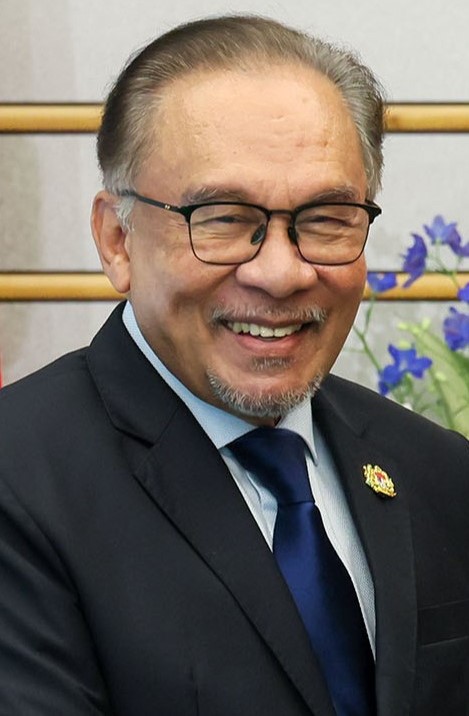
The presence of Philippine President Ferdinand Marcos Jr, current ASEAN Chair, alongside Malaysian Prime Minister Datuk Seri Anwar Ibrahim and other regional leaders demonstrated the bloc's collective commitment to maintaining robust engagement with Russia despite international pressures and sanctions regimes targeting Moscow. This attendance signalled ASEAN's determination to preserve its cherished strategic autonomy and to resist external demands for choosing sides in major power contests.
Looking forward, the strategic partnership faces both opportunities and constraints. Expanding trade and investment require navigating complex sanctions architectures, banking restrictions, and regulatory frameworks that constrain legitimate economic activity. Food and energy security cooperation promises tangible benefits but depends on sustained political will amid volatile international conditions. Digital transformation partnerships offer mutual advantage but raise questions about technological standards, data sovereignty, and intellectual property protection that demand careful negotiation.
For Malaysia specifically, the Russia-ASEAN partnership framework reinforces the government's independent foreign policy orientation. Enhanced regional cooperation with Moscow diversifies Malaysia's strategic options, strengthens bargaining positions in broader Asia-Pacific forums, and creates additional pathways for technological transfer and educational exchange. The partnership simultaneously reflects ASEAN's enduring commitment to the principle that Southeast Asia should remain open to engagement with all major powers rather than gravitating toward exclusive blocs.