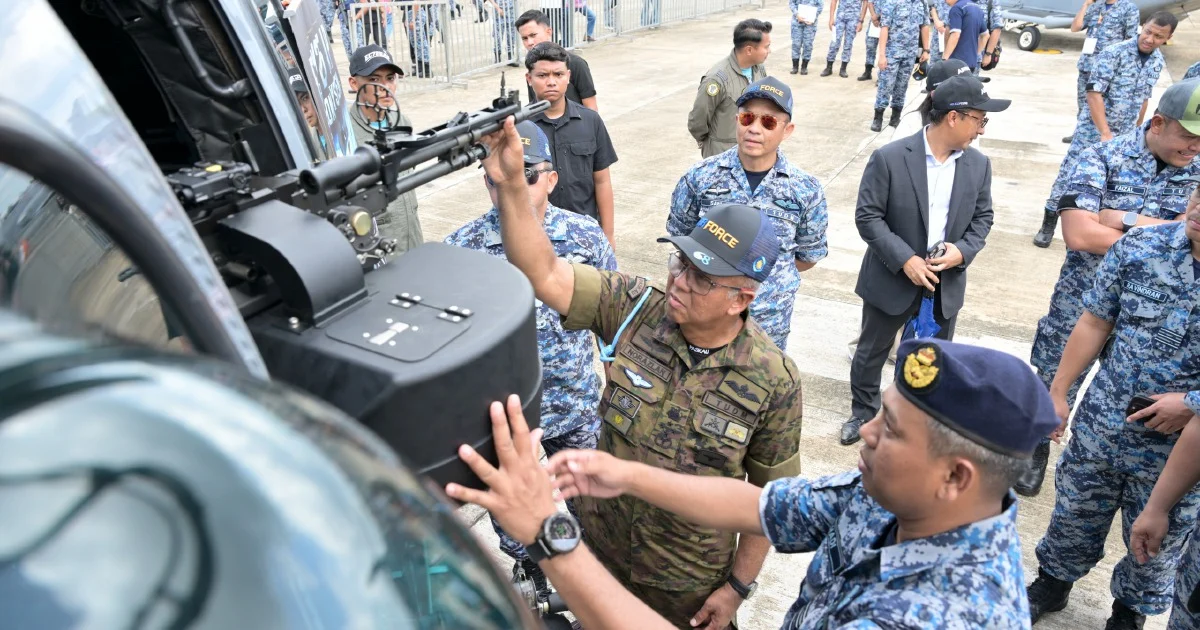
The Royal Malaysian Air Force has substantially upgraded its EC725 helicopter fleet with integrated firepower systems designed to bolster combat search and rescue operations in hostile or contested areas. This modernisation represents a significant enhancement to the service branch's operational capability, particularly for missions requiring extraction of military personnel from dangerous zones where enemy ground fire poses a genuine threat.
Combat search and rescue, or CSAR, represents one of the most demanding and perilous roles in military aviation. Crews must locate downed personnel, often behind enemy lines or in remote terrain, then conduct extraction while providing suppressive fire against hostile forces. The addition of weaponry to the EC725 platform addresses a critical vulnerability in existing operations—the need for organic firepower to suppress adversary positions during rescue attempts. Previously, RMAF helicopters relied on escort aircraft or ground forces to provide covering fire, a coordination requirement that increases operational complexity and risk.
The EC725, a modern twin-engine transport and tactical helicopter derived from the Airbus Helicopters family, has proven itself across numerous air forces globally. Its robust design, reliable performance in tropical climates, and substantial cargo capacity made it an appropriate candidate for armed enhancement. Malaysia's fleet serves multiple roles including troop transport, cargo operations, and medical evacuation, but dedicating platforms specifically for CSAR with integrated weapons capability represents a tactical refinement aligned with contemporary military doctrine.
Weapons integration on helicopters demands careful engineering to maintain performance and safety parameters. The additions must account for weight distribution, fuel consumption, transmission load, and aircraft balance. Advanced targeting systems and fire control solutions require integration with existing avionics, demanding sophisticated installation and comprehensive pilot training. The RMAF's decision to proceed with this upgrade indicates confidence in both the technical feasibility and operational necessity of the enhancement.
From a Southeast Asian strategic perspective, Malaysia's upgrading of combat capabilities reflects broader regional security dynamics. The South China Sea remains contested territory, with multiple claimants and increasing militarisation by several powers. Enhanced CSAR capabilities improve the RMAF's operational resilience, particularly if aerial operations occur over disputed maritime zones where personnel recovery becomes logistically challenging. Countries across Southeast Asia face similar operational challenges, and Malaysia's experience with the EC725 upgrade may inform decisions by regional neighbours.
The CSAR mission carries profound significance beyond tactical considerations. Military personnel operating in high-risk environments draw confidence from knowing recovery assets possess sufficient capability to extract them under fire. The psychological dimension of credible rescue capability affects morale, mission planning, and personnel retention. By demonstrating commitment to equipped rescue operations, the RMAF sends a message about prioritising soldier welfare and operational seriousness.
Weapon system upgrades for transport helicopters typically involve careful selection of armament that balances suppressive capability against weight penalties. Common solutions include flexible-mounting door guns, rocket pods, or modest air-to-ground missile systems. The specific configuration chosen for the EC725 fleet remains operationally sensitive, but the selection process would reflect RMAF requirements for typical CSAR scenarios and threat assessments against probable adversaries.
Training implications cannot be understated. Helicopter crews accustomed to transport or medical evacuation roles require extensive preparation to safely integrate weaponry into their operations. This includes gunnery training, weapons employment procedures, emergency protocols for weapon malfunctions, and integration with ground forces and other airborne assets. The RMAF's training command faces significant workload in ensuring crews achieve required proficiency standards before operational deployment.
The upgrade decision also reflects Malaysia's defence spending priorities during a period of fiscal constraints affecting many regional militaries. Investment in capability enhancement rather than aircraft acquisition suggests pragmatic budget management, extracting maximum utility from existing platforms. This approach proves particularly sensible for smaller air forces where procurement budgets cannot sustain continuous new equipment acquisition.
International partnerships likely facilitated this upgrade, as Malaysia maintains defence relationships with multiple countries. Equipment integration, technical support, and training assistance often flow through established military-to-military channels, whether with European helicopter manufacturers, allied air forces, or specialised defence contractors. These partnerships extend beyond hardware provision to encompass doctrine development and operational expertise sharing.
Looking forward, the armed EC725 enhancement establishes a template for improving the utility of existing military assets. As defence budgets tighten globally, air forces increasingly pursue modification and upgrade programmes rather than pursuing expensive replacement acquisitions. Malaysia's EC725 programme exemplifies this approach, transforming a respected transport platform into a more versatile combat asset without procuring entirely new systems.
The firepower upgrade reflects modern military thinking about operational flexibility. Aircraft serving multiple roles enhance force planning efficiency and operational sustainability. The RMAF's EC725 fleet now possesses improved relevance across a broader spectrum of potential missions while maintaining its original transport and medical evacuation functions. This versatility strengthens the overall defence posture by enabling tailored responses to diverse operational challenges from humanitarian assistance through combat operations.
For Malaysia's military and defence establishment, the EC725 upgrade demonstrates commitment to maintaining credible defence capabilities despite constrained circumstances. As regional security competition intensifies and operational demands grow more complex, modernisation of existing capabilities often proves as valuable as acquisition of new platforms. The enhanced combat rescue helicopter fleet sends clear signals about Malaysia's determination to protect its personnel and maintain operational effectiveness in a challenging strategic environment.

