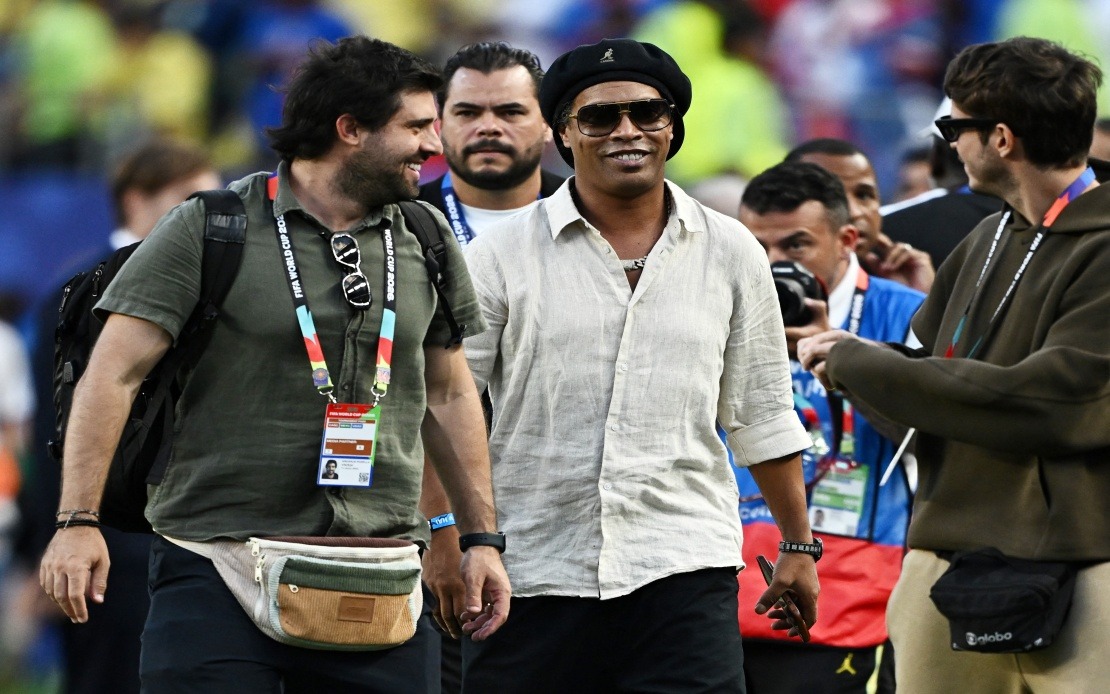
At 46 years old, Ronaldinho is preparing for an unexpected return to professional football, with reports indicating the Brazilian legend will sign with Ravenna, a club competing in Italy's third tier of football. German news agency dpa has confirmed the negotiations, citing sources close to the deal. The move marks a striking development for a player who officially retired from competitive sport nearly a decade ago, sparking intense speculation about whether the aging superstar will actually take to the pitch or if this represents something closer to a ceremonial engagement with the Italian club.
Ravenna, based in the Emilia-Romagna region, has secured a high-profile signing that extends far beyond typical third-division recruitment. Club owner Ignazio Cipriani, a prominent businessman with significant hotel industry interests, has orchestrated the agreement with Ronaldinho, whose enthusiasm appears genuine despite the substantial gap since his last professional appearance. The forward expressed eagerness to rejoin the sport, stating: "I can't wait to dance with the ball again and write a new story with Ignazio and the whole Cipriani family." This phrasing carries Ronaldinho's characteristic poetry about football, suggesting emotional investment beyond mere contractual obligation.
The specifics of this arrangement remain deliberately vague, reflecting uncertainty about execution and realistic expectations. Ariedo Braida, serving as Ravenna's vice-president, acknowledged this ambiguity when speaking to Italian news agency ANSA, saying that whether Ronaldinho will actually compete in matches cannot be confirmed. Yet Braida's comments also hint at openness, noting that "he is a champion, he knows no age," suggesting the club believes exceptional talent transcends conventional physical limitations. A clarification event scheduled in Miami on Tuesday was intended to provide comprehensive details about the contract structure and Ronaldinho's anticipated involvement.
Ronaldinho's playing career, though officially concluded in 2017, ended in a manner befitting his unconventional trajectory through sport. His last professional match occurred in 2015 with Rio de Janeiro's Fluminense, after which he pursued futsal opportunities in India's Premier Futsal League across two separate engagements. This progression through different competitions and countries reflected both his adaptability and the inevitable decline that accompanies advancing age in professional athletics. His retirement announcement in 2017 appeared definitive at the time, making this potential Italian venture a genuine surprise to football observers worldwide.
The magnitude of Ronaldinho's achievements provides essential context for understanding why clubs continue pursuing him decades into his post-career phase. As a two-time FIFA World Footballer of the Year, he stands among the sport's most decorated talents. His 2002 World Cup victory with Brazil cemented his status as a generational player, while his subsequent exploits at Barcelona—where he won the Champions League in 2006—established him as one of football's most entertaining and technically gifted performers. His later conquest of South America's premier club competition, the 2013 Copa Libertadores with Atletico Mineiro, demonstrated sustained excellence across different leagues and competitive levels.
For Malaysian and Southeast Asian football enthusiasts, Ronaldinho's potential comeback carries particular resonance. The Brazilian's playing style emphasised flair, creativity, and entertainment value—qualities that contrast sharply with the increasingly systematised and physically demanding modern game. His willingness to engage with lesser-known clubs in various regions, including his futsal involvement in India, reflected an inclusive approach to the sport. A stint in Italian football, regardless of the division, maintains Ronaldinho's pattern of global engagement with the beautiful game, demonstrating that elite talent retains marketable appeal across geographies and league hierarchies.
Ravenna's approach to acquiring Ronaldinho reflects broader trends in contemporary football, where celebrity value and commercial appeal increasingly factor into recruitment decisions. Third-division clubs typically operate with constrained budgets and limited revenue streams, yet the international media attention generated by Ronaldinho's involvement could provide substantial promotional value. His presence on the roster, even if limited to periodic appearances, could attract spectators, media coverage, and sponsorship opportunities that offset traditional transfer costs. This commercial calculus has become increasingly common in football, particularly as digital platforms amplify the reach of even lesser-tier competitions.
The question of whether Ronaldinho will meaningfully participate in matches remains the central narrative tension surrounding this development. Professional football demands specific physical capabilities—sustained cardiovascular fitness, acute positional awareness, explosive power for decisive moments—that naturally diminish with age. Yet Ronaldinho's exceptional technical abilities, particularly his ball control and creative vision, deteriorate less dramatically than pure athletic attributes. Futsal, which he played into his early 40s, requires different demands than traditional eleven-a-side football, potentially leaving open questions about his readiness for tactical and physical demands at Ravenna's level.
The Italian football landscape provides an interesting context for this venture. Serie C, the third tier, contains clubs with considerable history and passionate supporter bases, though financial resources remain modest compared to elite divisions. Ravenna itself possesses a football legacy extending across generations, providing a club with institutional identity beyond novelty value. Integrating Ronaldinho into this environment, whether as an active participant or strategic ambassador, offers possibilities for both party enhancement. For Ravenna, association with a globally recognised figure enhances status; for Ronaldinho, engagement with passionate Italian supporters represents the chance to maintain connection with professional football on his preferred terms.
The broader implications of this potential comeback extend beyond sporting performance metrics. Ronaldinho, throughout his career, has embodied football as artistic expression, frequently emphasising enjoyment and creative spontaneity over rigid tactical compliance. His potential involvement with Ravenna, regardless of match participation, signals that football remains accessible across age categories and competitive levels, particularly for those possessing the technical mastery that defines elite operators. For younger players observing from developing football nations across Southeast Asia and beyond, Ronaldinho's trajectory demonstrates that football careers need not follow predetermined trajectories but can accommodate individual preference and creative reinvention.
Ultimately, whether Ronaldinho actually participates in competitive matches for Ravenna remains secondary to the announcement's symbolic resonance. At 46, with substantial retirement years already elapsed, his decision to engage seriously with professional football again—whether as active player or prominent figurehead—reflects the profound passion for the sport that defined his playing career. For Malaysian audiences following European football developments, this narrative encapsulates sport's capacity to transcend conventional age limitations when elite talent encounters genuine enthusiasm for continued engagement, even at diminished physical capacity.

