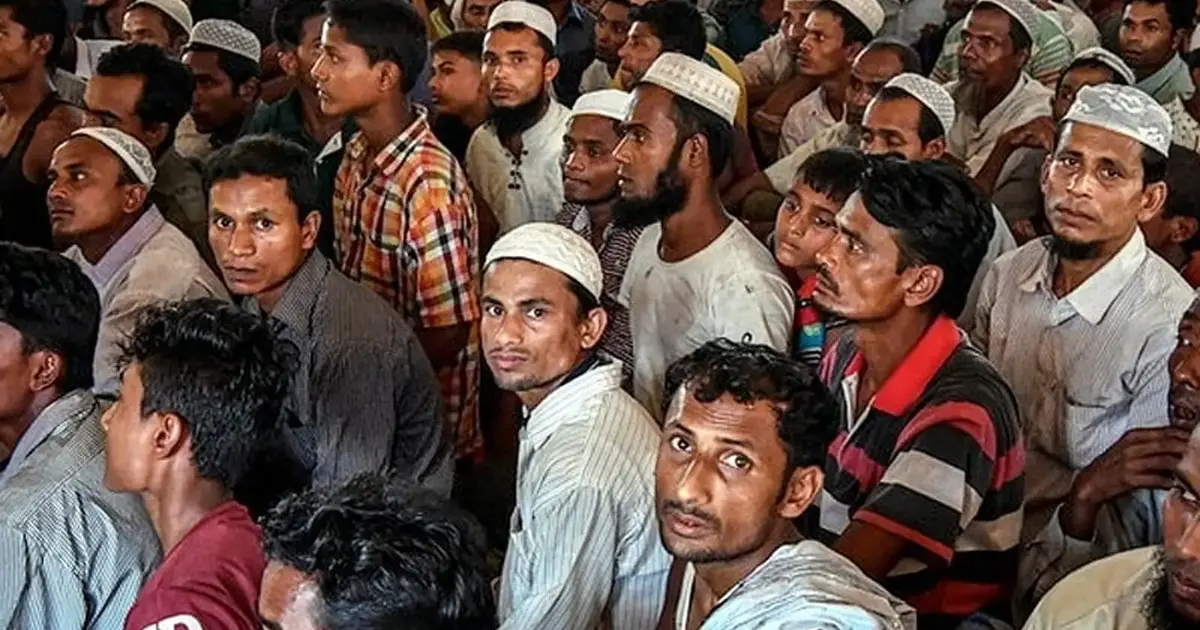
The Rohingya Ulama Council has categorically denied reports suggesting that members of the Rohingya refugee community are actively pursuing Malaysian citizenship, with council chairman Rahimullah Hussain describing such assertions as manufactured accusations intended to provoke hostility toward the marginalised population. The denial comes amid ongoing tensions surrounding Rohingya integration and settlement in Malaysia, where the stateless ethnic minority has faced significant social and political pushback despite the country hosting one of the world's largest refugee populations.
Rahimullah Hussain's statement represents the community's attempt to distance itself from narratives that have periodically circulated in public discourse, particularly through social media platforms and non-official channels. The chairman framed these allegations not merely as inaccurate but as deliberately engineered messaging designed to polarise Malaysian public opinion and generate anti-Rohingya sentiment. This framing underscores the defensive posture the community has increasingly adopted in response to what its representatives perceive as coordinated campaigns to demonise Rohingya populations.
The timing of the denial is significant given Malaysia's complex relationship with its refugee population. Despite being a signatory to various international humanitarian conventions, Malaysia has maintained restrictive policies toward refugees, including the Rohingya, who number approximately 180,000 in the country. They remain ineligible for formal citizenship under Malaysian law, a status that has kept them in legal limbo for decades, unable to access full employment rights, education opportunities, and public healthcare on equal terms with citizens.
The Rohingya Ulama Council's intervention highlights how the community's leadership structures attempt to engage with Malaysian society and counter inflammatory rhetoric through institutional channels. By publicly refuting such allegations through an established representative body, the council seeks to establish credibility and demonstrate responsible community governance, though such efforts often receive limited media coverage compared to sensationalist claims.
Malaysia's handling of the Rohingya question reflects broader regional anxieties about immigration, cultural integration, and resource allocation. Public discourse around Rohingya presence frequently becomes entangled with debates about national identity, religious demographics, and economic competition for jobs and services. This politicised context makes the community particularly vulnerable to inflammatory claims that tap into existing social tensions and resentments.
The fabrication of such allegations, according to Rahimullah Hussain, serves to obscure the actual conditions facing Rohingya populations in Malaysia. The community faces restrictions on movement, limited employment prospects outside informal sectors, and social discrimination. Rather than pursuing citizenship—which would require fundamental changes to Malaysian constitutional law—most Rohingya focus on basic survival, education for their children, and maintaining cultural and religious practices within the constraints imposed by their stateless status.
International humanitarian organisations have documented the precarious situation facing Rohingya in Malaysia, noting that despite their decades-long presence, many remain trapped in poverty with minimal access to formal education or healthcare. Children born in Malaysia to Rohingya parents cannot access government schools and remain undocumented, perpetuating cycles of marginalisation across generations. Against this backdrop, allegations of citizenship-seeking appear disconnected from the realities of refugee life in the country.
The council's denial also reflects the community's awareness that such claims, if widely believed, could trigger political backlash and intensify existing discrimination. Malaysian political discourse has periodically featured inflammatory rhetoric regarding refugees, and unfounded allegations have previously catalysed public campaigns against Rohingya communities in various neighbourhoods. The council's proactive response suggests an understanding that counter-narratives must be mobilised quickly to prevent false claims from becoming embedded in public consciousness.
Regionally, the Rohingya question remains a persistent challenge for Southeast Asian stability and humanitarian responsibility. Thailand, Bangladesh, and Indonesia have also grappled with large Rohingya populations, each pursuing different policy approaches. Malaysia's position as a middle-income country with established institutions creates particular expectations regarding refugee protection, yet the country has struggled to balance humanitarian obligations with domestic political pressures.
The distinction between refugee protection and citizenship remains crucial in this context. International legal frameworks recognise the right of stateless populations to access basic services and protection without necessarily conferring citizenship. Malaysia's restrictive approach has prevented most Rohingya from accessing such protections adequately, creating a humanitarian gap. The council's statement implicitly argues that the community has accepted its non-citizen status and seeks only dignified treatment within that framework.
Moving forward, the challenge for Malaysia involves reconciling humanitarian responsibilities with political realities. The Rohingya Ulama Council's statement suggests that community leadership recognises the necessity of managing expectations and building trust through transparent communication. However, without corresponding policy changes addressing the fundamental vulnerabilities facing stateless populations, such reassurances may offer only limited reassurance to either the refugee community or concerned segments of Malaysian society.
The broader implication of this controversy is that without intentional efforts to address misinformation and provide factual information about refugee conditions and policies, public discourse risks remaining hostage to inflammatory allegations and manufactured narratives. The council's intervention represents a modest effort to inject accuracy into an often-distorted conversation, though systemic solutions will require engagement from government agencies, civil society, and media institutions committed to evidence-based reporting.

