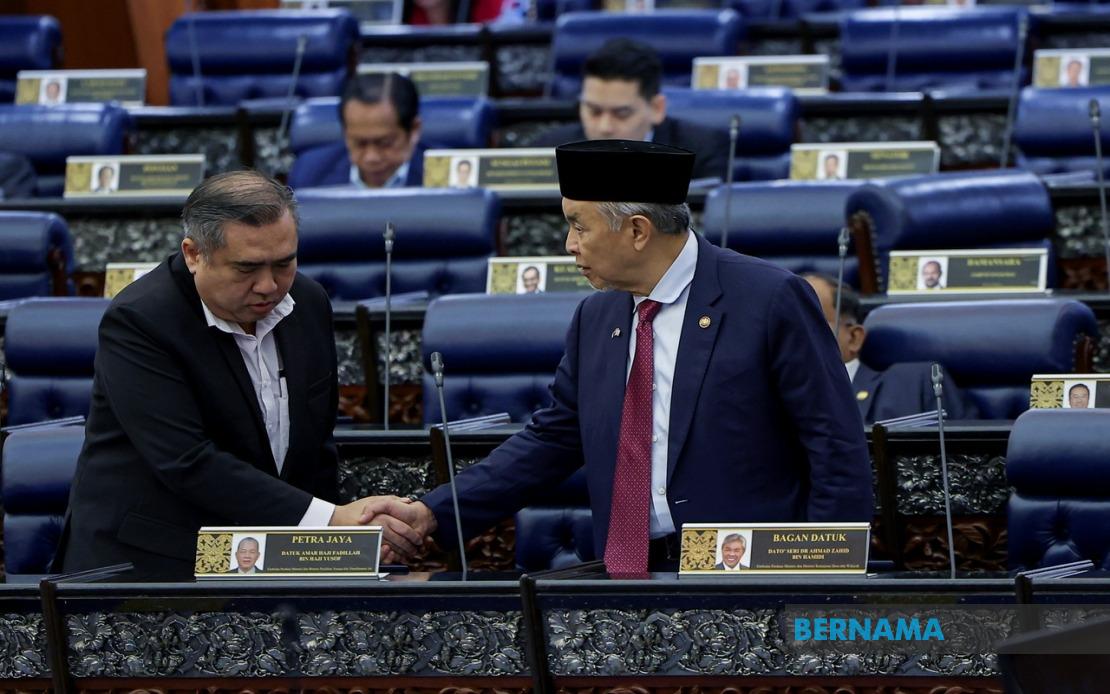
Malaysia's Transport Ministry has moved forward with comprehensive legislation intended to fortify traffic law enforcement across the nation. The Road Transport (Amendment) Bill 2026, presented to the Dewan Rakyat on June 22, marks a significant hardening of the regulatory framework governing vehicle use and driver conduct on public roads. Transport Minister Anthony Loke introduced the measure, which will proceed to second reading during the current parliamentary session, signalling the government's determination to tackle rising traffic violations and road safety concerns through legislative reform.
The proposed amendments represent a substantial escalation in financial and custodial penalties designed to deter motorists from committing traffic offences. The Bill systematically raises baseline fines across multiple categories of violations, with standard penalties increasing from the previous minimum of RM300 to RM500 for numerous common infractions. This doubling of minimum fines targets fundamental regulatory breaches such as operating vehicles without proper registration display, driving without valid licensing credentials, and exceeding posted speed limits. By elevating the financial consequences of routine violations, authorities aim to create stronger incentives for compliance while generating additional revenue for traffic safety programmes.
Dangerous driving conduct faces particularly aggressive penalties under the revised framework. Individuals apprehended while operating vehicles during a licence suspension face potential imprisonment extending to three years alongside financial penalties ranging from RM3,000 to RM10,000. This represents a dramatic departure from previous legislation, which permitted maximum imprisonment of only one year or fines not exceeding RM5,000. The enhancement reflects growing governmental concern about chronic traffic law violators who persist in driving despite administrative sanctions, a group authorities identify as disproportionately responsible for serious road accidents.
Street racing and unauthorised speed-testing activities, increasingly prevalent in Malaysian urban centres and drawing particular concern from law enforcement agencies, receive dedicated attention within the Bill's provisions. A newly inserted Section 42A establishes racing on public roads as a specific arrestable offence with escalating penalties based on repeat offences. First-time violators face fines between RM2,000 and RM10,000, imprisonment up to two years, or both. Those convicted a second time confront substantially harsher consequences: fines ranging from RM5,000 to RM20,000 combined with mandatory imprisonment of at least five years. This graduated penalty structure explicitly acknowledges that persistent street racing represents a qualitatively distinct threat to public safety compared with isolated speeding incidents.
The amendments also strengthen enforcement mechanisms by granting expanded authority to traffic officials. Police officers and road transport officers receive broadened powers to control and redirect vehicular traffic, enabling more flexible responses to congestion, accidents, and hazardous conditions. Additionally, the legislation introduces new administrative capabilities, including procedures for impounding and disposing of micromobility devices—an increasingly significant category encompassing electric scooters and similar micro-vehicles that have proliferated across Malaysian cities and frequently operate outside established regulatory frameworks. These provisions acknowledge the emergence of transportation technologies that existed at the margins when original legislation was drafted.
False statements relating to road transport matters face substantially heightened penalties that underscore the Bill's intent to eliminate documentation fraud and ensure data integrity throughout the regulatory system. Those convicted of making misleading declarations or providing false information encounter potential fines reaching RM200,000 alongside imprisonment of up to ten years. Such severe consequences target individuals engaged in systematic deception—such as falsifying vehicle registration documents, misrepresenting vehicle condition to authorities, or providing fraudulent licensing credentials—rather than inadvertent administrative errors.
Compound settlement mechanisms have been adjusted to align with the revised penalty structure. The maximum compound amount for offences that authorities may resolve through financial settlement increases from RM300 to RM500, maintaining proportionality with substantially elevated standard penalties. This adjustment enables enforcement officers to resolve minor infractions through fixed financial settlements without requiring court proceedings, streamlining administrative processes while preserving escalatory options for serious violations.
The legislation expands ministerial discretion in specific domains, particularly regarding the regulation of foreign-registered vehicles operating temporarily within Malaysian territory. Amendments to Section 66 of the existing Act empower the Transport Minister to establish and adjust fees associated with entry permits issued to foreign motor vehicles, accommodating international travel demands while enabling the government to adjust revenue requirements and regulatory costs without requiring additional parliamentary action for routine adjustments.
Protections for enforcement personnel have been strengthened through new provisions establishing assault or obstruction of road transport officers as an arrestable offence. This enhancement reflects documented increases in confrontational incidents between enforcement personnel and violators resistant to sanctions. By classifying such conduct as arrestable rather than merely summonable, the legislation enables immediate apprehension without requiring officer discretion, potentially reducing dangerous confrontations and reinforcing the authority of traffic personnel.
The collective effect of these amendments positions Malaysia within the regional context of increasingly stringent traffic enforcement, aligning with similar trends across Southeast Asia as governments respond to rising vehicular accident rates and urban congestion challenges. The Bill's particular emphasis on dangerous driving offences and repeat violators reflects accumulated evidence that safety improvements derive not from general deterrence but from targeted intervention against high-risk subpopulations. For Malaysian motorists and the broader driving public, the amendments signal a fundamental shift toward stricter compliance expectations and potentially transformed cost-benefit calculations regarding traffic law violations.

