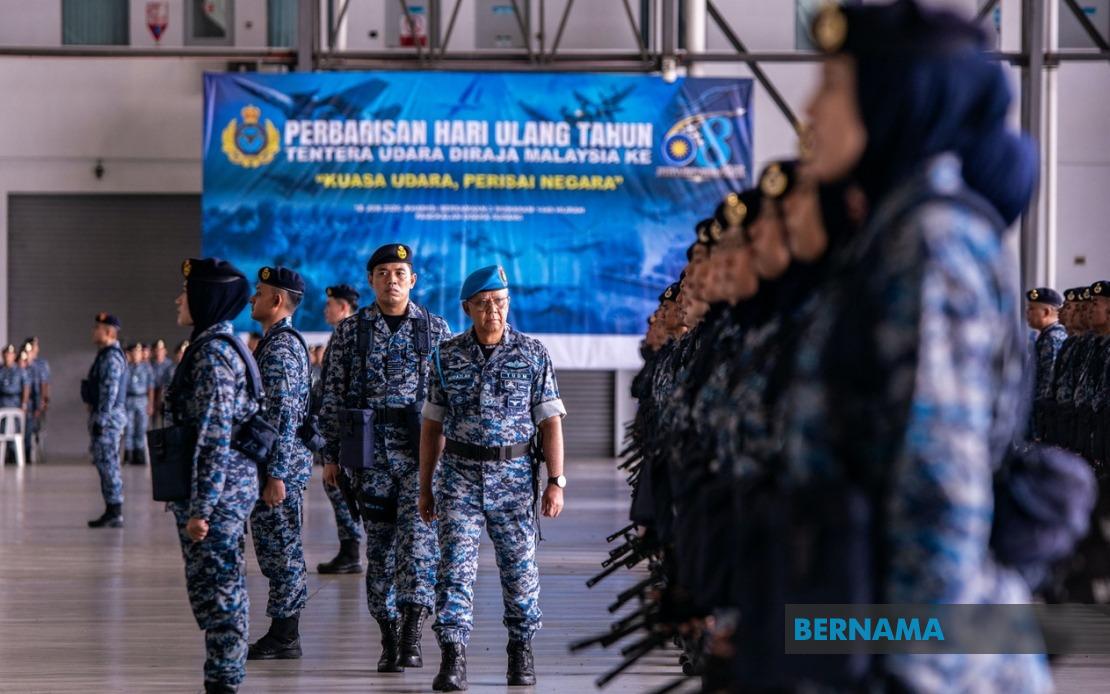
Malaysia's air force is taking concrete steps to modernise its surveillance infrastructure, with the Royal Malaysian Air Force (RMAF) announcing plans to install air defence and surveillance radar systems at several key installations across the country. The deployment, revealed during the RMAF's 68th Anniversary Parade in Subang on June 18, represents a significant investment in closing critical gaps in the nation's airspace monitoring capabilities and represents the beginning of a long-term strategic upgrade programme.
According to Chief of Air Force General Tan Sri Muhamad Norazlan Aris, the expansion will see air defence radars operational at three terrestrial locations: Bintulu in Sarawak, Bukit Puteri in Terengganu, and Bukit Lunchu in Johor. Additionally, an air surveillance radar installation is being developed on Pulau Layang-Layang, an island territory in the South China Sea. The selection of these locations reflects a deliberate strategy to monitor Malaysia's vast airspace and strategic maritime zones that are crucial to national security.
The radar modernisation programme forms the cornerstone of the first phase of the RMAF's Capability Development Plan 2055, an ambitious roadmap designed to ensure the air force remains technologically contemporary and capable of addressing future security threats. By implementing sophisticated detection and early warning systems, the RMAF aims to eliminate blind spots in surveillance coverage, particularly in areas where Malaysia has declared strategic interest. These enhancements will provide the air force with real-time situational awareness and faster response times to potential security incidents.
The timing of this upgrade carries particular significance given the contemporary geopolitical environment. General Muhamad Norazlan referenced ongoing conflicts in West Asia as a stark reminder of the unpredictability and complexity of modern security challenges. These regional tensions have demonstrated the fragility of global stability and the cascading effects that regional disruptions can have on distant economies and nations. Malaysia, despite its geographic distance from Middle Eastern conflicts, remains deeply vulnerable to such disturbances through its reliance on international trade routes and energy supplies.
The general drew specific attention to disruptions affecting the Strait of Hormuz, a critical chokepoint through which approximately one-third of the world's maritime petroleum trade passes. When tensions in the Persian Gulf region escalate, they create ripple effects across global energy markets, commodity prices, and supply chains. For Malaysia, which imports significant quantities of energy and relies on stable international markets to distribute its own exports, such disruptions pose an existential economic threat. The interconnectedness of modern global commerce means that instability half a world away can quickly translate into higher inflation, reduced export competitiveness, and economic contraction at home.
Malaysia's own maritime environment presents equally demanding security considerations that justify the investment in enhanced radar coverage. The Strait of Malacca, through which one of the world's busiest shipping lanes passes, is vital to Malaysia's economic survival and that of the broader Southeast Asian region. Beyond this crucial waterway lies the South China Sea, a territory where Malaysia maintains exclusive economic zone claims and where geopolitical tensions have simmered for years. The South China Sea remains one of the most strategically significant bodies of water in the world, with competing territorial claims from multiple nations and through which trillions of dollars in international trade flows annually.
The radar installations, particularly those positioned to monitor airspace over the Strait of Malacca and the South China Sea, will provide Malaysia with enhanced ability to monitor aerial activity, detect anomalies, and respond swiftly to any incursions or threats to national sovereignty. In an era where unmanned aircraft, sophisticated military platforms, and emerging air-based technologies are becoming increasingly prevalent, having comprehensive surveillance coverage is no longer a luxury but a necessity. The capability to detect threats early provides decision-makers with precious minutes or hours to formulate an appropriate response, whether diplomatic, defensive, or operational.
The RMAF's modernisation initiative also reflects a broader recognition among Malaysia's defence establishment that maintaining credible deterrence and effective sovereignty protection requires continuous technological investment. A nation that cannot effectively monitor or control its own airspace and maritime zones risks becoming vulnerable to encroachment, whether through accidental incursions, deliberate provocations, or more serious military challenges. The radar network serves as both a practical security tool and a symbolic demonstration of Malaysia's commitment to safeguarding its territory and territorial waters.
The celebration of the RMAF's 68th anniversary provided an appropriate venue for announcing these capability enhancements, as it reinforced the air force's operational importance and demonstrated commitment to personnel. The ceremony involved extensive participation from various RMAF units, including the Special Forces (PASKAU), Ground Defence Force (HANDAU), and composite flights representing both traditional and increasingly important roles within the modern air force. Sixteen officers and 272 personnel participated in the parade, reflecting the institutional depth and diverse specialisations required to maintain comprehensive air defence.
Beyond the immediate security dimensions, the radar deployment signals Malaysia's strategic thinking about regional stability and its own role within it. By enhancing its surveillance capabilities, Malaysia positions itself as a more capable actor in regional security arrangements and better equipped to contribute to collective defence efforts within ASEAN or broader Indo-Pacific security frameworks. Enhanced situational awareness also provides Malaysia with better information for diplomatic engagement, allowing decision-makers to respond to challenges with greater knowledge and confidence.
The investment in air defence infrastructure also carries implications for Malaysia's defence industrial development and technological advancement. Such modernisation programmes typically involve partnerships with defence contractors and technology providers, creating opportunities for Malaysian companies to develop expertise in advanced systems and potentially for knowledge transfer that strengthens domestic capabilities. Over time, experience with these systems can build indigenous expertise that reduces dependence on foreign military technology and enhances Malaysia's strategic autonomy.
The RMAF's modernisation programme, while substantial, represents only the beginning of a longer-term transformation outlined in the Capability Development Plan 2055. Future phases will likely involve additional radar systems, integration of these platforms into unified command and control networks, and potentially the addition of complementary defence systems. The radar network will only achieve its full potential when integrated with other air defence assets, communication systems, and coordinated with broader national security strategies involving the army, navy, and civilian agencies.
As Malaysia navigates an increasingly complex security environment characterised by regional tensions, emerging technologies, and evolving threats, the investment in radar capabilities demonstrates a commitment to protecting national interests through enhanced surveillance and early warning. The installations at Bintulu, Bukit Puteri, Bukit Lunchu, and Pulau Layang-Layang represent tangible steps toward a more secure airspace and the realisation of Malaysia's aspirations to maintain effective sovereignty over its vast territory and strategic maritime zones.