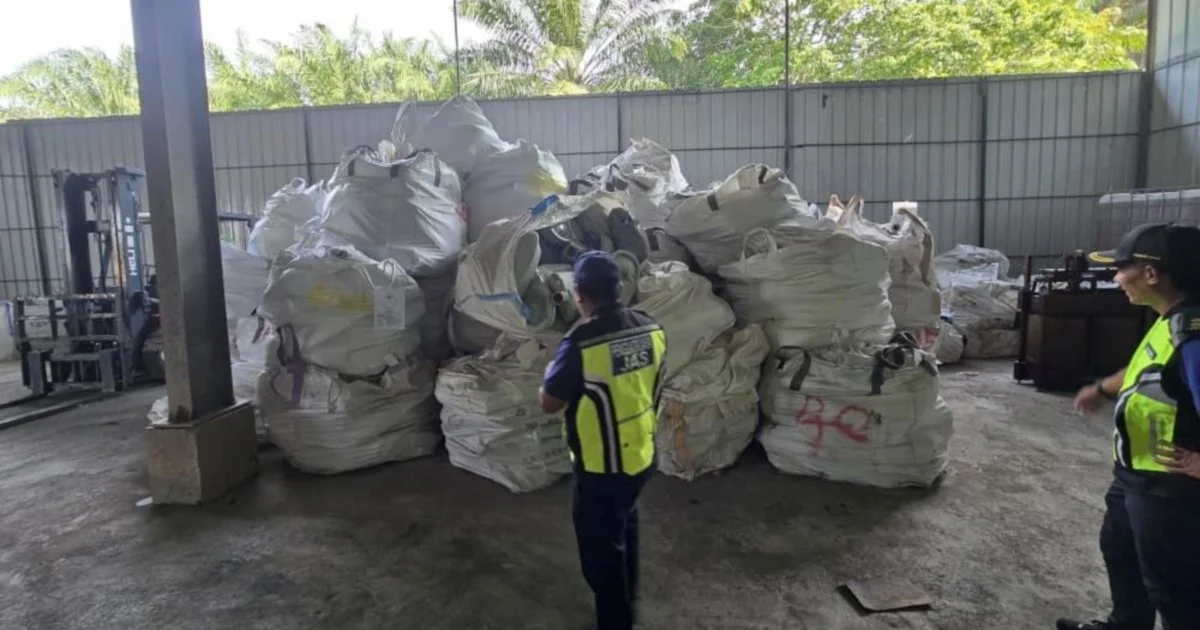
A sweeping enforcement action by the General Operations Force resulted in the seizure of substantial quantities of electronic waste valued at RM6.4 million following a raid on an unauthorised processing facility in Gambang, Kuantan. The operation, conducted yesterday, has again highlighted the persistent challenge of illegal e-waste operations flourishing across Malaysia's industrial zones, particularly in Pahang where enforcement resources remain stretched across vast territory.
The facility in question appears to have been engaged in unregulated dismantling and processing of discarded electronic equipment without proper environmental safeguards or licensing. Such operations pose significant environmental and health hazards, as the improper handling of e-waste releases toxic substances including lead, mercury, and cadmium into soil and groundwater. Workers at these clandestine facilities often labour without protective equipment, exposing themselves to chemicals and heavy metals that accumulate in the body over time, creating severe occupational health risks that frequently go undocumented.
The detention of the factory manager signals an escalation in enforcement strategy beyond merely confiscating materials. Authorities are increasingly targeting operational leadership, recognising that dismantling supply chains requires holding individuals accountable rather than simply disrupting shipments. This approach mirrors successful strategies employed in combating illegal mining and wildlife trafficking, where prosecuting key operators has proven more effective than temporary seizures alone.
Kuantan and its surrounding industrial areas have emerged as concerning hotspots for informal e-waste recycling, driven partly by the region's established electronics manufacturing base and logistical infrastructure. The convergence of legitimate electronics production, growing domestic and regional waste streams, and porous borders creates ideal conditions for entrepreneurs to establish shadow operations that profit from global demand for recovered materials, particularly precious metals and rare earth elements embedded in circuit boards and components.
The scale of this particular seizure—RM6.4 million in material value—suggests an operation of considerable sophistication, likely serving as a collection and processing node within a larger illicit network. Intelligence gathered during the raid may reveal upstream suppliers and downstream buyers, potentially exposing connections to organised trafficking networks that operate across multiple jurisdictions in Southeast Asia.
Malaysia has historically struggled to regulate e-waste flows despite signing international agreements including the Basel Convention, which restricts transboundary movement of hazardous waste. The country receives substantial volumes of e-waste from developed nations and neighbour countries, ostensibly for legitimate recycling but often diverting to uncontrolled facilities where valuable materials are extracted using crude methods that maximise profit while minimising compliance costs.
The environmental implications extend beyond immediate contamination. Informal e-waste processing generates significant volumes of contaminated soil and water that require expensive remediation. Communities surrounding these facilities experience elevated heavy metal exposure through multiple pathways including contaminated groundwater used for drinking and irrigation. In Pahang specifically, several agricultural regions depend on groundwater, making such contamination particularly concerning for food security and public health.
Regulatory oversight through the Department of Environment and the Electronics and Electrical Equipment Recycling and Recovery Scheme faces resource constraints and coordination challenges. The voluntary nature of many existing e-waste management programmes means that genuine recyclers struggle to compete with operators unconcerned by environmental compliance costs, creating a perverse market dynamic that incentivises illegal activity. Establishing mandatory take-back schemes and stricter manufacturer responsibility requirements could address this imbalance, though implementation would require legislation and funding currently unavailable.
The seizure underscores demand from both local and international markets for recovered materials, particularly copper, gold, and aluminium, which remain valuable despite extraction costs. Criminal syndicates recognise this demand and invest in establishing processing infrastructure in jurisdictions where enforcement remains uncertain. The transnational dimension of e-waste trafficking means that effective interventions require coordinated action with Thailand, Indonesia, Vietnam, and other regional partners through ASEAN frameworks designed for exactly such cross-border environmental crime.
Government agencies must now balance prosecution of the detained manager with investigation of the operation's wider network. Key questions include the sourcing of raw materials, whether they arrived through legal channels subsequently diverted to informal processors, and whether finished materials were destined for domestic consumption or export. Answers will illuminate broader patterns of e-waste management across the region and inform future policy interventions.
Moving forward, the incident presents an opportunity to strengthen enforcement capacity in Pahang through dedicated task forces, improved intelligence sharing, and enhanced monitoring of industrial zones suspected of harbouring unregulated facilities. Public awareness campaigns highlighting the health and environmental consequences of e-waste dumping could also generate community intelligence, allowing residents to report suspicious operations before they accumulate significant material volumes.
For Malaysian manufacturers and legitimate recyclers, stronger enforcement against illegal competitors ultimately benefits legitimate operations by levelling the competitive landscape. The seizure demonstrates that authorities are actively pursuing such cases, potentially encouraging compliance among marginal operators considering informal routes.

