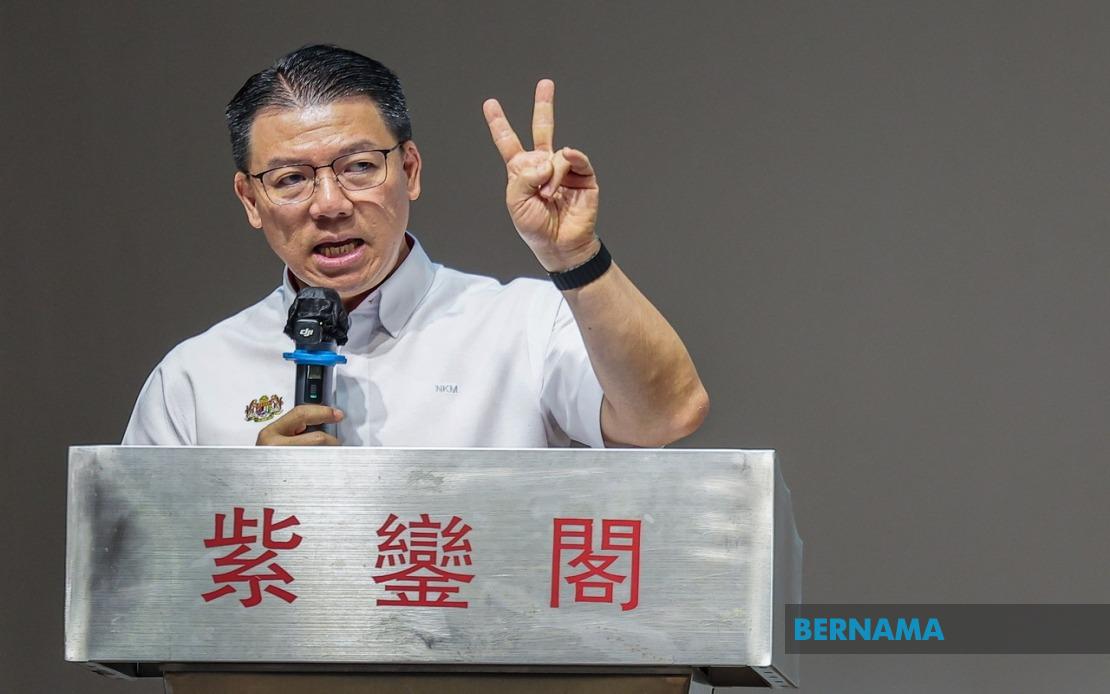
The Ministry of Housing and Local Government has committed RM200 million towards maintaining places of worship for non-Muslim communities across Malaysia, a four-year initiative that began in 2023 and underscores the MADANI government's stated dedication to inclusive development. Minister Nga Kor Ming announced the funding framework during a visit to Kluang, Johor, where the ministry handed over allocations to 27 religious institutions in the state totalling RM3.14 million for the current year.
The scope of the Non-Muslim Houses of Worship Maintenance Initiative extends across multiple faith communities, encompassing churches, gurdwaras, Hindu temples, Buddhist temples, and associated religious organisations nationwide. This breadth reflects Malaysia's pluralistic religious landscape and the need for systematic maintenance infrastructure across different denominations. The initiative addresses a longstanding gap in government support for non-Muslim religious facilities, which often operate with limited budgets despite serving significant portions of the population.
Demand for the programme has exceeded initial projections. Through the e-RIBI System—a digital platform designed to streamline applications and approvals—the ministry received 1,478 requests valued at more than RM279 million, indicating substantial unmet maintenance needs throughout the country. This gap between available funding and submitted applications highlights the pressing condition of many religious facilities and suggests that the current allocation, while substantial, addresses only a portion of nationwide requirements.
In Johor specifically, the government has disbursed RM18.75 million since the initiative's inception through May 2026, benefiting 154 religious institutions across the state. The current-year allocation for Johor will support renovation work, structural maintenance, new construction where necessary, and emergency repairs to ensure these facilities remain safe and functional for their communities. This geographically targeted approach allows for localised assessment of priorities while maintaining centrally coordinated oversight.
Nga emphasised that the initiative represents broader ideological positioning within the MADANI framework, which explicitly rejects divisive approaches in favour of bridge-building across Malaysia's diverse communities. His framing of the programme as evidence of governmental fairness addresses sensitivities around resource distribution in a multiethnic, multireligious nation where perceptions of inequitable treatment can undermine social cohesion. By allocating resources to non-Muslim facilities, the government signals commitment to pluralism beyond rhetorical statements.
The minister articulated the connection between domestic unity and economic performance, arguing that social stability directly correlates with investor confidence and currency strength. This linkage between communal harmony and macroeconomic outcomes reflects Malaysia's experience of how religious and ethnic tensions can affect business sentiment and capital flows. In this framing, funding maintenance of minority religious facilities becomes not merely a matter of fairness but an economic imperative.
Transparency and accountability mechanisms form integral components of the initiative's implementation. The ministry committed to professional monitoring of approved projects to ensure funds reach genuinely deserving organisations and that allocations fulfil their intended purpose. This emphasis addresses legitimate concerns about government spending efficiency and reflects evolving expectations for public sector accountability in Malaysia's contemporary political environment.
The e-RIBI System itself represents institutional modernisation, enabling digital submission and tracking of applications rather than reliance on traditional bureaucratic channels. This technological infrastructure potentially reduces friction in accessing government support and creates verifiable records of allocation decisions. For religious organisations across the country, the system theoretically democratises access to funding by removing geographical barriers to application submission and reducing the advantage of institutional proximity to decision-makers.
For Southeast Asia broadly, Malaysia's approach offers a governance model for managing religious diversity within a Muslim-majority nation. The explicit allocation of state resources to non-Muslim religious infrastructure demonstrates one strategy for maintaining communal coexistence in contexts where religious identity intersects with political representation and resource distribution. Similar tensions exist across the region, making Malaysia's mechanisms relevant for policymakers elsewhere grappling with analogous challenges.
The scale of unmet demand revealed through the RM279 million in submitted applications suggests that subsequent phases of the initiative, or expansion beyond the four-year framework, may warrant consideration. Maintenance backlogs at religious facilities extend beyond mere aesthetics; deferred repairs can compromise safety and accessibility, directly affecting community members' ability to practise their faith. Systematic underfunding of such facilities before this initiative began created compound problems that single-year allocations cannot fully address.
Looking forward, sustainability of the initiative depends on continued political commitment and budgetary prioritisation across election cycles. Religious institutions typically operate on limited revenues from congregational contributions and occasional fundraising; government support provides stability that enables long-term planning and prevents deterioration. The MADANI government's framing of this programme as fundamental to its governing philosophy suggests ongoing priority, though this remains contingent on electoral outcomes and shifting fiscal constraints.
The initiative also carries symbolic weight beyond its direct budgetary impact. Government funding of minority religious infrastructure serves as official recognition of these communities' presence within the Malaysian social contract. For congregations and religious leaders, this acknowledgement validates their claim to equal standing within the polity, potentially reducing feelings of marginalisation that can complicate centre-periphery relations in multiethnic states. The programme thus operates simultaneously as practical resource transfer and political communication.

