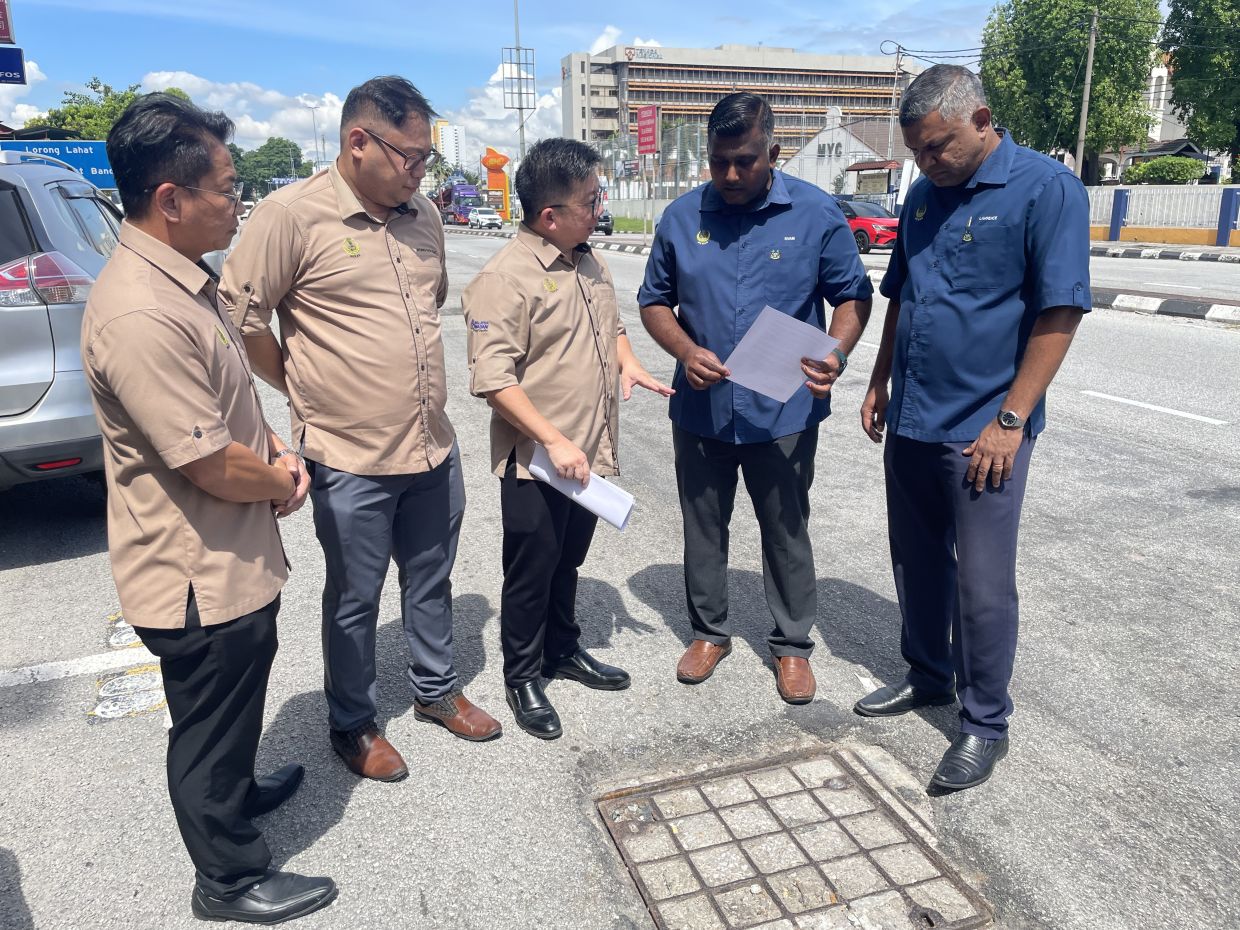
Ipoh motorists will finally get relief along Jalan Lahat after authorities greenlit a RM2.6mil resurfacing initiative scheduled to commence in July. The project will target the most damaged 4km stretch of the approximately 10km to 11km road, addressing years of complaints from residents and road users struggling with potholes, uneven surfaces, and safety hazards that have made this major artery increasingly challenging to navigate.
The roadwork will cover both directions of Jalan Lahat, running from the Falim traffic lights to the Jalan Leong Boon Swee junction near Little India. This critical corridor passes through three state constituencies—Buntong, Tebing Tinggi, and Menglembu—making it a vital connector for residential areas, schools, and commercial establishments throughout the region. Menglembu assemblyman Chaw Kam Foon confirmed the project details this week, emphasizing that the Malaysian Road Records Information System (Marris) funding would enable authorities to address the most deteriorated sections where safety had become a genuine concern.
The deterioration of Jalan Lahat has become impossible to ignore, particularly after social media attention recently highlighted a massive pothole on the road's flyover section that prompted immediate temporary repairs. Chaw noted that the viral exposure proved crucial in catalyzing action from the relevant authorities. More strikingly, approximately 20 vehicles sustained tyre punctures during June alone after encountering potholes along the affected stretch—a clear indicator of how severely the road has deteriorated and the cumulative impact on road users.
Previous attempts to maintain the road through patching and temporary repairs have repeatedly failed to address the underlying structural problems. Councillor K. Sivam explained that years of spot-fixing have proven ineffective due to a combination of high traffic volumes, weather exposure, and the sheer scale of accumulated damage. Large vehicles and lorries regularly traverse Jalan Lahat as part of their delivery routes, intensifying wear patterns on the asphalt and making piecemeal repairs unsustainable as a long-term solution. Full resurfacing has become the only viable approach to restore the road to acceptable standards.
Interestingly, much of the road's deterioration stems not merely from traffic wear but from poorly executed utility installation work conducted in previous years. Sivam pointed to sewerage pipeline installations and other underground utility excavations where restoration works fell short of proper standards. These inadequately restored sections created weak points in the road structure, accelerating overall degradation beyond what normal usage would typically cause. This revelation highlights a systemic problem where utility companies sometimes fail to reinstate roads adequately after their work concludes.
The Corridor Utiliti Darul Ridzuan (KUDR) will now oversee future utility excavation work along this stretch, introducing a regulatory framework designed to prevent similar problems. The authority possesses powers to fine, compound, and mandate repairs for companies that fail to restore roads to approved specifications. This supervisory approach represents a shift toward accountability and should theoretically prevent future deterioration caused by negligent restoration practices.
The resurfacing project scope extends beyond simply laying new asphalt. Works will include levelling of utility access points, removal of surface undulations that create uncomfortable and unsafe driving conditions, and repainting of lane markings to restore visual guidance for motorists. These comprehensive measures should deliver a properly functioning road surface designed to withstand both regular traffic and the tropical climate challenges that accelerate pavement deterioration in Malaysia's environment.
Sivam confirmed that tender processes for the project are currently underway, with construction anticipated to commence in July and completion targeted within approximately three weeks. The relatively tight timeline suggests authorities are prioritizing this work and attempting to minimize disruption to daily traffic flows. Given that Jalan Lahat serves as a major route connecting residential neighborhoods, educational institutions, and business districts, efficient project execution will be essential to prevent significant congestion during the works.
The long wait for this project underscores persistent challenges in Malaysian municipal infrastructure maintenance. Sivam revealed that requests for Jalan Lahat resurfacing have circulated since 2024, demonstrating how maintenance issues can languish despite repeated community advocacy. The eventual approval and funding allocation represent a victory for persistent local advocacy and, notably, the power of social media to accelerate official response to infrastructure failures that direct complaint channels had failed to address adequately.
For Ipoh residents and regular users of this corridor, the July commencement of resurfacing work promises meaningful improvement in road safety, vehicle maintenance costs, and overall driving comfort. The project's success will likely depend on proper execution and the effectiveness of KUDR's future oversight of utility works. As Malaysia continues developing its infrastructure across the Klang Valley and beyond, Jalan Lahat's experience illustrates both the importance of comprehensive resurfacing solutions and the necessity of stronger coordination between road authorities and utility companies to prevent future deterioration.

